The thyroid is small, but its hormones reach almost every tissue. That is why low thyroid function can feel broad: colder hands, slower bowels, heavier fatigue, low mood, dry skin, menstrual change, or a mind that feels less sharp. The difficult part is that none of these signs proves hypothyroidism. The useful question is not whether you feel “suboptimal”, but whether symptoms, risk factors, and blood tests point in the same direction.
Why thyroid symptoms are so easy to misread
Thyroid hormone helps regulate energy use, heat production, heart rhythm, digestion, muscle function, and aspects of brain function. When levels are clearly low, the body often slows. The American Thyroid Association lists cold intolerance, tiredness, dry skin, constipation, low mood, and forgetfulness among common hypothyroid symptoms, but it also makes the central caution plain: not everyone has all of them, and other health problems can cause them too.
That overlap matters. Fatigue can come from poor sleep, iron deficiency, depression, chronic stress, under-fuelling, sleep apnoea, medication effects, inflammatory disease, perimenopause, or simply too much life with too little recovery. Constipation can be dietary, neurological, medication-related, or structural. Low mood and poor concentration can belong to almost any long-running physical or psychological strain.
So a symptom list is a prompt for a proper conversation, not a diagnosis. Evan Cortland’s hormonal-health rule applies here more than almost anywhere: hormones explain some symptoms very well, but they are also an easy place to project every vague change in the body.
The brain and metabolism feel thyroid shifts early
The thyroid does not work alone. It sits in a feedback loop with the hypothalamus and pituitary gland, which monitor circulating thyroid hormone and adjust thyroid-stimulating hormone, or TSH. When the thyroid is under-producing, the pituitary usually raises TSH to push it harder. When thyroid hormone is excessive, TSH usually falls.
That feedback loop is one reason thyroid disease can show up as both physical and cognitive change. Brain tissue is sensitive to thyroid hormone availability, and people with overt hypothyroidism may describe slower thinking, poorer memory, low mood, or reduced alertness. The same biology also touches lipid metabolism, gut motility, skin turnover, body temperature, and reproductive hormones.
Still, the word “may” is doing real work. Brain fog is not a thyroid diagnosis. A person can feel cognitively flat with normal thyroid function, and another person can have abnormal thyroid tests before they notice much at all. The pattern becomes more meaningful when several features cluster together, persist, and are matched by laboratory results.
What counts as a sensible reason to test
Testing is reasonable when there is clinical suspicion, especially when more than one symptom is present or when risk is higher. NICE guidance on thyroid disease says clinicians should consider thyroid-function tests when thyroid disease is suspected, whilst bearing in mind that one symptom alone may not indicate thyroid disease. NICE also highlights autoimmune disease, new-onset atrial fibrillation, depression or unexplained anxiety, abnormal growth or behaviour changes in young people, and menopausal symptom overlap as contexts where testing may be relevant.
Risk factors matter because the most common cause of hypothyroidism in many settings is autoimmune thyroid disease, often called Hashimoto’s thyroiditis. A personal or family history of autoimmune disease, previous thyroid surgery, radioactive iodine treatment, radiation to the neck, some medicines such as lithium or amiodarone, and pregnancy or the post-partum period can all change the index of suspicion.
The practical caution is not to order endless panels because you feel tired after a hard month. It is to avoid dismissing a persistent cluster of symptoms, particularly when there are risk factors that make thyroid disease more plausible.
Which blood tests actually clarify the picture
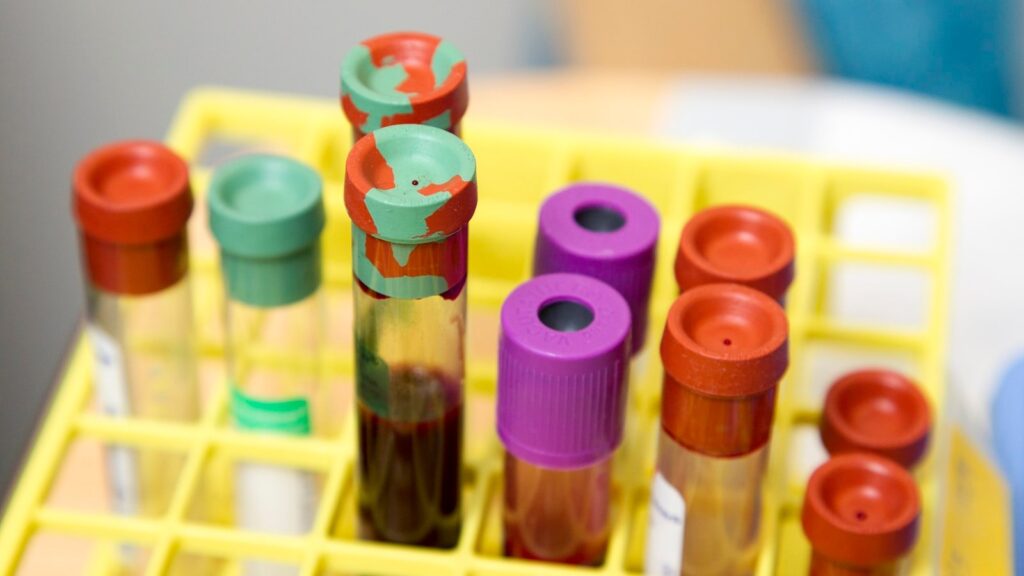
For most adults in whom pituitary disease is not suspected, TSH is the first screen. NICE recommends measuring TSH alone initially, then measuring free thyroxine, or FT4, in the same sample if TSH is above the reference range. If TSH is below range, FT4 and free triiodothyronine, or FT3, help assess possible overactivity. In suspected pituitary disease, TSH alone is not enough because the signal from the pituitary may be unreliable.
The National Institute of Diabetes and Digestive and Kidney Diseases makes the same point in patient language: hypothyroidism cannot be diagnosed from symptoms alone because many symptoms are shared with other diseases, so clinicians use blood tests and clinical assessment to confirm the diagnosis and look for the cause.
Thyroid peroxidase antibodies, often abbreviated to TPO antibodies, can help identify autoimmune thyroid disease when TSH is raised. They are not a weekly tracking metric. Biotin is another overlooked detail: high-dose biotin supplements can interfere with some thyroid assays, so NICE advises asking about biotin intake when thyroid dysfunction is suspected.
Overt, subclinical, and simply normal are different states
Overt primary hypothyroidism usually means TSH is high and FT4 is low. In that situation, treatment with levothyroxine is standard medical care, not wellness fine-tuning. The aim is to replace deficient hormone and bring thyroid-function tests back into, or close to, the reference range whilst symptoms are monitored.
Subclinical hypothyroidism is different: TSH is above range, but FT4 remains within range. This is where internet thyroid conversations often become overconfident. Some people with subclinical results do progress to overt disease, especially when antibodies are raised. Others remain stable or return to normal, particularly when the TSH elevation is mild or temporary.
The evidence for treating subclinical hypothyroidism is mixed and depends on age, TSH level, symptoms, pregnancy intentions, antibody status, and clinical context. A 2018 systematic review and meta-analysis in JAMA found that thyroid hormone therapy in non-pregnant adults with subclinical hypothyroidism was not associated with meaningful improvements in general quality of life or thyroid-related symptoms. That does not mean no individual ever benefits. It does mean that routine hormone treatment for mildly abnormal labs is not supported as a broad anti-fatigue strategy.
Why treatment is not a do-it-yourself project
Levothyroxine is effective when it is indicated, but the margin between enough and too much matters. Too much thyroid hormone can push the body towards palpitations, anxiety-like symptoms, bone loss, and atrial fibrillation, particularly in older adults. Too little leaves disease undertreated. That is why treatment decisions belong with a clinician who can interpret symptoms, medication timing, cardiovascular risk, pregnancy status, and repeat blood results together.
NICE advises against routinely offering liothyronine for primary hypothyroidism because evidence of benefit over levothyroxine alone is insufficient and long-term adverse effects are uncertain. It also advises against natural thyroid extract because evidence of benefit is insufficient and safety is uncertain. Those cautions are important because online thyroid spaces often frame T3-containing products or glandular extracts as more “natural” or more complete. Natural does not mean safer, and a stronger hormone signal is not automatically a better one.
Iodine deserves the same restraint. Iodine is required for thyroid hormone production, but high intakes from kelp, seaweed, or supplements can worsen thyroid problems in susceptible people, including some with autoimmune thyroid disease. Selenium and other micronutrients are being studied, but supplements should not be sold to readers as thyroid treatment.
What this means in practice
- Treat a symptom list as a reason to look for patterns, not as proof that your thyroid is the cause.
- If fatigue, cold intolerance, constipation, dry skin, low mood, menstrual change, or brain fog persist together, discuss thyroid testing with a GP or qualified clinician.
- Ask what your TSH and FT4 results mean together; a single number rarely tells the whole clinical story.
- Tell the clinician about biotin, iodine, kelp, “thyroid support” supplements, amiodarone, lithium, and any thyroid medicines before testing or treatment decisions.
- Do not start, stop, or change levothyroxine, liothyronine, or thyroid extract without medical oversight.
- If results are borderline, ask whether repeat testing, antibody testing, monitoring, or a time-limited treatment trial is appropriate for your age and risk profile.
What we don’t know
The weakest area is not whether overt hypothyroidism exists; that is well established. The uncertainty is how to interpret mildly abnormal results in people with common symptoms, especially when FT4 is normal. Trials and meta-analyses suggest that routine thyroid hormone therapy does not reliably improve symptoms in subclinical hypothyroidism, but some groups are under-studied, and individual clinical decisions can still differ.
Women’s hormonal health also remains unevenly studied. Perimenopause, post-partum thyroiditis, autoimmune disease, menstrual changes, and mood symptoms can overlap in ways that are easy to flatten into either “just hormones” or “nothing to worry about”. Neither response is good medicine. The better answer is careful testing, repeat measurement when appropriate, and humility about what symptoms alone can prove.
The thyroid can be the missing piece. It can also be a distraction from sleep, iron status, depression, medication effects, or metabolic disease. The safest interpretation is evidence-led: symptoms open the door, but diagnosis needs blood tests, context, and a clinician who is willing to look at the whole pattern.
Photo: National Cancer Institute on Unsplash.