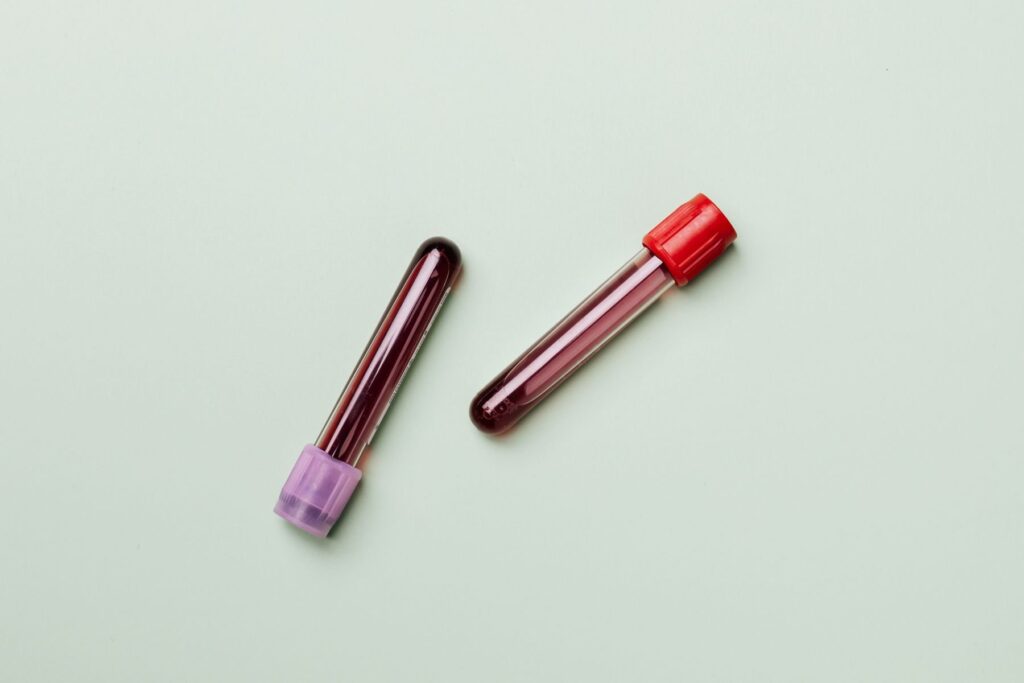
Biotin looks harmless because it is a vitamin, not a hormone. The problem is that some thyroid blood tests do not measure thyroid biology alone; they measure a laboratory signal that high-dose biotin can disturb. That distinction matters for anyone interpreting TSH, free T4, or free T3 after taking a hair, skin, or nail supplement.
The thyroid result is not always the thyroid
Thyroid testing is often treated as clean arithmetic: high TSH points one way, low TSH points another. In primary thyroid disease, guidance such as the NICE thyroid disease guideline still centres assessment on TSH with thyroid hormone measurements such as free T4 when needed. That is sensible clinical practice, but it assumes the assay itself is behaving.
Biotin interference is a laboratory problem, not a new thyroid disorder. It can make a blood sample appear more hyperthyroid than the person is, especially when the assay design uses the biotin-streptavidin binding system. The American Thyroid Association explains the practical pattern clearly: biotin can produce falsely high T4 or T3 and falsely low TSH, creating the appearance of too much thyroid hormone.
That is why the context around a thyroid panel matters. The American Thyroid Association’s guide to thyroid function tests describes TSH as a sensitive marker of thyroid status and free T4 as the hormone measurement often interpreted alongside it. When those values move in opposite directions because of assay interference, the clinical story can look persuasive even when the biology is unchanged.
Why a supplement can confuse an assay
Biotin, also known as vitamin B7, is present in food and is required in tiny amounts. Supplement doses are a different matter. Products marketed for hair and nails commonly contain milligram quantities, far above ordinary dietary intake. In many immunoassays, biotin is not the target being measured; it is part of the chemistry used to capture or signal the target.
When there is too much circulating biotin, that chemistry can be crowded out. In sandwich assays, such as many TSH tests, excess biotin can push the reported value downward. In competitive assays, including some thyroid hormone tests, it can push the reported value upward. Singapore’s Health Sciences Authority explains in its biotin interference with thyroid function tests safety alert that the direction of the error depends on the assay design, with sandwich assays and competitive assays affected differently.
The misleading pattern clinicians worry about
The classic biotin-distorted thyroid panel is low TSH with normal or high free T4 or T3. On paper, that may resemble hyperthyroidism, over-replacement with levothyroxine, or a need to reduce thyroid medication. In the body, nothing may have changed. The risk is not theoretical: it is a wrong treatment decision built on a wrong signal.
The American Thyroid Association summary of a 10,000 mcg biotin study notes that this commonly sold dose can falsely change TSH, free T4, total T3, and thyroglobulin results on some laboratory methods. It also emphasises that not all methods are affected in the same way, which is why a normal result at one laboratory does not prove that every thyroid assay is immune.
The danger is especially easy to miss because the result may look internally coherent. A person with palpitations and a low TSH may appear to have a straightforward endocrine explanation. A person taking levothyroxine may appear over-treated. A person being monitored after thyroid cancer treatment may appear to have a change in thyroglobulin. In each case, the supplement history can change the interpretation before any diagnosis changes.
This is bigger than thyroid testing
Thyroid tests are the example many patients notice because the results are common and easy to track. Regulators have been worried about the broader assay problem for years. The US Food and Drug Administration says it has continued to receive adverse-event reports involving biotin interference, including concern about falsely low troponin results in heart-attack assessment, in its biotin interference safety communication.
That does not mean every person taking biotin is unsafe, or that every test result should be dismissed. It means supplement history belongs in the same conversation as medication history. A clinician cannot interpret a hormone panel well if the laboratory has not been told about a compound that may alter the readout.
How long to stop biotin is not one-size-fits-all
The most quoted patient advice is to stop biotin before thyroid testing. The American Thyroid Association has advised patients to stop for at least two days before thyroid tests to reduce the risk of misleading results. Some laboratories or clinicians may recommend longer, especially after high-dose use, kidney disease, or a result that does not fit the clinical picture.
The important point is not to self-manage a washout if the test is urgent or if biotin is being used for a diagnosed deficiency. Tell the clinician and the laboratory what you take, the dose on the bottle, and when you last took it. A repeat test after an agreed washout is often simpler and safer than treating a surprising result as a new endocrine diagnosis.
Timing also matters because most people do not think of a beauty supplement as a medicine. They may stop prescription tablets before fasting blood work if told to do so, yet keep taking a gummy or capsule because it feels unrelated. The practical fix is administrative rather than dramatic: add supplements to the pre-test checklist and ask the laboratory whether its assay is vulnerable.
Who should be especially careful
People taking levothyroxine, antithyroid medicine, or being monitored after thyroid cancer treatment have more at stake because small test changes may alter clinical decisions. So do people being evaluated for palpitations, unexplained weight change, heat intolerance, fatigue, or menstrual changes, where thyroid results can steer the next step.
There is also a sex-specific blind spot. Women are more likely to buy hair, skin, and nail supplements, and thyroid disease is more common in women than men. That overlap creates an easy route to confusion: a supplement taken for hair shedding may distort a test ordered to investigate the same symptom.
What this means in practice
- Write down every supplement before thyroid testing, including the biotin dose and the time of the last dose.
- Ask the ordering clinician whether biotin should be paused before the blood draw and for how long.
- Do not change thyroid medication because of one surprising result without discussing possible assay interference.
- If TSH and thyroid hormone results do not match symptoms, ask whether the laboratory method is vulnerable to biotin.
- Bring the supplement bottle or a photograph of its label to the appointment if the dose is unclear.
What we do not know
The evidence is strongest that biotin can interfere with certain assays under certain conditions. It is weaker on the everyday frequency of clinically important harm, because the problem depends on dose, timing, kidney clearance, and the laboratory platform. A low-dose multivitamin is not the same exposure as a 10,000 mcg beauty supplement.
Nor does a possible assay problem explain every abnormal thyroid panel. Genuine hyperthyroidism, hypothyroidism, pregnancy-related thyroid changes, pituitary disease, medication effects, and acute illness can all alter results. Biotin should be considered when the pattern is odd, but it should not become a convenient way to ignore real thyroid disease.
Biotin is not a thyroid hormone, but it can imitate a thyroid signal on paper. That is enough reason to mention it before the blood draw, not after the result has already shaped the diagnosis.
Photo: Kaboompics.com on Pexels.