Selenium has a credible biological job and a much less certain role as a supplement. That distinction matters when a tablet promises thyroid support or protection against ageing. Trials have measured changes in thyroid antibodies without showing the improvement in daily life readers might expect. The useful question is what taking extra selenium achieves, and what risks accompany the dose.
A necessary nutrient does not establish a treatment
The NHS guide to selenium lists its roles in immune function, reproduction, and protection of cells and tissues. For adults aged 19–64, it gives daily requirements of 75 micrograms for men and 60 micrograms for women. These are nutritional reference amounts, not tablet prescriptions.
The same guidance lists fish, meat, eggs, and Brazil nuts as sources, and says a varied, balanced diet should provide what is needed. That is the starting point for evaluating a purchase: what problem is the product intended to solve? Meeting a nutritional requirement and treating a diagnosed illness are different propositions. A label should not be allowed to slide between them.
The biological rationale makes research reasonable. It does not settle whether a product works. The clinical evidence has to answer that separately.
Thyroid antibodies can move without resolving symptoms
In Valentina Huwiler and colleagues’ 2024 review in Thyroid, 35 studies examined selenium in Hashimoto thyroiditis. Pooled results showed a small reduction in thyroid-stimulating hormone, or TSH, amongst participants who were not taking thyroid hormone replacement. Thyroid peroxidase antibodies also fell, although results differed substantially between studies.
There was no significant pooled change in several other measurements, including free thyroid hormone levels and thyroid volume. The review rated the overall evidence as moderate certainty. These findings deserve attention, but they need their original labels: laboratory outcomes in people with a particular thyroid condition.
A reduction in an antibody concentration does not, by itself, demonstrate that someone feels better, needs less medicine, or avoids future illness. Those are separate outcomes requiring separate evidence. When a product advertisement presents a falling antibody result as proof of successful treatment, ask which of those outcomes was actually measured.
The trial that asked about daily life
The 2024 CATALYST trial in the European Thyroid Journal addressed a more direct question. Camilla Larsen and colleagues randomly assigned 412 adults with autoimmune thyroiditis to selenium or placebo, alongside their levothyroxine treatment. The intervention was 200 micrograms daily as selenium-enriched yeast for 12 months. This describes a research dose and form, not a suggested regimen.
Quality of life improved in both groups, with no additional benefit from selenium. Antibody levels were lower in the selenium group, but levothyroxine dosage was not reduced. In other words, the blood-test change and the patient-reported result told different stories.
This trial cannot answer every question about every thyroid patient. Its importance is narrower and practical: for the population studied, adding this preparation did not improve quality of life beyond placebo. Someone considering the same purchase deserves to hear that result alongside the antibody findings.
Cancer prevention claims failed the stronger test
The gap between plausible biology and demonstrated benefit appears elsewhere. A 2018 Cochrane review of selenium for cancer prevention included 10 randomised trials and 70 observational studies. High-quality trials found no reduction in overall cancer risk or in the individual cancers assessed.
Some observational research had linked higher selenium exposure with lower cancer rates. Such comparisons cannot reliably separate selenium from other differences between people. Randomised trials therefore carried more weight in the review’s conclusion.
There were also harm signals, including concerns about high-grade prostate cancer in some participants with high baseline selenium status, and type 2 diabetes. These findings do not mean every user will develop those conditions. They do undermine the argument that taking extra is a harmless precaution.
The review’s search ended in January 2017. It is evidence about cancer prevention, not a trial proving or disproving every possible claim about lifespan. Neither a mechanistic explanation nor an attractive observational association can supply the missing clinical result.
The dose includes everything you swallow
The NIH Office of Dietary Supplements’ selenium fact sheet, updated in September 2025, lists forms including selenomethionine, selenium-enriched yeast, sodium selenite, and sodium selenate. Evidence for a specified preparation should not become a blanket endorsement of every product on the shelf.
NIH also notes that Brazil nuts have high and variable selenium concentrations. Treating a fixed number of nuts as a precisely measured daily supplement is therefore unreliable. A capsule, a multivitamin, and food all contribute to exposure; the number on one bottle is only part of the picture.
Chronic excess can cause selenosis, with hair loss, brittle or lost nails, gastrointestinal symptoms, and nervous-system abnormalities amongst the possible effects. If they appear during supplementation, seek clinical advice and bring the packaging. Severe illness or a suspected large accidental ingestion warrants urgent medical help.
Safety limits are not intake goals
A 2023 assessment in EFSA Journal set an adult upper intake level of 255 micrograms a day, counting all dietary sources. It includes pregnant and breastfeeding adults. The assessment used hair loss as the critical adverse effect and incorporated an uncertainty factor.
Published guidance is not uniform. The NHS page says 350 micrograms or less daily from supplements is unlikely to cause harm, whilst NIH reports a US adult upper limit of 400 micrograms from all sources. These figures have different scopes and assessment histories; they should not be treated as interchangeable allowances.
None is a target to approach. For illustration, a 200-microgram tablet plus a multivitamin containing 55 micrograms already totals 255 micrograms before food. That arithmetic explains why comparing a single tablet with a safety ceiling can mislead. It does not establish an individually safe dose. A pharmacist or clinician can review the complete intake and the reason for taking it.
What this means in practice
- Photograph the labels of supplements you use and check whether selenium appears in more than one. Record the amount per daily serving, not just per capsule.
- Take that list to a pharmacist if you are considering adding selenium. Include medicines and any regular Brazil-nut habit so the discussion covers total exposure.
- If a claim mentions thyroid antibodies, ask whether the study also showed better symptoms or quality of life. CATALYST illustrates why the distinction matters.
- Discuss persistent thyroid symptoms with the clinician managing your care. Do not replace or reduce prescribed treatment on the strength of a supplement claim.
- If selenium was prescribed for a specific clinical reason, ask the prescriber about its purpose, duration, and monitoring before changing it. This article is not an individual treatment review.
What we don’t know
The thyroid review leaves questions about which patient groups, baseline selenium levels, preparations, and treatment durations might matter. Its biochemical findings do not establish a general approach for improving symptoms. CATALYST provides a valuable answer for treated autoimmune hypothyroidism, but cannot establish what happens in every deficient population or over many years.
EFSA also called for better biomarkers of selenium exposure and effects, and further investigation of the relationship between excess intake and diabetes. Uncertainty about the precise boundary of harm is a reason for care, not permission to assume a wider margin.
Evaluate selenium as you would any proposed treatment: define the problem, identify a meaningful outcome, and weigh the evidence against the exposure. An essential nutrient still needs a convincing reason to become an extra daily tablet.
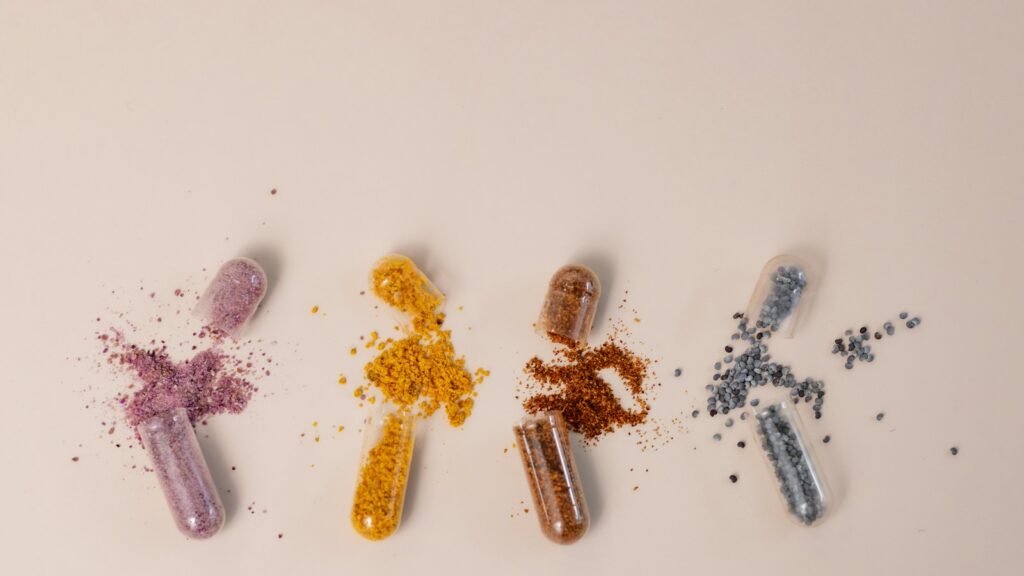
Photo: laura adai on Unsplash. Illustrative capsules; not a photograph of a verified selenium product.