Creatine has earned its reputation in the weight room, but the more interesting question is whether the same compound has credible uses outside it. The answer is promising but uneven: creatine monohydrate is well supported for muscle performance, plausible for brain energy under some conditions, and still far from proven as a longevity supplement.
The compound is not the same as the product
Creatine is a nitrogen-containing compound made in the body and obtained from foods such as meat and fish. In muscle and brain tissue, it helps recycle adenosine triphosphate, the cell’s immediate energy currency, through the creatine-phosphocreatine system. That mechanism is why the supplement first became interesting to athletes: it can support short bursts of high-intensity work where rapid energy turnover matters.
But Theo Marsh’s rule for supplements applies neatly here: separate the molecule from the jar. The strongest evidence concerns creatine monohydrate, not every flavoured powder, capsule, gummy, or proprietary blend sold under the creatine banner. A 2017 position stand in the Journal of the International Society of Sports Nutrition concluded that creatine monohydrate is the most studied and clinically effective form for increasing muscle creatine stores and supporting high-intensity exercise capacity.
The muscle evidence is the baseline
The best-established use remains physical performance. Creatine monohydrate does not build muscle by itself; it tends to work when paired with resistance training or repeated high-intensity effort. In that setting, the evidence base is much stronger than it is for most over-the-counter supplements. The same ISSN review describes typical maintenance intakes of 3-5 grams per day after an optional loading phase, and notes that smaller daily intakes can raise muscle creatine more gradually over several weeks.
That matters for ageing because muscle is not cosmetic tissue. Loss of strength, power, and lean mass is tied to frailty risk, falls, and poorer metabolic health. Creatine’s most credible longevity angle is therefore indirect: it may help some adults train harder, recover capacity, or preserve lean tissue when the exercise programme is already in place. That is not the same as saying creatine extends lifespan. It is a narrower, more defensible claim.
The brain case is biologically plausible
The brain is an energy-demanding organ, and creatine is involved in brain energy metabolism. That gives the cognitive claim a plausible mechanism. The question is whether oral supplementation reliably changes cognitive performance in real adults, not whether the biochemistry sounds attractive.
Here the evidence becomes more tentative. A 2024 systematic review and meta-analysis in Frontiers in Nutrition pooled randomised trials in adults and reported possible benefits in some cognitive domains, particularly memory and processing speed, whilst finding no clear effect on overall cognitive function or executive function. The review included small studies with different populations, doses, and testing methods, which makes a single confident headline inappropriate.
The signal may be stronger in situations where brain energy stress is higher, such as sleep loss, low habitual creatine intake, or older age. Even there, the product label should not outrun the trial data. A cognitive benefit is plausible; a broad promise of sharper thinking is not.
Older adults are the most relevant group
For longevity readers, the older-adult question is more useful than the young-athlete question. A 2025 systematic review on creatine and cognition in ageing adults found that the research base remains sparse and inconsistent, with few randomised intervention studies that isolate creatine from exercise or diet. That does not dismiss the idea. It means the next step is better trials, not stronger marketing.
Older adults may also respond differently because baseline diet, muscle mass, activity level, sex, and health status influence creatine turnover and storage. Someone who eats little meat or fish may not start from the same baseline as someone with a high-creatine diet. A person doing progressive resistance training may see different outcomes from someone taking creatine without changing activity. Those distinctions are usually absent from supplement advertising, but they are central to interpreting the evidence.
Dose, form, and label quality matter
The boring form is the one with the best record: creatine monohydrate. Common protocols use either 3-5 grams per day without loading, or a short loading phase followed by maintenance dosing. Loading is not a moral requirement; it is mainly a faster route to higher muscle stores and can be harder on the gut for some people.
More exotic forms are often sold as easier to absorb or more advanced. The clinical case for paying extra is weak. The more practical quality question is whether the product contains what it claims, at the amount stated, and without undeclared ingredients. That is a general supplement-market problem rather than a creatine-specific one. Readers who use supplements should favour products with credible third-party testing, clear monohydrate labelling, and no stimulant blends hidden behind broad “performance” language.
Safety is reassuring, with important caveats
In healthy adults, creatine monohydrate has a relatively reassuring safety record at conventional doses. The 2017 ISSN review reports no compelling evidence of harm in otherwise healthy people when creatine is used within studied ranges, and a 2025 systematic review and meta-analysis on kidney function found no significant change in glomerular filtration rate across included studies, although serum creatinine can rise modestly because creatine breaks down into creatinine.
That last point is easy to misread. Creatine can make a blood creatinine result look different without necessarily showing kidney damage, but anyone with chronic kidney disease, reduced eGFR, a kidney transplant, unexplained abnormal renal markers, or medicines that affect kidney function should discuss supplementation with a clinician before use. The same caution applies during pregnancy, breastfeeding, adolescence, active cancer treatment, or complex neurological and psychiatric care. A supplement with a good safety record is not automatically appropriate for every medical situation.
What this means in practice
- Treat creatine monohydrate as the evidence-based form; be sceptical of expensive “advanced” versions without comparative human data.
- If using it, conventional adult intakes are usually in the 3-5 gram per day range; loading is optional and may increase stomach discomfort.
- Expect the most reliable benefit to be training-related, especially alongside resistance exercise, not a stand-alone anti-ageing effect.
- Read cognition claims narrowly: memory or fatigue signals in some contexts are not proof of broad brain enhancement.
- Choose products with third-party testing and simple ingredient lists, particularly if competing in sport or avoiding undeclared stimulants.
- Ask a clinician first if you have kidney disease, abnormal renal blood tests, pregnancy-related questions, or complex medication use.
What we don’t know
The biggest unknown is not whether creatine is biologically interesting; it is whether supplementation produces meaningful, durable outcomes outside muscle performance. A 2026 commentary in Frontiers in Nutrition argued that the 2024 cognitive meta-analysis may have over-weighted non-independent test outcomes, and noted EFSA’s concern that no firm conclusion could be drawn from that dataset.
We also do not know which older adults, if any, are most likely to gain cognitive or functional benefit independent of training. Future studies need larger samples, longer follow-up, objective measures of creatine status, and cleaner separation between creatine, exercise, protein intake, and baseline diet. Until then, the honest position is moderate: creatine monohydrate is unusually well supported for a supplement, but the longevity case still depends mostly on helping people maintain muscle and train effectively.
Creatine deserves more respect than most supplement claims, and less mythology than it often receives. The compound is solid; the broader promises still need better evidence.
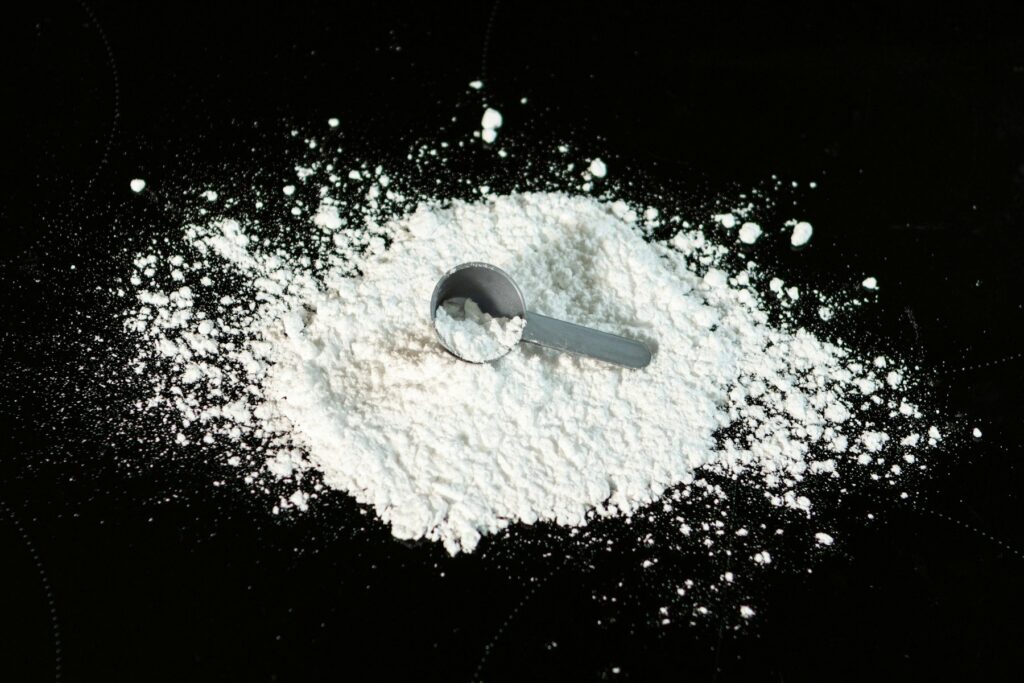
Photo: Alex Saks on Unsplash.