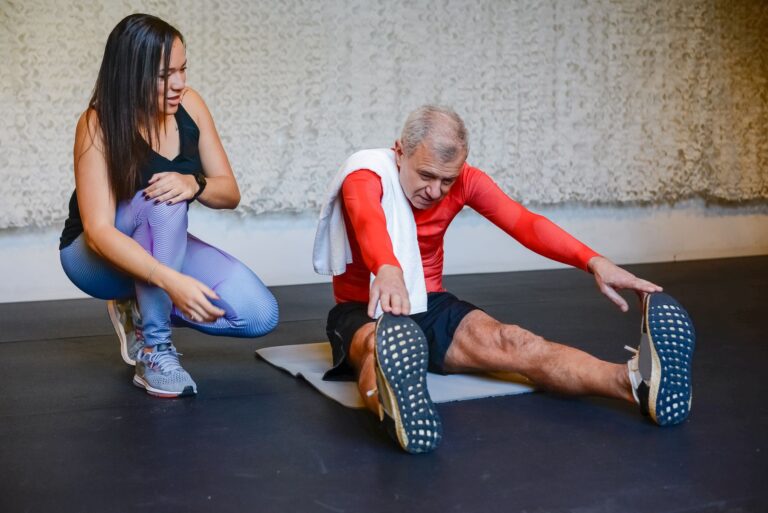
Balance training is often sold as a simple answer to falls in later life. The evidence is more useful, and less tidy, than that. Programmes that challenge balance, strength, and everyday movement can reduce falls in older adults, but they do not make anyone fall-proof. The practical question is how to train balance without turning a sensible habit into a risky stunt.
Why balance deserves its own place in training
Balance is not one thing. It is a negotiation between vision, the vestibular system in the inner ear, sensation from the feet and joints, reaction speed, muscle strength, and attention. That is why someone can walk well on a flat pavement and still feel uncertain on stairs, wet grass, or a crowded kitchen.
Age changes that system unevenly. A 2024 cross-sectional study in PLOS One found that one-leg standing time declined with age in healthy adults over 50, and appeared to change more clearly than some strength and gait measures. That does not make a one-leg stand a diagnosis. It does suggest that balance is a sensitive part of physical ageing, and one that ordinary gym routines can miss.
Most adults already know to walk, lift, and stretch. Balance work is easier to neglect because it feels small. A few minutes near a kitchen counter does not look like training in the same way a heavy set or a brisk hill walk does. But for older adults, the ability to recover from a wobble can matter as much as the ability to produce force.
What the fall-prevention evidence actually says
The strongest case for balance training comes from fall-prevention research, not from longevity marketing. A 2019 Cochrane review of exercise for preventing falls concluded that exercise reduces both the rate of falls and the number of people who fall among community-dwelling older adults. Programmes that mainly involved balance and functional exercises had the clearest evidence.
That last phrase matters. The evidence is not simply “do any exercise”. Walking is valuable for health, and resistance training is valuable for muscle and function, but fall-prevention programmes usually ask the body to practise the awkward business of staying upright: narrowing the base of support, stepping in different directions, turning, rising from a chair, and controlling movement when attention is divided.
The WHO physical activity guidelines make a similar distinction. They recommend that older adults include varied, multicomponent physical activity with functional balance and strength training on three or more days a week, when possible, to support function and help prevent falls.
None of this means balance training can cancel out medication side-effects, poor vision, dizziness, neuropathy, unsafe flooring, or osteoporosis. Falls usually have more than one cause. Exercise is one lever, and often a good one. It is not the whole system.
Why strength still belongs in the picture
Balance is not separate from strength. Standing from a chair, catching yourself after a trip, and stepping sideways all require force from the hips, thighs, calves, and trunk. A person may understand where their body is in space but still lack the strength or speed to act quickly enough.
This is why the better programmes tend to combine balance with functional strength rather than treating them as rival categories. Sit-to-stand work, step-ups, heel raises, loaded carries, and controlled changes of direction all train the body to produce force in positions that resemble daily life. They are less dramatic than a wobble board, but often more relevant.
For adults who are already lifting, the missing ingredient may be task variety. A leg press builds useful strength, but it does not ask someone to turn, reach, or step onto an uneven kerb. For adults who are not lifting, balance drills alone may be too narrow. The body needs both the information to stay upright and the capacity to respond.
The safe version is deliberately unglamorous
The internet version of balance training often jumps to standing on one leg with eyes closed, balancing on unstable surfaces, or adding weights before the basic skill is reliable. That may be fine for some athletic adults. It is not the starting point for someone with a history of falls, dizziness, low blood pressure on standing, new weakness, or a medication change.
NHS Inform advises people who already use falls-prevention exercises from a physiotherapist, occupational therapist, or falls specialist to continue unless they are injured or their health changes, and notes that some medical conditions can make certain activities unsuitable. Its falls-prevention exercise guidance is a useful reminder that safer training often means supervised, boring, repeatable work rather than novelty.
A cautious progression might begin with standing feet hip-width apart near a stable support, then narrowing the stance, then practising tandem stance, then slow weight shifts, then supported single-leg holds. The test is not whether the exercise looks impressive. It is whether the person can practise it without panic, pain, or a realistic chance of hitting the floor.
Tai chi is credible, but not magic
Tai chi deserves mention because it appears repeatedly in fall-prevention research. The Cochrane review found that tai chi may reduce the rate of falls, though the certainty and size of effect vary by comparison and population. Its appeal is not mysterious: it trains slow weight transfer, attention, posture, and controlled stepping.
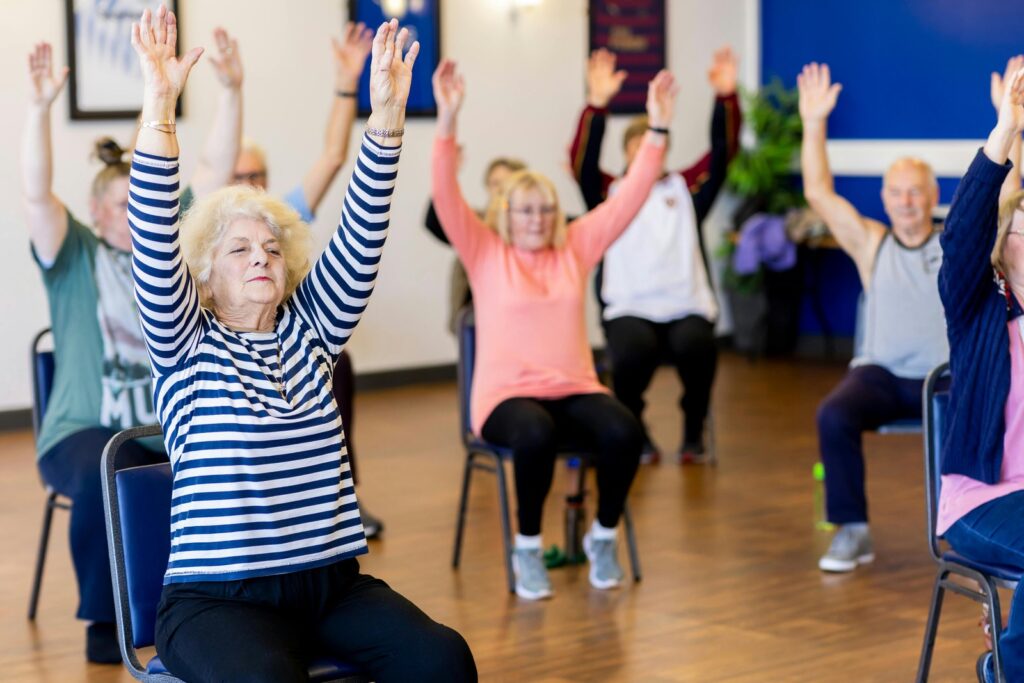
Still, tai chi is a method, not a guarantee. A class that is too advanced, too crowded, or poorly matched to someone’s mobility may be the wrong fit. Some people will do better with a physiotherapist-led falls programme, a chair-based class, or individual exercises at home. Others may enjoy tai chi enough to keep doing it, which is not a trivial advantage. The best fall-prevention exercise is rarely the one with the most elegant theory. It is the one a person can do safely and consistently.
When to get clinical help first
Balance training should be medically cautious because losing balance is sometimes a symptom, not just a training gap. Sudden dizziness, fainting, one-sided weakness, new numbness, chest pain, shortness of breath, a recent fall with injury, or a rapid change in walking all deserve clinical advice rather than a new home exercise routine.
Medication review can also matter. Sedatives, some blood pressure medicines, alcohol, and combinations of several medicines can increase fall risk. Vision checks, footwear, hearing, foot pain, and home hazards are part of the same picture. Exercise may improve capacity, but it cannot make a loose rug or a dizzy spell irrelevant.
People with osteoporosis, Parkinson’s disease, stroke history, neuropathy, severe arthritis, or known heart or lung disease may still benefit from movement. They may also need an individualised plan. The cautious message is not “avoid balance training”. It is “match the challenge to the person”.
What this means in practice
- Practise balance near a stable support, such as a kitchen counter, especially when trying a new drill.
- Use simple progressions: narrow stance, tandem stance, weight shifts, step-taps, and supported single-leg holds before unstable surfaces.
- Pair balance with leg strength, including sit-to-stand practice, heel raises, step-ups, or other exercises suited to your current capacity.
- Consider a supervised class or physiotherapist-led programme if you have fallen, feel afraid of falling, or have a condition that affects walking.
- Treat dizziness, fainting, sudden weakness, chest symptoms, or repeated falls as reasons to seek medical advice before progressing.
What we don’t know
Fall-prevention trials tell us that exercise programmes can reduce falls on average. They do not tell every person exactly which drill they need, how quickly to progress, or how much benefit they will get. Studies also vary in supervision, duration, adherence, and the baseline risk of participants. A healthy 55-year-old who wants better one-leg stance is not the same as an 82-year-old recovering confidence after a fall.
The long-term maintenance question is also harder than the initial training question. Balance improves with practice, but it can fade when the practice stops. That makes balance less like a badge to earn and more like brushing teeth: small, repeated, and easy to underestimate until it is missing.
Balance training after 50 is worth taking seriously, but not because it promises immunity from falls. Its value is more practical than that: it gives the body regular chances to rehearse steadiness, strength, and recovery before daily life demands them unexpectedly.
Photo: Centre for Ageing Better on Pexels.