Chronological age is simple: it is the number of years since birth. Biological age is more ambitious. It tries to ask whether cells, tissues, or organ systems appear older or younger than expected for that number. The science is useful, especially in research. The harder question is whether one result can reliably guide an individual health decision.
Why chronological age is not the whole story
Two people can both be 55 and yet have very different cardiovascular risk, muscle function, glucose handling, cognitive resilience, and inflammatory profiles. Clinicians have always recognised this gap. A frail 55-year-old and a robust 75-year-old may sit in very different places biologically, even if the calendar says otherwise.
That difference is the promise behind biological-age testing. Instead of asking only how long someone has lived, a clock tries to infer how much age-related change is visible in measurable biology. Some clocks use blood chemistry. Some use DNA methylation. Others use proteins, metabolites, immune markers, imaging, or combinations of these data. The common aim is to compress many signals into a single estimate.
The compression is also the problem. A single age-like number is easy to understand, but it can hide which system is driving the result. A higher biological-age estimate might reflect inflammation, smoking history, kidney markers, immune-cell composition, technical noise, or a model trained on a population unlike the person being tested. The number is not a diagnosis.
What epigenetic clocks actually measure
The best-known biological-age tools are epigenetic clocks. These use patterns of DNA methylation, chemical marks that help regulate gene activity without changing the DNA sequence itself. In 2013, Steve Horvath published a multi-tissue DNA methylation clock in Genome Biology, showing that methylation patterns across many tissues could estimate chronological age with striking accuracy.
That was a technical landmark, but it is worth being precise about what it showed. Early clocks were very good at estimating age from tissue samples. They did not automatically prove that a person with an older methylation age was destined for disease, nor that a younger methylation age meant an intervention had worked. The clock was a model trained on patterns in data.
Later clocks shifted the target. Some were trained to predict mortality-related outcomes or clinical biomarkers rather than calendar age alone. Others, such as DunedinPACE, were designed to estimate the pace of ageing rather than accumulated age. In the DunedinPACE paper in eLife, Belsky and colleagues derived a DNA methylation measure from two decades of organ-system data in the Dunedin birth cohort, then tested it in other datasets. That makes it conceptually different from a simple “how old do your cells look?” readout.
Why different tests can give different answers
Biological age is not one thing measured by one instrument. A blood-chemistry calculator, a saliva methylation test, a proteomic clock, and an MRI-based brain-age model may each be asking a different biological question. They may all be marketed under the same label, but their inputs, training data, error margins, and intended uses differ.
That is why two tests can disagree without one being fraudulent. A blood-based phenotypic age score may be sensitive to albumin, glucose, kidney function, inflammatory markers, and white-cell counts. A DNA methylation clock may be sensitive to methylation sites, tissue source, immune-cell composition, laboratory processing, and the statistical choices behind the model. A brain-age estimate may be most informative about neural structure, not metabolic health.
A 2024 systematic review and meta-analysis in Ageing Research Reviews catalogued hundreds of reported associations between epigenetic age acceleration and physiological, cognitive, social, and environmental factors. That breadth is scientifically useful. It also underlines how heterogeneous the field is: different clocks, different exposures, different populations, and different outcomes are often being grouped under one convenient phrase.
What a biological-age result can usefully tell you
At its best, a biological-age result can be a research-grade summary of risk-relevant biology. In cohorts, people with more advanced or faster epigenetic ageing often show higher rates of age-related disease, functional decline, or mortality. These associations are why the field matters.
For an individual, the most reasonable interpretation is narrower. A result may raise a question worth discussing: are standard clinical markers being missed, is cardiovascular risk adequately assessed, is sleep apnoea possible, is inflammation persistent, are medications or illnesses affecting the result? The test may prompt a more careful look at established measures, but it should not replace them.
This distinction matters because established clinical biomarkers already have interpretation ranges, repeat-testing norms, treatment thresholds, and evidence-based pathways. Blood pressure, HbA1c, ApoB, kidney function, liver enzymes, bone density, and cardiovascular risk scores are imperfect, but they sit inside clinical systems built to act on them. Most biological-age clocks do not yet have that infrastructure.
Where the clinical utility is still limited
The strongest caution is that biological-age tests are much better validated for groups than for personal decision-making. A recent peer-reviewed article, “From population science to the clinic? Limits of epigenetic clocks as personal biomarkers”, argues that current epigenetic clocks face technical and biological barriers before they can be treated as individual clinical tools.
The concerns are practical, not philosophical. Sample type matters. Laboratory batch effects matter. Data-preprocessing choices matter. The population used to train a model matters. Methylation patterns vary by tissue and can be influenced by environmental and social exposures. A clock may be valid for comparing averages across groups whilst still being too noisy, context-dependent, or poorly calibrated to tell one person what to do next.
There is also a medical-risk problem. If someone treats a favourable result as proof they can ignore high blood pressure, high ApoB, poor glucose control, or symptoms, the test has become harmful. The reverse is also true: an unfavourable biological-age result can create anxiety and drive unnecessary supplements, extreme fasting, unproven interventions, or medication changes. None of those should follow from a clock result alone.
How to read a test report cautiously
The first question is what the report actually measures. “Biological age” may mean methylation age, phenotypic age, pace of ageing, organ age, brain age, immune age, or a proprietary blend. The second question is what outcome the model was trained to predict. A clock trained to estimate chronological age is not the same as one trained against mortality risk or longitudinal physiological decline.
The third question is whether the result is repeatable enough to matter. A change of two or three “biological years” may sound dramatic, but it may sit inside the variation created by sample handling, illness, recent exercise, infection, cell-type shifts, or platform differences. Unless a test publishes meaningful error margins and repeatability data, small changes should be treated cautiously.
The fourth question is whether the result changes anything beyond standard care. If a report encourages established basics, such as checking blood pressure, reviewing cardiometabolic risk, improving sleep regularity, resistance training, and not smoking, the clock may be acting mostly as an expensive motivator. If it recommends specific interventions, the evidence threshold should be much higher.
What this means in practice
- Treat biological-age tests as research-adjacent information, not as diagnoses or proof that an intervention has worked.
- Do not stop, start, or change prescribed medication because of a biological-age result without a qualified clinician reviewing the full clinical picture.
- If testing, compare like with like: the same test type, similar sample conditions, and enough time between tests to make change plausible.
- Give more weight to validated clinical markers, such as blood pressure, ApoB, HbA1c, kidney function, and symptoms, than to a single clock number.
- Be wary of reports that turn a biological-age estimate into supplement bundles, anti-ageing promises, or personalised treatment claims without transparent evidence.
What we don’t know
We do not yet know which biological-age clocks, if any, should become routine personal medical tools. The field still needs clearer clinical thresholds, better reproducibility across laboratories, stronger validation in diverse populations, and trials showing that acting on a clock result improves outcomes beyond standard risk assessment.
We also do not know how best to communicate these results without causing fatalism or false reassurance. A clock may reflect biology, environment, social exposure, technical variation, and health status at once. Turning that mixture into a single number can make it feel more certain than it is.
The sensible position is neither dismissal nor hype. Biological-age science is one of the most interesting areas in longevity research. For now, its strongest use is helping researchers understand ageing patterns across populations and trials. For an individual, the calendar still matters, conventional clinical markers still matter more, and any biological-age result should be read as a prompt for careful questions rather than a verdict.
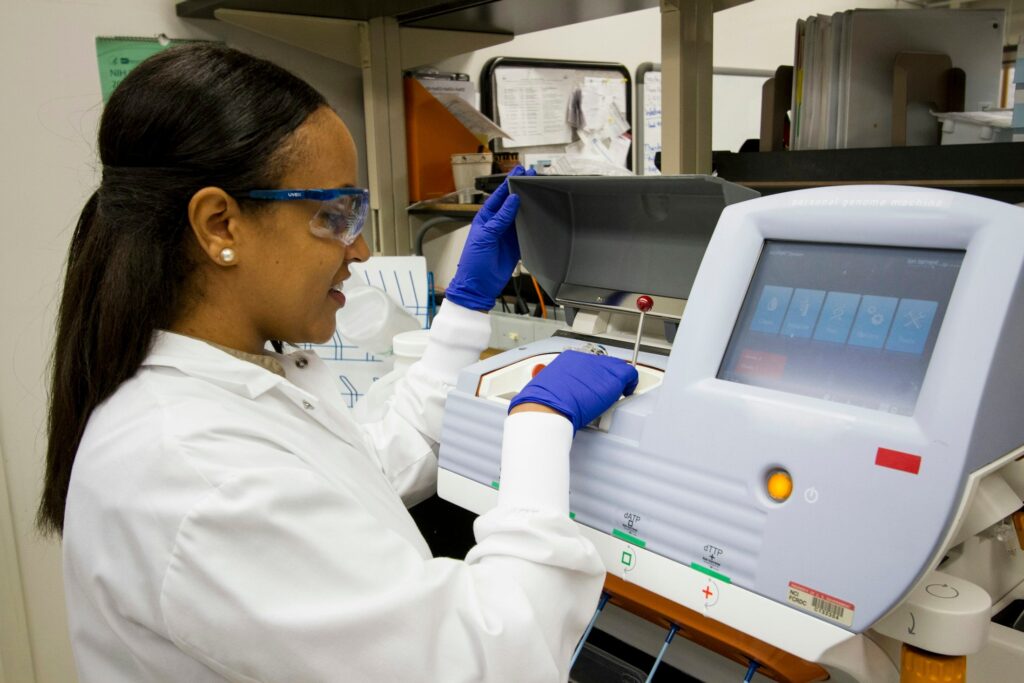
Photo: Daniel Sone / National Cancer Institute on Unsplash.