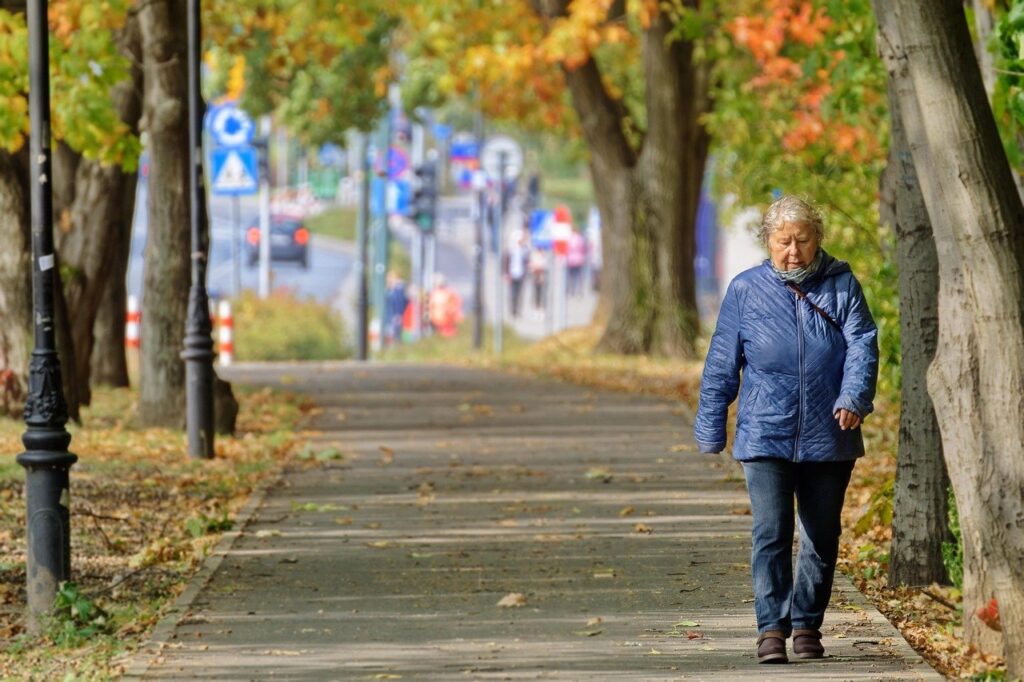
Walking speed looks too ordinary to deserve much medical attention. It is not a diagnosis, and it is not a longevity score. But in older adults, the pace someone can comfortably sustain across a short distance can reveal something important: how well strength, balance, nerves, joints, heart, lungs, and confidence are working together.
Why researchers keep measuring walking speed
Exercise science often gets pulled toward the impressive numbers: VO2 max, one-rep max, race times, wearable recovery scores. Walking speed is less glamorous. A clinician marks out a short distance, asks someone to walk at their usual pace, and times the result. That simplicity is exactly why the measure keeps appearing in ageing research.
A pooled analysis in JAMA followed more than 34,000 older adults across nine cohorts and found that gait speed was associated with survival. The result did not mean that walking faster magically lengthened life. It meant that walking speed carried information about health status that was hard to capture with a single disease label.
That is the useful frame. Walking pace is not just a leg measure. To move across a room at a steady speed, a person needs muscle force, joint range, sensation in the feet, vision, balance reactions, aerobic capacity, and enough confidence not to shorten every step. When pace slows, the cause may be muscular, neurological, cardiovascular, painful, psychological, or all of the above.
What the evidence can and cannot say
The strongest evidence is prognostic. A systematic review and meta-analysis in Gait & Posture reported that slower usual walking speed was associated with higher all-cause mortality risk in older people. Another systematic review and meta-analysis of prospective cohorts linked slower gait speed with mortality and cardiovascular outcomes.
Those findings are not a prescription to chase a faster stopwatch time at any cost. They are associations, not proof that increasing measured pace directly causes lower mortality. Slower walking can be a sign of underlying illness, pain, frailty, medication effects, fear of falling, low activity, or recovery from an acute event. The speed is the signal; the reason for the signal is the clinical question.
This distinction matters because the wellness version of the story tends to flatten it. If slow walking is associated with risk, the tempting claim is that faster walking prevents the risk. The evidence is more careful. Improving strength, balance, endurance, pain control, and confidence may improve walking speed and daily function. But a stopwatch result should not be treated as proof that the whole health picture has changed.
How the test is usually done
Most clinical and research protocols use a short, flat walk: often four metres, sometimes three, six, or longer. The person starts from standing and walks at their usual pace. The time is converted into metres per second. A result can vary depending on the distance, instructions, footwear, fatigue, walking aid, floor surface, and whether the person gets a practice attempt.
That is one reason single home measurements can be misleading. A narrow hallway, a slippery floor, a painful knee, or a rushed attempt can change the number. The four-metre test has published reference values and reliability data; NIH Toolbox researchers reported normative values for adults, whilst also showing that age, sex, height, and testing method influence interpretation.
In practice, the trend is often more useful than one reading. A gradual decline over months may suggest deconditioning, worsening arthritis, medication side effects, neurological change, anaemia, heart or lung disease, or fear after a fall. A sudden decline deserves more caution. It is not a fitness challenge; it is a reason to ask what changed.
Why walking speed changes with age
Walking usually slows because several small losses start to stack up. Calf strength drops. Hip extension becomes less comfortable. Foot sensation may dull. Reaction time changes. Vision may be less reliable in low light. Balance systems have to work harder. Pain encourages shorter steps. People who have fallen often walk more cautiously, which is understandable but can reduce confidence further.
There is also an energy cost. For some older adults, walking at an ordinary pace becomes more metabolically expensive. A route that used to feel automatic may start to require planning: where to cross, where to sit, whether there is a handrail, whether the pavement is uneven. That mental load is part of mobility too.
None of this means decline is inevitable or uniform. Adults of the same age can have very different walking speeds because activity history, strength, chronic disease, surgery, sleep, nutrition, medications, and environment differ. The practical question is not whether someone matches an age-table average. It is whether their pace supports the life they need to live.
Train the ingredients, not the stopwatch
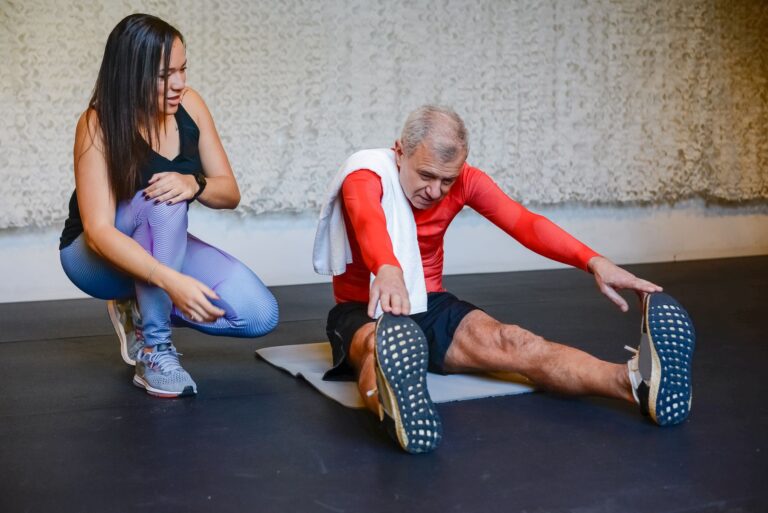
The obvious response to a slow walking-speed result is to walk faster. Sometimes that helps, especially when the issue is under-practice or low confidence. But most people do better by training the ingredients of walking: lower-body strength, balance, ankle and hip mobility, aerobic capacity, and safe exposure to real walking environments.
The CDC guidance for older adults recommends a mix of aerobic, muscle-strengthening, and balance activity each week. That blend is sensible because walking is not one system. A person may need resistance work for sit-to-stand strength, stepping drills for balance, regular walking for endurance, and medical treatment for pain or breathlessness.
Speed work can have a place, but it should be controlled. Short bouts of slightly brisker walking on a clear, even surface are different from rushing across a road or trying to beat a personal best on a bad knee. The aim is smoother, more confident movement, not a heroic pace.
When slow walking deserves medical attention
A slower pace after a cold, a poor night of sleep, or a long inactive spell is common. More concerning patterns include sudden slowing, new foot drop, dizziness, chest pain, breathlessness out of proportion to effort, fainting, new confusion, repeated falls, worsening one-sided weakness, or pain that changes the way someone walks. Those are not training problems until a clinician has assessed them.
Medication changes also matter. Sedatives, some blood-pressure medicines, glucose-lowering drugs, pain medicines, and alcohol can affect balance, alertness, and fall risk. People with Parkinson’s disease, stroke history, neuropathy, severe arthritis, osteoporosis, heart disease, lung disease, or visual impairment may need a tailored plan rather than generic walking advice.
Walking aids should not be treated as failure. A correctly fitted stick, frame, or rollator can expand safe mobility. A poorly fitted aid can do the opposite. Physiotherapists and occupational therapists are often the right people to assess the details: step length, turning, footwear, home hazards, confidence, strength, and whether the person is avoiding activity because walking has become frightening.
What this means in practice
- Use walking speed as a conversation starter, not a private verdict. If pace has changed noticeably, ask what else changed: pain, medicines, illness, mood, sleep, falls, or activity.
- If you measure it, keep the setup consistent: same distance, clear floor, usual footwear, usual walking aid, and a normal rather than rushed pace.
- Train the supporting systems with a mix of walking, lower-body strength, balance practice, and mobility work, adjusted for symptoms and medical history.
- Do not chase speed through pain, dizziness, chest symptoms, or fear of falling. Those signs deserve clinical assessment.
- Make the environment easier where possible: good lighting, supportive shoes, clear paths, handrails, and rest points can change real-world walking more than motivation.
- Consider physiotherapy if walking has become slower, less steady, or more effortful despite ordinary activity.
What we don’t know
We still do not know how much of walking speed’s link with survival or disability is causal. Faster walkers often have better health in many other ways, and studies cannot fully separate pace from disease burden, socioeconomic factors, pain, cognition, or lifelong activity. Improving walking speed is valuable when it improves function, but it should not be oversold as a direct longevity intervention.
There is also no single perfect threshold for every adult. A short person, a tall person, a new hip-replacement patient, and a lifelong hill walker may all need different interpretation. A walking aid, a neurological condition, or severe arthritis changes the meaning of the number. Trends, symptoms, and goals matter more than a one-off comparison with an average.
The best use of walking speed is modest and practical. It helps reveal when mobility is changing. It can show whether a rehabilitation plan is helping. It can prompt earlier questions before daily life shrinks too far. It should never become another score to fear.
Walking speed earns attention because it is simple, not because it is magic. If your pace is changing, the useful response is curiosity: what is limiting the walk, what can be trained safely, and what needs medical attention before training begins?
Photo: stevepb on Pixabay.