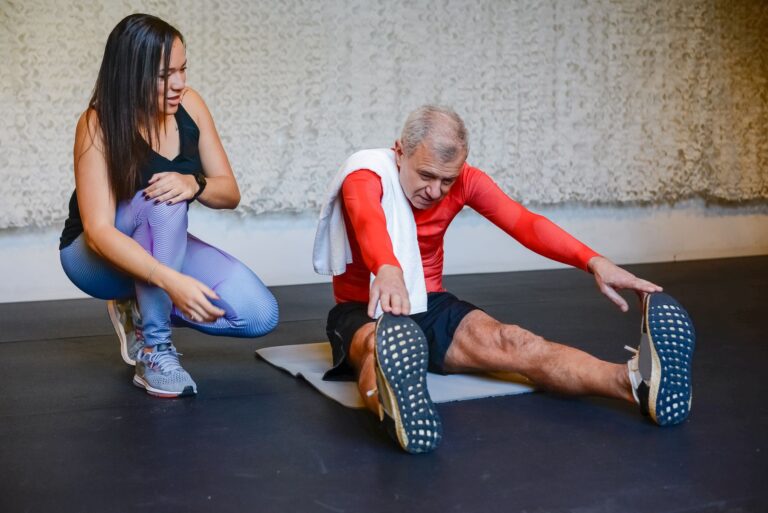
Bone density peaks somewhere in your twenties or thirties, then begins a slow, nearly silent decline. For adults over 50 — particularly postmenopausal women — that decline can accelerate past the threshold for osteopenia and osteoporosis. The usual medical advice is weight-bearing exercise, but the question most people actually ask is: which kind, how often, and does it really make a difference? A growing body of evidence has some answers, and some caveats.
What bone density loss looks like after 50
Peak bone mass, reached in early adulthood, is the reservoir the skeleton draws on for the rest of life. After menopause, falling oestrogen removes one of the main brakes on bone resorption, and losses of 1 to 2 per cent per year in the first five to ten years are common. In men, the decline is slower but real, driven largely by falling testosterone and age-related changes in calcium metabolism. By age 70, roughly one in two women and one in four men will have low bone mass by DXA scan criteria, according to the National Osteoporosis Foundation.
That statistic sounds dire, but it describes a distribution, not a prognosis. Bone density is a risk factor, not a verdict on whether you will fracture.
How exercise reaches bone
Bone responds to mechanical load. When muscle pulls on bone or impact compresses it, the skeleton signals osteoblasts — the cells that build bone — to reinforce the site. The stimulus is site-specific: loading the hip strengthens the hip, loading the spine strengthens the spine. This is why general advice to “do something active” is less useful than understanding which movements deliver load to the bones most at risk.
A 2022 systematic review in the British Journal of Sports Medicine examined 28 trials of exercise interventions in adults over 50 and found that multi-component programmes combining high-impact weight-bearing activity with progressive resistance training produced the clearest improvements in lumbar spine and femoral neck bone mineral density. Impact alone, without resistance, was better than nothing but not as effective as the combination.
The specific protocols with the best evidence
The studies that show consistent bone benefit share several features. First, they use loads that exceed habitual daily activity — walking alone, while excellent for cardiovascular health, does not generate enough ground-reaction force to stimulate bone formation in most older adults. Jumping, skipping, and stair climbing produce peak forces of 2 to 5 times body weight, which appears to be the stimulus range the skeleton responds to.
Second, resistance training matters, but not all resistance training is equal. A 2022 Cochrane review of 43 trials found that programmes using moderate-to-high intensity resistance training (loads above 60 per cent of one-rep max, two to three sessions per week) improved spine but not hip bone density in postmenopausal women. The hip, it turns out, needs impact — either from jumping or from exercises like squats and lunges done with significant load — to respond.
Third, consistency matters more than intensity in the long term. Bone remodelling takes months, and DXA scans rarely show measurable change in fewer than 12 to 18 months of sustained training.
What about walking, swimming, and cycling?
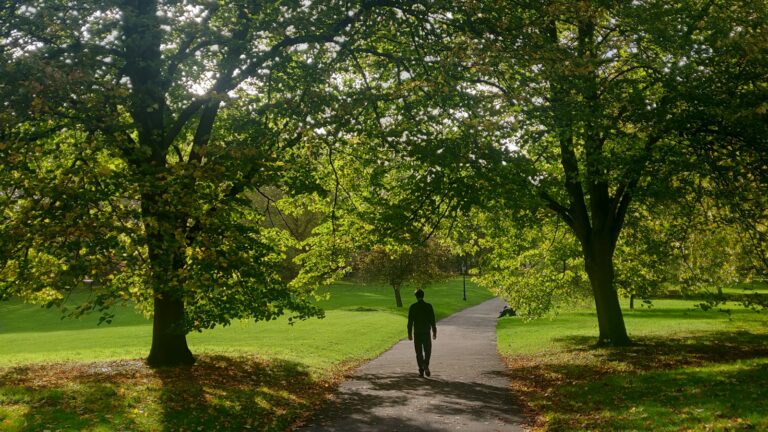
Each of these is excellent for cardiovascular and metabolic health, but the evidence for bone is equivocal. Walking at a normal pace generates ground-reaction forces of roughly one to 1.2 times body weight — below the threshold most studies associate with bone formation. Brisk walking or rucking (walking with a weighted vest or backpack) may raise the stimulus, but the data are mixed. The NHS recommends weight-bearing exercise such as brisk walking as part of osteoporosis prevention, but the studies that separate walking from other exercise types show inconsistent bone-density benefits — a modest preservation effect at best, not a gain.
Swimming and cycling are non-weight-bearing. The skeleton is unloaded in water and supported by the bike. Neither has shown consistent bone benefit in trials, and some studies report lower bone density in competitive cyclists than in age-matched controls. They remain excellent forms of exercise — just not for bone density.
Safety considerations for adults over 50
This is where the caution needs to be clear. Jumping and high-impact exercise carry real risk for someone who already has low bone density or a history of fracture. A vertebral compression fracture can happen from something as ordinary as a misjudged step or a heavy sneeze when the bone is sufficiently compromised.
The Royal Osteoporosis Society advises that while exercise is important for bone health, anyone with diagnosed osteoporosis or a history of fragility fracture should take a cautious approach — working with a physiotherapist or exercise specialist on a supervised programme and adjusting activity as needed. For osteopenia (low bone mass not yet in the osteoporosis range), moderate impact under guidance is usually appropriate, but individual assessment matters.
Anyone starting a new exercise programme after 50 with known bone density concerns should consult their GP or a specialist before beginning.
What this means in practice
- Combine impact (jumps, hops, stair climbing, skipping) with resistance training (squats, deadlifts, lunges, overhead press) at least two to three times per week.
- Use loads that feel challenging by the eighth to twelfth repetition. Light weights with high reps do not produce the bone stimulus needed.
- Walk for cardiovascular health and metabolic benefit, but do not rely on it alone to protect bone density.
- Consider a weighted vest or backpack for walking if your bone density is normal or osteopenic and you have no contraindications. Start with 5 per cent of body weight and progress slowly.
- Give it time. Bone density changes are slow — measurable improvement typically requires 12 to 18 months of consistent training.
- If you have osteoporosis, diagnosed low bone density, or a history of fragility fracture, work with a physiotherapist on a safe programme before attempting high-impact activity.
What we don’t know
The evidence base for exercise and bone density is stronger for postmenopausal women than for men over 50, and most trials are under 24 months, so long-term fracture outcomes are harder to assess than short-term DXA changes. We also do not know the optimal “dose” — the most efficient combination of impact frequency, resistance load, and session duration — and the studies that exist vary widely in their protocols, making head-to-head comparisons difficult. Some researchers argue that vibration platforms may offer a low-impact alternative, but the trial data so far are inconsistent.
What the evidence can say with reasonable confidence is that doing something is better than doing nothing, and that targeted, progressive loading works better than generic activity.
Bone density after 50 is not a fixed number. It responds — slowly, site-specifically, and within limits — to the mechanical load you give it. The studies point toward a combination of impact and resistance, done consistently, with the awareness that what helps bone is not always the same as what helps the heart or the muscles. That does not make it complicated. It makes it specific.
Photo: Ketut Subiyanto on Pexels.