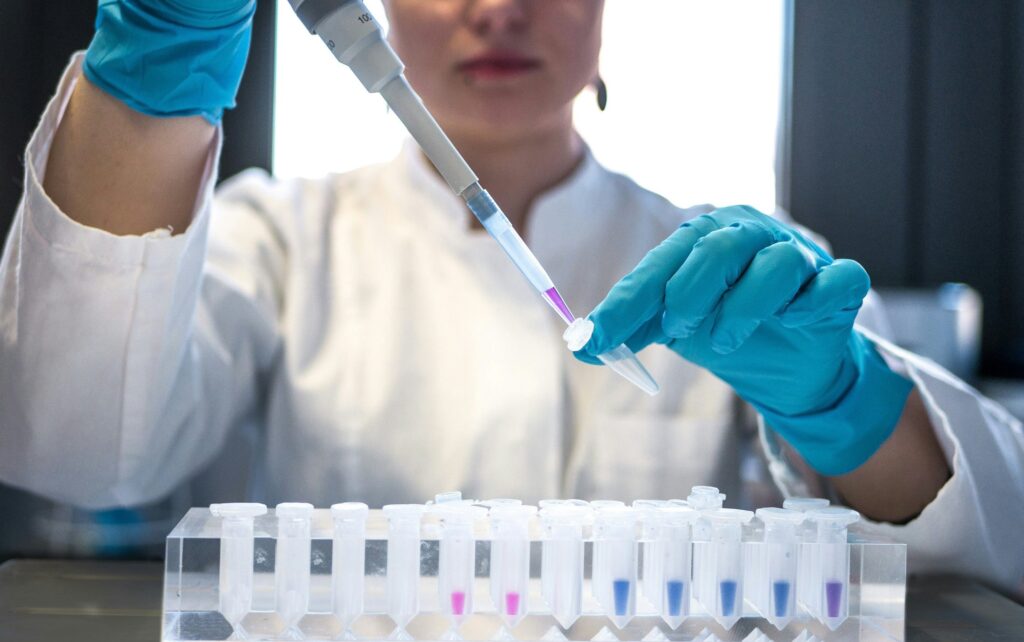
DHEA falls with age, which makes the supplement story sound tidy. The biology is real: dehydroepiandrosterone is an adrenal hormone precursor that can feed into androgen and oestrogen pathways. The clinical question is harder. After 50, the evidence does not turn a lower DHEA number into an energy treatment, a brain-health plan, or an ageing shortcut.
What DHEA is, and why it falls
DHEA is made mainly by the adrenal glands and circulates largely as DHEA sulphate, or DHEA-S. It is often called a prohormone because tissues can convert it into more active androgens and oestrogens. That conversion is why DHEA attracts attention in midlife health, and also why it deserves more caution than an ordinary vitamin.
The age pattern is well described. Endotext’s 2023 chapter on adrenal androgens and ageing describes DHEA and DHEA-S as steroid pre-hormones that rise earlier in life, peak in the third decade, and then generally decline through midlife and later life. Mayo Clinic’s DHEA review gives the same practical summary: natural DHEA levels peak in early adulthood and slowly fall with age.
The tempting interpretation is simple: if a hormone falls, replace it. Hormone physiology is rarely that neat. A lower DHEA-S result may reflect age, sex, illness, medicines, adrenal function, or lab variation. It does not, by itself, explain fatigue, low mood, poor sleep, weight gain, libido changes, or brain fog. Those symptoms are real, but they are non-specific. They deserve context before they are assigned to one adrenal hormone.
The anti-ageing claim is still weak
The commercial claim usually starts with a fact and ends with a leap. DHEA falls with age; therefore, restoring it should restore some part of youth. Mayo Clinic’s 2026 review is more restrained. It says research has not proved that DHEA supplementation can counteract ageing effects, and that evidence on muscle strength and physical performance is mixed, with most studies showing no effect.
A 2022 review in The Journal of Clinical Endocrinology & Metabolism reached a similarly cautious position for women. It found no consistent beneficial effects of DHEA administration for menopausal symptoms, sexual function, cognition, or overall wellbeing in women without a defined deficiency state. Local vaginal DHEA is a different question, and may help vulvovaginal atrophy; that does not make oral DHEA a general midlife hormone strategy.
That distinction is central. A treatment delivered locally for a specific menopausal symptom is not the same as a systemic supplement taken for ageing, energy, mood, or performance. The first has a defined target. The second often has a vague promise.
Sex-hormone effects are part of the risk
DHEA is sometimes marketed as gentle because it sits upstream of other sex hormones. Upstream does not mean inert. A 2025 meta-analysis of randomised trials in postmenopausal women reported that DHEA supplementation at doses of at least 50 mg per day significantly increased testosterone, with oestradiol changes also reported in some subgroups. That may be the intended effect for some users, but it is also the safety issue.
If a compound can alter androgen or oestrogen activity, it can plausibly matter for acne, unwanted hair growth, scalp hair thinning, breast symptoms, postmenopausal bleeding, mood changes, and hormone-sensitive conditions. Mayo Clinic warns that DHEA can have a steroid effect, may raise androgen levels, may reduce HDL cholesterol, may worsen mood disorders, and should not be used in hormone-sensitive cancers, pregnancy, or breastfeeding.
Those are not small-print cautions. They are central to the decision. People with a history of breast, ovarian, uterine, or prostate cancer; unexplained bleeding; polycystic ovary syndrome; severe acne or hirsutism; liver disease; bipolar disorder or significant mood instability; pregnancy or breastfeeding; or medicines affecting hormones, clotting, glucose, or psychiatric symptoms should not treat DHEA as a casual wellness experiment.
The brain and energy claims need restraint
The brain-health argument has a familiar shape: DHEA declines with age, the brain uses steroid signalling, therefore supplementation should support memory or mood. It is a reasonable hypothesis. It is not proof of benefit. A 2023 systematic review of DHEA therapy and cognitive performance in postmenopausal women concluded that the evidence did not support a beneficial cognitive effect.
Energy is even harder to judge. Fatigue can come from sleep disruption, anaemia, thyroid disease, depression, medication effects, under-fuelling, inflammatory illness, diabetes, overtraining, caregiving strain, and many other causes. A hormone story can feel satisfying because it offers one lever. But when the symptom is broad, the safer medical move is usually to widen the differential, not narrow it around a supplement.
Mood deserves the same restraint. The 2022 JCEM review noted small benefits in quality of life and mood in women with adrenal insufficiency or anorexia, but not consistent benefits in women without those contexts. That does not mean the signal is irrelevant. It means it is context-specific, and should not be stretched into a general claim that DHEA treats low mood after 50.
Testing can clarify context, not create a target
DHEA-S testing can be useful when there is a clinical question. MedlinePlus describes DHEA-S as a blood test for a hormone mostly made in the adrenal glands, and notes that abnormal levels may point to an adrenal problem. Mayo Clinic Laboratories also lists DHEA testing for evaluating hyperandrogenism and related adrenal questions.
That is different from using a number as a personal longevity score. A lab range is not a supplement instruction. A low-normal DHEA-S result in a 62-year-old does not carry the same meaning as a pronounced elevation in someone with rapid-onset androgen symptoms. In the latter case, the result may require medical evaluation, not self-treatment.
There is also a product-quality problem. Mayo Clinic notes that quality control for DHEA supplements has often been low. That matters more when the compound affects hormones. Even a modest mismatch between label and content can become clinically relevant when the intended effect is to move androgen or oestrogen pathways.
What this means in practice
- Do not treat a falling DHEA or DHEA-S level after 50 as proof that replacement is needed; age-related decline is common and not automatically pathological.
- Be wary of anti-ageing, energy, libido, muscle, or brain claims that cite hormone decline but do not show meaningful clinical outcomes in humans.
- Avoid casual DHEA use if you are pregnant or breastfeeding, have a history or high risk of hormone-sensitive cancer, have unexplained bleeding, significant mood instability, liver disease, PCOS, or use medicines that affect hormones, clotting, glucose, or psychiatric symptoms.
- If DHEA-S is being tested, ask what clinical question the result is meant to answer. A number without a question is easy to over-interpret.
- For fatigue, sleep disruption, low mood, libido changes, or brain fog, consider DHEA one possible line of inquiry only after more common causes and medication effects have been reviewed with a qualified clinician.
- Athletes should be especially cautious: Mayo Clinic notes that the NCAA bans DHEA use, so supplement labels are not the same as permission to compete.
What we don’t know
We do not know whether long-term DHEA supplementation improves healthy-ageing outcomes in adults with normal adrenal function. The existing evidence is too short, too mixed, and too dependent on surrogate markers to answer that question cleanly. We also do not know which subgroups, if any, have a favourable benefit-risk balance outside diagnosed endocrine conditions.
We need better trials that separate oral DHEA from local vaginal DHEA, distinguish men from women, track baseline hormone levels, report androgenic and oestrogenic side effects carefully, and follow people long enough to see clinically meaningful outcomes. Skin hydration, hormone concentrations, and questionnaire shifts may be interesting. They are not the same as fewer fractures, better cognition, safer sex-hormone profiles, or longer life.
The safest conclusion is modest. DHEA is biologically interesting because it sits close to several hormone pathways that change with age. That is exactly why it should not be sold as a casual ageing supplement. A hormone signal can open a clinical conversation. It should not close one.
Photo: Julia Koblitz on Unsplash.