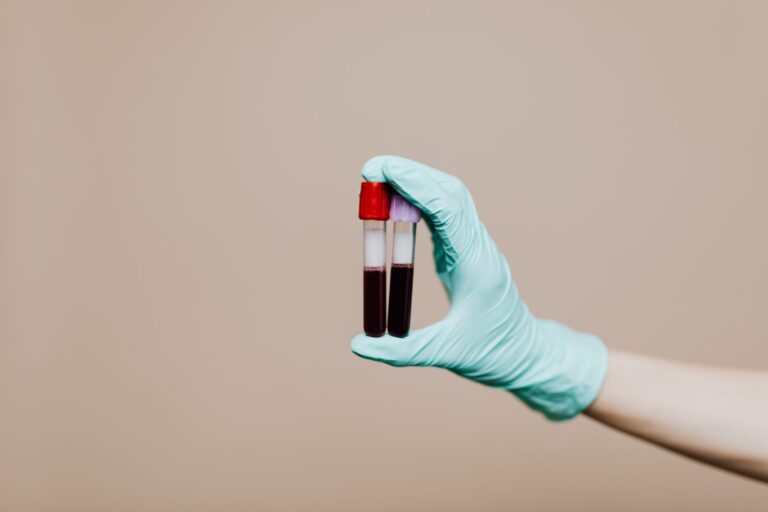
When ovarian function changes before 40, the question extends beyond hot flushes or fertility. Premature ovarian insufficiency, or POI, can mean many more years with reduced oestrogen exposure. That changes the discussion about bones, cardiovascular health, and hormone replacement. The 2024 international POI guideline supports active care, whilst acknowledging that much of the condition-specific evidence remains limited.
Why age changes the hormone conversation
POI describes loss of ovarian activity before 40. It differs from early menopause, which the international guideline defines as occurring from 40 to 44. These age boundaries matter because they describe different clinical contexts. Treatment decisions for someone in their thirties cannot simply be copied from discussions about starting hormones decades later. This distinction is central to Nick Panay and colleagues’ international guideline in Human Reproduction Open.
The ovaries are part of a wider hormonal system. Oestrogen has roles beyond reproduction, including in bone and cardiovascular health. A reduction earlier in life lengthens the period of reduced exposure, as Leeds Teaching Hospitals’ patient information explains. This is why POI care may address future health as well as symptoms that are troublesome now.
The useful question is therefore specific: what care is appropriate for this diagnosis, at this age, with this medical history? It is a question for a clinical assessment, rather than a general promise about keeping hormone levels youthful.
A change in periods deserves context
Infrequent or absent periods can be the presenting sign. Hot flushes, sleep difficulties, vaginal dryness, low mood, or concentration problems may also occur, according to the NHS overview of early and premature menopause. These symptoms warrant attention, but a symptom checklist alone cannot establish POI.
The international guideline says pregnancy should be excluded when periods stop. It also warns that hormonal medicines, including contraceptives, can change bleeding patterns and affect follicle-stimulating hormone, or FSH, measurements. That makes the medication history part of interpreting the result. Readers should not stop contraception or prescribed hormones to arrange their own testing; any change needs a clinician’s plan, including consideration of pregnancy prevention.
For an appointment, a record of bleeding changes, symptoms, medicines, and relevant family or treatment history can provide a clearer starting point. There is no need to decide in advance that every symptom has a hormonal explanation. The purpose of the record is to help the clinician understand the pattern.
Why the testing guidance is not identical
There is a real difference between current guidance sources. NICE’s current POI recommendations specify compatible symptoms and elevated FSH on two samples taken four to six weeks apart. They explicitly advise against diagnosis from one blood test.
The 2024 international guideline uses at least four months of disordered menstrual cycles and FSH above 25 IU/l. It allows one elevated measurement with a fitting clinical picture, with repeat FSH after four to six weeks when uncertainty remains. This is a difference in diagnostic guidance, rather than a reason for readers to choose whichever pathway seems quicker. A UK clinician can explain the local pathway and whether specialist input is needed.
Both sources discourage routine use of anti-Müllerian hormone, or AMH, as the main diagnostic approach. The international guideline allows a supporting role when FSH is inconclusive, interpreted in context. An isolated home test result cannot resolve that context. Nor should the four-month criterion be read as an instruction to postpone seeking help until four months have passed.
Hormone replacement has a different purpose here
The NHS guidance on when HRT is considered distinguishes premature and early menopause from menopause at the usual age. In POI, replacing hormones can be discussed for bone protection as well as symptom relief. Whether HRT or a combined hormonal contraceptive is suitable depends on individual circumstances.
The international guideline recommends hormone therapy until the usual age of menopause, including when low-oestrogen symptoms are absent, followed by a fresh individual assessment. However, its recommendation for preventing longer-term illness and mortality is supported by very-low-certainty evidence. A strong recommendation describes the panel’s clinical judgement; it does not turn the underlying studies into high-certainty proof.
That distinction allows two things to be said together. There is a clinical rationale for replacing hormones lost unusually early. There is also uncertainty about the size of some long-term benefits in people with POI. Neither statement supports choosing a dose, formulation, or duration without medical review.
Brain health needs careful language
Oestrogen signalling is relevant to the brain, but mechanism and clinical benefit are different questions. In a 2024 Weill Cornell account of Lisa Mosconi’s brain-imaging research, researchers reported differences in brain oestrogen-receptor density across menopause stages. Those observations do not establish that prescribing hormones prevents dementia.
For POI specifically, the international guideline discusses an association with cognitive impairment and dementia, grading that evidence as very low certainty. It recommends hormone therapy to reduce the possible risk, with low-certainty supporting evidence. “Possible” matters: there is no reliable individual prediction in those statements, and no guarantee of prevention.
Concentration difficulties should therefore be discussed as symptoms requiring assessment, rather than interpreted as a forecast of dementia. The brain belongs in the hormone conversation without becoming a source of alarm or a sales argument.
Safety and fertility belong in the same care plan
Hormone treatment is not suitable for everyone. The NHS safety information for systemic oestrogen highlights histories such as cancer, blood clots, unexplained vaginal bleeding, and liver problems for discussion before treatment. These are reasons for individual review, not a basis for selecting a product independently.
The POI guideline generally advises against hormone therapy after breast cancer. It also states that people with a womb need progestogen alongside systemic oestrogen to protect the womb lining, and that unscheduled bleeding requires assessment. A recommendation to consider replacement does not override these safeguards. Cancer-related POI particularly calls for care coordinated with the relevant specialist.
Fertility counselling is a separate part of that conversation. In non-surgical POI, ovarian activity can occur intermittently and natural conception remains possible, although fertility is substantially reduced. Leeds’ POI information explains that HRT is not contraception. A treatment plan therefore needs to account for whether pregnancy is wanted or needs to be prevented.
There is room here for emotional support as well as medical decisions. Fertility goals need not be settled in the same appointment that introduces the diagnosis. Asking for time, written information, or specialist counselling is a reasonable part of shared decision making.
What this means in practice
- Consider discussing persistent period changes or menopause-like symptoms before 40 with a GP, rather than relying on an online symptom score. The NHS advises assessment of suspected symptoms.
- Bring a brief timeline and medication list. Ask how contraception or other hormones affect the interpretation of blood tests before making any changes.
- If POI is diagnosed, ask what the plan covers beyond symptom relief: bone health, cardiovascular risk, follow-up, and support. The international guideline recommends a bone-density assessment at diagnosis where available.
- Make pregnancy intentions and contraception needs explicit. HRT and contraception serve different purposes, even when the care plan includes both.
- Flag cancer, clotting, liver, and bleeding history before treatment discussions. Ask for specialist advice when these complicate the options.
What we don’t know
The international guideline acknowledges limited POI-specific evidence for many management options. Some recommendations draw on expert consensus or research in related populations. We cannot turn them into a precise forecast of fractures, heart disease, or dementia for one person, or promise that one hormone regimen is best for everyone.
Diagnostic guidance also remains uneven, as the NICE and international testing pathways demonstrate. The disagreement should be visible, with uncertainty referred to a clinician or specialist, rather than edited into a single universal rule.
POI deserves care that recognises both the years ahead and the person receiving the diagnosis. Clear explanations, an individual safety assessment, and room for questions are a more useful starting point than a promise about lifelong youth.
Photo: cottonbro studio on Pexels. Illustrative consultation image; the people pictured are models.