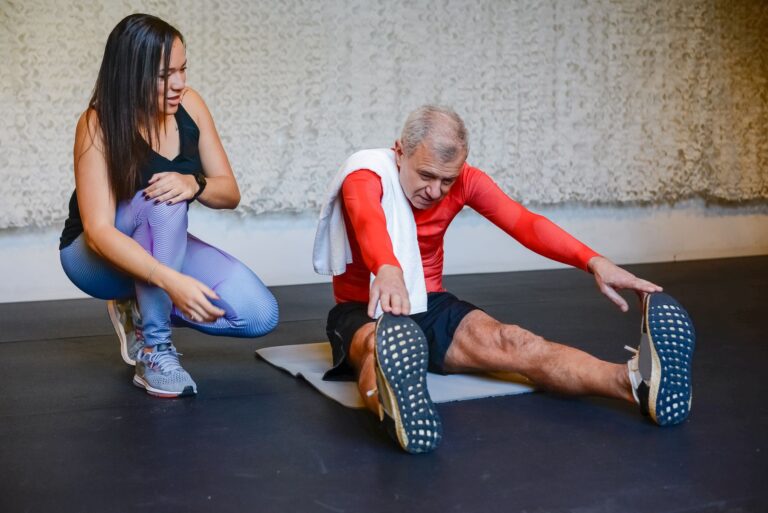
Strength training has become a popular shorthand for “ageing well.” That is understandable: muscle strength matters for daily function, balance, independence, glucose handling, and the ability to keep moving through later life. But the evidence is more careful than the slogan. Resistance training is not a proven life-extension treatment, and it should not be framed as a substitute for medical care, sleep, nutrition, medication when indicated, or safer movement patterns for people with injuries.
A practical way to read the evidence is this: strength training appears to be one useful part of an overall physical activity pattern associated with better long-term health. It is not a guarantee, and the best dose may vary by health status, training history, age, mobility, and recovery capacity.
What public health guidance says
The current U.S. public health guidance is not built around bodybuilding or maximal lifting. The CDC summarises the adult guideline as at least 150 minutes per week of moderate-intensity aerobic activity, or an equivalent amount of vigorous activity, plus muscle-strengthening activity on 2 or more days per week. The muscle-strengthening work is meant to involve major muscle groups, not just one favoured exercise.
That is an important distinction for longevity-minded readers. The baseline recommendation is broad, moderate, and health-oriented. It does not require heavy barbells, extreme soreness, or daily high-intensity sessions. For some people, resistance bands, machines, body-weight movements, carrying groceries, stair climbing, or supervised physical therapy-style exercises may be more realistic starting points than free weights.
What observational research suggests
Several large observational studies and meta-analyses have reported that people who do muscle-strengthening activities tend to have lower risks of all-cause mortality and some major chronic disease outcomes than people who do none. A 2022 systematic review and meta-analysis in the British Journal of Sports Medicine found associations between muscle-strengthening activities and lower risk of all-cause mortality, cardiovascular disease, total cancer, diabetes, and lung cancer. The authors also noted uncertainty about higher volumes, including possible non-linear patterns where the benefit may plateau or even reverse at very high doses.
That wording matters. Observational studies can show associations, but they cannot prove that lifting itself caused every difference in outcomes. People who strength train may also differ in income, diet, smoking history, baseline health, access to care, aerobic activity, body weight, sleep, and many other factors. Researchers adjust for some of these, but not perfectly, and residual confounding is the norm in this field, not the exception.
A separate JAMA Network Open cohort study of U.S. adults aged 65 and older also found lower mortality among older adults meeting muscle-strengthening and aerobic activity guidelines, with the strongest pattern generally seen when both types of activity were present. Again, this supports strength training as part of a broader activity pattern, not as a single magic lever.
Why muscle may matter with age
The biological plausibility is strong. With age, many adults lose muscle mass, strength, power, and balance confidence. That can make everyday tasks harder: rising from a chair, climbing stairs, catching a stumble, carrying household items, or recovering after illness. Strength training can improve or preserve strength in many populations, and stronger muscles can make aerobic movement easier to sustain.
There are also metabolic reasons to care. Skeletal muscle is involved in glucose storage and energy use, so maintaining muscle may support healthier metabolic function. But this should be framed cautiously. Strength training can be part of diabetes prevention or management strategies for some people, but anyone with diabetes, cardiovascular disease, kidney disease, neuropathy, eye complications, or medication-related low blood sugar risk should follow individualised medical guidance.
Strength also matters for fall prevention. Falls are a leading cause of serious injury in older adults, and leg strength, reaction time, and the ability to recover from a stumble are all trainable to some degree. A 2024 Cochrane review on exercise for fall prevention in older adults living in the community found that programmes including balance and functional exercises reduced the rate of falls. Strength training was often a component of the most effective programmes, but it was rarely the sole intervention. The strongest evidence supports programmes that combine strength, balance, and functional training rather than any single mode.
What strength training cannot promise
A longevity article should not imply that resistance training reverses ageing, prevents disease on its own, detoxifies the body, or replaces prescribed treatment. It should also avoid implying that more is always better. The research on dose is still developing, and injury risk can rise when people progress too fast, ignore pain, train through dizziness or chest symptoms, or use loads they cannot control.
The cautious interpretation is enough: doing some appropriate muscle-strengthening work, alongside aerobic movement, is consistent with public health guidance and associated with better outcomes in population studies. The exact routine is less important than matching the activity to the person’s current capacity and recovering well enough to keep doing it.
Safety notes before starting or changing a routine
People who are inactive, frail, pregnant or postpartum, recovering from surgery, living with osteoporosis, managing heart disease, experiencing unexplained shortness of breath, chest pain, fainting, severe joint pain, neurological symptoms, or unstable blood pressure should get clinician guidance before starting or intensifying resistance training. A qualified physical therapist, clinical exercise physiologist, or certified trainer with experience in medical limitations may be appropriate for higher-risk situations.
During exercise, warning signs such as chest pressure, faintness, severe breathlessness out of proportion to effort, sudden weakness, sharp pain, or new neurological symptoms warrant stopping and seeking medical advice urgently. Delayed muscle soreness can be normal, but persistent joint pain, swelling, or worsening function is not something to push through.
What this means in practice
- Aim for muscle-strengthening activity on at least 2 days per week, working major muscle groups, as a complement to aerobic activity rather than a replacement for it.
- Choose a mode you can sustain: body-weight exercises, resistance bands, machines, free weights, or supervised classes all count. The best routine is the one you will do consistently.
- Progress slowly. Increasing weight, reps, or frequency by small increments and allowing adequate recovery between sessions reduces injury risk.
- If you have a chronic condition, a recent injury, or have been inactive for months or years, seek guidance from a healthcare professional or qualified exercise specialist before starting.
- Watch for warning signs during exercise: chest discomfort, unusual shortness of breath, dizziness, or sharp pain means stop and seek medical advice.
- Treat strength training as one component of a broader movement pattern that includes aerobic activity, balance work, and enough rest to recover between sessions.
Where the evidence is weaker
The research on resistance training and longevity has meaningful gaps. Most large studies are observational, so cause-and-effect claims are not justified. The optimal dose, frequency, intensity, and progression for different age groups and health statuses are not well established. Studies rarely compare different training protocols head-to-head in older populations, and most rely on self-reported activity rather than supervised training, which introduces measurement error.
Evidence is also thinner for specific outcomes such as brain health, immune function, and cancer recurrence, where the hype often outruns the data. Until more randomised controlled trials with long follow-up periods are available, the conservative position is that strength training is useful for functional capacity and metabolic health, with less certainty about direct effects on lifespan.
The bottom line
Strength training deserves a place in longevity conversations, but the most honest case is measured. Public health agencies recommend muscle-strengthening activity at least twice weekly for adults, and observational evidence links it with lower mortality and chronic disease risk. The evidence is strongest when strength work is viewed as one component of a sustainable movement pattern that also includes aerobic activity, balance training, and appropriate medical caution.
For longevity, the goal is not to prove toughness. It is to preserve capacity: enough strength to keep moving, enough restraint to avoid preventable injury, and enough consistency that the habit can last for years.