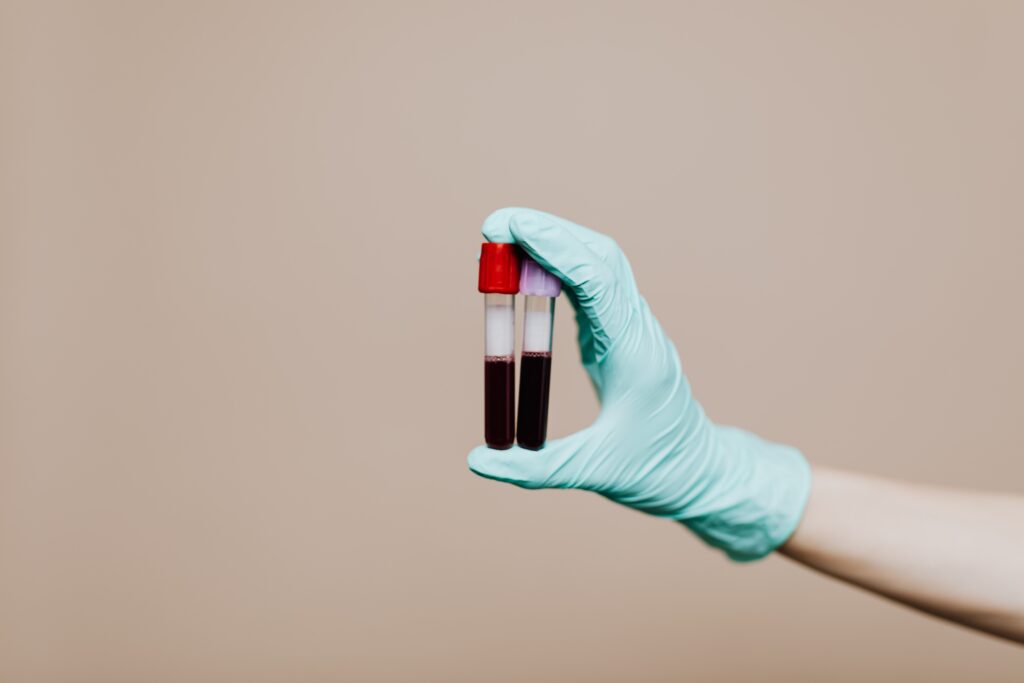
Cortisol testing has become a shorthand for midlife stress, but the biology is less tidy than the marketing. Cortisol rises and falls across the day, responds to illness, sleep, medicines, and meals, and is most useful when a clinician is asking a specific adrenal question. A result can be a signal. It is not a personality test for burnout.
Why cortisol is difficult to interpret
Cortisol is made by the adrenal glands under direction from the brain’s hypothalamic-pituitary-adrenal axis. It helps maintain blood pressure, glucose availability, immune signalling, and the body’s response to physical stress. That makes it important. It also makes it noisy.
A single cortisol number rarely stands alone because cortisol follows a strong daily rhythm. For many people, levels are higher after waking and lower late at night. That rhythm can shift with sleep timing, night work, acute illness, alcohol, depression, oestrogen-containing medicines, pregnancy, and glucocorticoid treatment. The result is that timing and clinical context matter as much as the laboratory value itself.
That is why clinical guidance treats cortisol tests as tools for defined conditions, not as general wellness scores. MedlinePlus explains cortisol testing as a blood, urine, or saliva measurement used mainly to help diagnose adrenal disorders, including Cushing syndrome and Addison’s disease. The test can be useful, but only when the question is clear.
The clinical questions cortisol can answer
There are two broad clinical directions. One is excess cortisol, where doctors are concerned about Cushing syndrome. The other is low cortisol, where the question is adrenal insufficiency. Both matter because untreated disease can be serious. Neither is diagnosed by feeling stressed and ordering a random morning blood test.
For suspected Cushing syndrome, clinicians look for a pattern: progressive features such as easy bruising, proximal muscle weakness, facial rounding, new or worsening high blood pressure, diabetes, osteoporosis at an unusually young age, or an adrenal incidentaloma. the Endocrine Society guideline on Cushing syndrome diagnosis recommends first excluding outside glucocorticoid exposure, then using one of several higher-accuracy screening tests rather than casual cortisol sampling.
For suspected adrenal insufficiency, the clinical picture is different: fatigue can be part of it, but clinicians are more concerned when it comes with weight loss, low blood pressure, salt craving, abdominal symptoms, skin pigmentation changes, unexplained low sodium, high potassium, or severe illness. the Endocrine Society guideline on primary adrenal insufficiency recommends corticotropin stimulation testing to confirm the diagnosis when the patient’s condition allows. Morning cortisol and ACTH can help, but they are not the whole answer.
Blood, saliva, and urine measure different things
The common mistake is to treat cortisol tests as interchangeable. They are not. Blood cortisol is a snapshot, usually interpreted against the clock. Salivary cortisol is often used late at night because it can capture whether the normal evening fall has happened. A 24-hour urine free cortisol test estimates total free cortisol output across a full day.
For Cushing syndrome, NIDDK describes urine, saliva, and blood tests as part of diagnosis, including late-night salivary cortisol because cortisol normally drops after sleep begins. The detail matters: a late-night saliva sample is not trying to answer the same question as an 8 a.m. blood draw.
For low cortisol, an early-morning blood sample may be a first clue because this is when cortisol is expected to be relatively high. But borderline values are common, and the next step is often dynamic testing: giving synthetic ACTH and measuring whether the adrenal glands respond. That is a physiological challenge test, not a wellness panel.
At-home cortisol curves have a narrower role
At-home saliva kits often promise to map the day’s stress pattern. Some collect four or five samples and return a curve. The idea is not irrational; cortisol is rhythmic, and saliva collection is convenient. The problem is the leap from measurement to meaning.
A flatter curve may appear in some chronic illness, sleep disruption, shift work, depression, or severe stress research. But that does not mean a commercial curve can diagnose burnout, prescribe supplements, or prove that a morning routine has repaired the adrenal axis. Assay quality, collection timing, contamination, recent food or exercise, and day-to-day variation all affect the result.
This is where midlife hormone testing often becomes overconfident. The body is changing, sleep may be more fragmented, oestrogen and progesterone patterns may be shifting, caregiving and work pressures may be high, and symptoms overlap. A saliva curve can be interesting. It is not the same thing as a validated diagnosis.
Medicines are the first thing to check
Before interpreting a cortisol result, the most practical question is often: has the person used glucocorticoids? Prednisolone tablets, steroid injections, high-potency skin creams, inhaled steroids, and some eye drops can all complicate the picture. They may raise apparent exposure, suppress the body’s own cortisol production, or both, depending on dose, duration, route, and individual absorption.
This matters because adrenal insufficiency after glucocorticoid use is a recognised clinical problem. a 2024 joint European Society of Endocrinology and Endocrine Society guideline covers glucocorticoid-induced adrenal insufficiency and emphasises careful tapering and assessment after longer-term treatment. The point is not that steroid medicines are bad. It is that cortisol interpretation changes once they are in the story.
Hormonal medicines can also alter measurement. Oral oestrogen can raise cortisol-binding globulin, which can change total serum cortisol without necessarily changing free cortisol in the same way. Pregnancy changes the axis too. A good clinician reads the medication list before reading too much into the number.
When cortisol testing is worth discussing
Cortisol testing is reasonable when symptoms and signs point towards adrenal disease, when a doctor is monitoring known pituitary or adrenal disease, or when someone has been on significant glucocorticoid treatment and there is concern about adrenal recovery. It can also be part of a specialist work-up for adrenal masses or unusual patterns of blood pressure, glucose, or electrolytes.
It is much less useful as a broad explanation for common midlife fatigue. Fatigue deserves attention, but the first-pass causes are often more ordinary: insufficient sleep, sleep apnoea, iron deficiency, thyroid disease, depression, medication effects, alcohol, under-fuelling, overtraining, caregiving load, or perimenopausal sleep disruption. A cortisol result can distract from those if it is treated as the master answer.
The most careful framing is this: test when the result will change the next clinical decision. If the plan is the same regardless of the number, the number is probably not doing much work.
What this means in practice
- Do not interpret a random cortisol result without the collection time, sleep schedule, recent illness, and medication list.
- Ask what condition the test is trying to rule in or rule out: Cushing syndrome, adrenal insufficiency, medication suppression, or something else.
- If Cushing syndrome is suspected, expect a clinician to use validated screening options such as late-night salivary cortisol, 24-hour urine free cortisol, or dexamethasone suppression testing.
- If low cortisol is suspected, ask whether dynamic ACTH stimulation testing is needed rather than relying on a borderline morning value.
- Treat at-home cortisol curves as limited data, not as a diagnosis of burnout, adrenal fatigue, or a supplement need.
- Seek urgent medical care for severe weakness, fainting, confusion, vomiting, very low blood pressure, or suspected adrenal crisis, especially after steroid withdrawal.
What we don’t know
We do not yet have a clean way to turn everyday cortisol variation into a personal longevity score. Research can link cortisol patterns with sleep, mood, metabolic health, and stress exposure at group level, but that is different from telling one person exactly what their four-point saliva curve means on a Tuesday.
We also do not have strong evidence that many popular interventions marketed to “balance cortisol” reliably improve hard clinical outcomes in people without adrenal disease. Sleep regularity, resistance training, adequate food, social support, and treatment for sleep apnoea or depression may all improve how someone feels. That does not mean their benefit operates mainly through cortisol, or that cortisol needs to be measured to justify them.
The useful middle ground is neither dismissive nor credulous. Cortisol is a real hormone with serious clinical relevance. Testing belongs in medicine when the question is precise. Outside that frame, a cortisol number can look more certain than it is.
Photo: Kaboompics.com on Pexels.