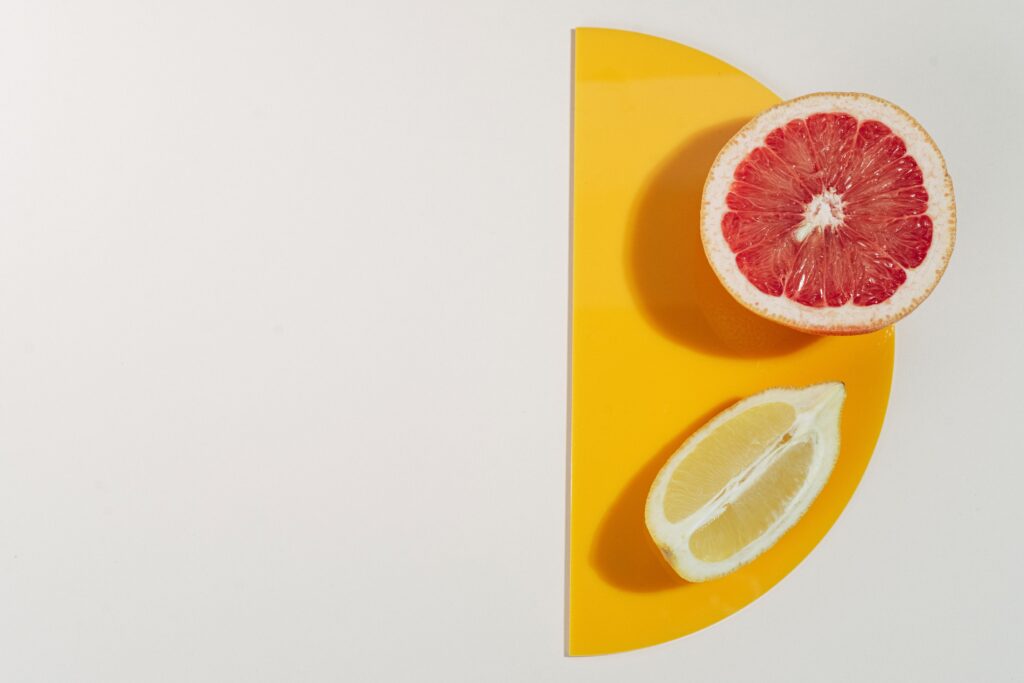
Grapefruit has the sort of wholesome reputation that can make a medicine warning seem implausible. It is fruit, after all. But food quality and medicine compatibility are different questions. Grapefruit can change how some medicines behave in the body, sometimes increasing side effects. The useful question is which medicine, rather than whether grapefruit belongs on a list of good or bad foods.
A food warning needs a medicine name
Evidence type: this article draws on medicine-specific NHS and NIH patient information and clinical pharmacy guidance. It explains established interaction warnings; it does not present a trial of grapefruit avoidance or evidence that avoiding grapefruit extends life.
The broad claim that grapefruit “interacts with medication” is true but incomplete. It does not mean every medicine is affected, or that every affected medicine carries the same risk. NHS Specialist Pharmacy Service guidance on drug interactions distinguishes the mechanism of an interaction from its clinical significance. Something can change drug handling without telling us, by itself, how much harm a particular person will experience.
That distinction matters when a headline becomes a shopping rule. A warning attached to one tablet is not automatically a warning attached to every treatment for the same condition. Equally, a friend’s uneventful breakfast is not evidence that a combination is suitable for someone else. The medicine’s own instructions and a pharmacist’s assessment are more useful than either general reassurance or general alarm.
The starting point is therefore prosaic: the actual medicine name, the current leaflet, and the person taking it. This is an article about interpreting a food warning, not a way to decide which treatment to use.
Why the gut changes the calculation
Some medicines taken by mouth are partly broken down by enzymes in the gut wall before they reach the circulation. One important enzyme is called CYP3A4. Grapefruit juice can inhibit intestinal CYP3A4, allowing more of certain medicines to reach the bloodstream. This is a change in drug exposure, not a claim that grapefruit makes every tablet “stronger”. The NHS explanation of enzyme and transporter interactions describes that mechanism.
The same guidance explains why simply moving breakfast away from tablet time is unreliable for this interaction. Grapefruit’s effect on intestinal CYP3A4 can persist for days after consumption stops. There is no timing schedule offered here: the duration of a mechanism is not a personal instruction about when an affected medicine becomes safe to combine with grapefruit.
It is tempting to turn a scientific explanation into a household fix. “Take them separately” sounds measured and practical. In this case, the mechanism is precisely why that shortcut can fail. If a leaflet says to avoid grapefruit, a gap of a few hours should not be treated as permission to ignore it.
Statins show why the details matter
Statins are a useful example because the advice is not identical across the group. The NHS simvastatin information advises avoiding grapefruit juice during treatment. That warning deserves to be read as written, rather than diluted into an assumption that a small serving must be harmless.
The NHS atorvastatin information, by contrast, warns against too much grapefruit juice and gives quantity-based advice. This difference is not a reason to transfer an allowance from atorvastatin to simvastatin. Nor does an article establish a personal allowance for atorvastatin: existing instructions and individual advice still govern.
There are two common mistakes here. One is to hear “statin” and assume all members of the class are interchangeable. The other is to notice that guidance varies and conclude that none of it is dependable. The better interpretation is that named medicines have different interaction profiles. The NHS overview of statins directs readers to their leaflet and pharmacist when food or medicine combinations are uncertain.
Changing or pausing a prescribed statin to keep a breakfast habit is a treatment decision, not a nutrition experiment. A prescriber or pharmacist can assess the combination without asking the reader to choose between a headline and a prescription.
Less medicine can also be the problem
Not every juice interaction increases drug exposure. Fexofenadine, an antihistamine used for allergies, illustrates the opposite concern. The NHS fexofenadine guidance says grapefruit, apple and orange juice can make the medicine work less well. That is a specific warning about this medicine, not a reason to avoid those fruits across the population.
MedlinePlus instructions for fexofenadine specify taking the medicine with water rather than fruit juice and following the directions for the particular product. They also advise against changing the amount or frequency without medical direction. Taking extra tablets to compensate for a suspected juice interaction would turn an uncertain exposure into another dosing problem.
This example also exposes the limits of substitution by intuition. Orange juice might sound like the obvious replacement for grapefruit juice. With fexofenadine, it still appears in the warning. The relevant question is whether a replacement suits the particular medicine, not whether it belongs to a fruit category with a better reputation.
Whole fruit and mixed products still need checking
A warning about grapefruit juice should not automatically be interpreted as an endorsement of whole grapefruit. Mayo Clinic’s explanation of grapefruit interactions covers the fruit as well as its juice, and identifies related citrus fruits, including pomelos, tangelos and Seville oranges, as possible concerns with some medicines.
That makes the ingredient list more useful than the front of a bottle. For a smoothie or mixed juice, the practical question is whether it contains an ingredient restricted by the medicine’s instructions. For marmalade or an unfamiliar citrus product, the fruit name can be worth bringing to a pharmacist. These are prompts for checking, rather than a comprehensive list of prohibited foods.
Mayo also cautions that taking medicine at a different time usually does not solve the grapefruit problem. A change of product, fruit or schedule deserves an actual compatibility check. “Natural” describes an origin; it does not answer that question.
What this means in practice
- At the next medicine review, bring the exact names of prescription medicines, pharmacy purchases and supplements. A written list helps a pharmacist assess combinations; MedlinePlus recommends keeping one.
- Read the food-and-drink instructions in each current leaflet. Note whether the warning names grapefruit, other juices or particular citrus fruits, rather than applying advice from another medicine.
- If grapefruit is part of your usual diet, mention that when a medicine is started or changed. Ask whether the fruit, juice and mixed products are compatible with the prescription.
- Do not create a timing workaround, skip a prescribed dose or take extra medicine to compensate. If you have already combined a restricted food with a medicine, contact a pharmacist or your treating team for advice about that exact exposure.
- Take possible adverse effects seriously. For simvastatin, Mayo Clinic advises contacting a doctor immediately for symptoms including unexplained muscle pain or weakness and dark urine. These symptoms need assessment; they do not establish grapefruit as the cause.
What we don’t know
An interaction mechanism cannot predict an individual’s outcome from a serving of fruit. NHS Specialist Pharmacy Service stresses that clinical significance needs assessment alongside the mechanism. A general article cannot settle the risk from an accidental mouthful, a particular juice blend or a person’s complete combination of medicines. Those uncertainties belong in the pharmacist’s assessment, not in an invented universal threshold.
Likewise, differences between medicine-specific instructions do not justify averaging them into a compromise. Where the label is unclear, or advice appears inconsistent, the unresolved question should go to a pharmacist or prescriber before the combination is repeated. We can explain why the warning exists without pretending to replace that decision.
Grapefruit does not need a moral verdict. A food can fit someone’s diet and still be unsuitable alongside a particular medicine. Matching the warning to the medicine is more useful than giving the fruit a health halo or a bad name.
Photo: Ivan Samkov on Pexels.