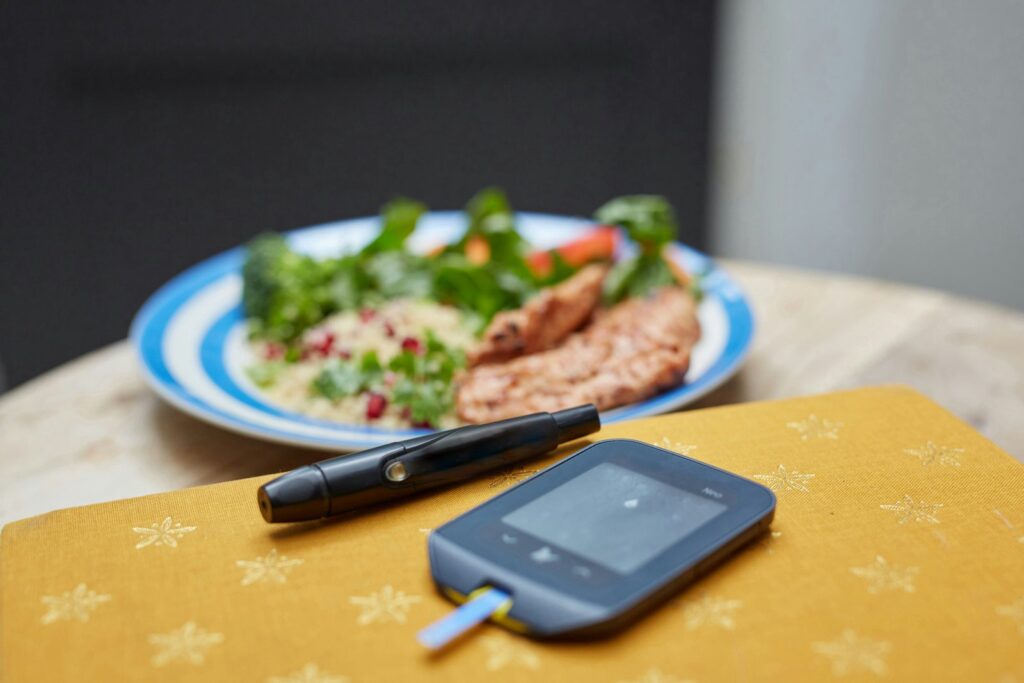
Prediabetes sounds like a diagnosis with a countdown attached. It is not quite that. What we have is a blood-sugar category that identifies higher risk, not a guarantee of type 2 diabetes. The useful question is not whether one number predicts your future. It is whether the pattern is stable, what else is happening metabolically, and which evidence-backed changes are proportionate.
What prediabetes is measuring
Prediabetes is usually defined by blood glucose that is above the normal range but below the diagnostic threshold for type 2 diabetes. In practice, clinicians may use HbA1c, fasting plasma glucose, or an oral glucose tolerance test. The CDC’s A1C guidance lists HbA1c of 5.7% to 6.4% as the prediabetes range, with 6.5% or above in the diabetes range.
That matters, but HbA1c is not a real-time glucose sensor. It estimates average blood sugar over roughly the previous three months. A person can have a fairly ordinary HbA1c and still have large post-meal excursions; another can have a borderline HbA1c because of factors that affect red blood cells rather than glucose exposure itself. The category is a starting point for interpretation, not the interpretation.
The mechanism is insulin resistance. Muscle, fat, and liver cells become less responsive to insulin, so the pancreas has to produce more of it to move glucose out of the bloodstream. The NIDDK overview of insulin resistance and prediabetes describes this as a state in which blood glucose is higher than normal but not yet high enough for type 2 diabetes. That is why the label often sits alongside waist size, triglycerides, blood pressure, fatty liver, and family history rather than standing alone.
Why the label can overstate certainty
Prediabetes is useful because it catches risk early. It can also make risk look more precise than it is. The same label can apply to an active 66-year-old with an HbA1c of 5.7%, a 42-year-old with gestational-diabetes history and a fasting glucose of 124 mg/dL, or someone taking medicines that affect glucose metabolism. Those people do not carry the same risk.
Age is a good example. In a 2021 cohort study in JAMA Internal Medicine of older adults, progression from prediabetes to diabetes was not the dominant outcome over follow-up; regression to normal glucose or death was more common in some groups. That does not make prediabetes meaningless in later life. It does mean the label should not be treated as a uniform disease state.
There is also a measurement issue. HbA1c can be falsely high or low in severe anaemia, kidney failure, liver disease, some haemoglobin disorders, after blood loss or transfusion, during pregnancy, and with some medicines. For those readers, a single HbA1c result deserves confirmation and clinical context before it is used as the basis for major decisions.
What the prevention trials actually show
The strongest evidence comes from the Diabetes Prevention Program and its long follow-up. The original trial tested intensive lifestyle intervention, metformin, and placebo in adults at high risk of type 2 diabetes. A 2025 analysis in The Lancet Diabetes & Endocrinology reported that, over about 21 years, diabetes incidence remained lower in the original lifestyle and metformin groups than in placebo, although much of the separation happened early.
That is important, but it is not a miracle result. The lifestyle intervention was intensive: regular coaching, dietary change, physical activity, and weight-loss support. It was not simply a reminder to eat better. Metformin also reduced diabetes incidence, but the benefit was not identical for everyone; the ADA’s 2026 prevention standards say it should be considered for adults at higher risk, especially those aged 25–59 years with BMI at least 35 kg/m2, higher fasting glucose or HbA1c, and those with prior gestational diabetes.
The DPP results are best read as evidence that risk can be delayed or reduced in selected high-risk adults. They are not evidence that any one diet, fasting window, supplement, or glucose-monitoring routine prevents diabetes on its own.
Metformin is not a wellness shortcut
Metformin occupies an awkward place in longevity culture. It is inexpensive, well studied, and biologically interesting. It is also a prescription medicine, not a general anti-ageing tool. For prediabetes, the question is narrower: does this person have enough diabetes risk that the benefit justifies adding a drug?
That decision belongs with a clinician, partly because risk is heterogeneous and partly because contraindications matter. Kidney function, liver disease, alcohol use, gastrointestinal tolerance, pregnancy plans, B12 status, and other medicines can all affect whether metformin is appropriate. The point is not that metformin is alarming. The point is that a blood-sugar label alone is too thin a reason to self-prescribe, import, or borrow it.
The cardiovascular story is also more restrained than many people assume. In a 21-year DPP Outcomes Study cardiovascular analysis, lifestyle and metformin lowered diabetes development but did not reduce major cardiovascular events compared with placebo. That does not erase the metabolic benefit. It does keep the claim in its proper lane.
The role of food, exercise, and weight change
Most readers want the intervention list. The evidence is less tidy than the internet version. Weight loss, when it happens safely and is maintained, can improve insulin resistance. Physical activity improves glucose disposal because working muscle is a major sink for glucose. Higher-fibre eating patterns, less ultra-processed food, and adequate protein can make meals more metabolically forgiving. Sleep and stress matter because they alter appetite, glucose regulation, and the ability to repeat boring behaviours.
None of that requires a theatrical protocol. The NIDDK notes that the NIH-funded DPP found that losing 5% to 7% of starting weight helped reduce diabetes risk among people at high risk. But weight loss is not a universal instruction, and it is not always the first concern. Frail older adults, people with eating-disorder history, pregnant people, and those with complex medical conditions need individual guidance. In some cases, the safer target is strength, medication review, sleep apnoea treatment, or blood-pressure control rather than weight loss.
This is where prediabetes becomes clinically useful: not as a moral verdict on food choices, but as a prompt to look at the whole metabolic picture.
CGMs and finger-prick testing can mislead
Continuous glucose monitors and home meters can be helpful for people who need them. For people without diabetes, they can also turn normal physiology into an anxiety project. Glucose rises after food. The relevant question is not whether it rises, but how high, for how long, in what context, and whether a clinician needs that information.
Finger-prick meters also have error margins, and CGMs measure interstitial glucose rather than blood glucose directly. A single spike after a meal should not be treated as a diagnosis. If home data repeatedly suggests high fasting glucose, very high post-meal values, symptoms, or unexpected lows, that is a reason to discuss formal testing rather than build a private rulebook.
What this means in practice
- Confirm the result before building a plan around it, especially if the number is borderline or HbA1c may be unreliable for you.
- Ask which test created the label: HbA1c, fasting plasma glucose, or oral glucose tolerance testing can tell slightly different stories.
- Review the wider risk picture with a clinician: blood pressure, waist size, lipids, liver markers, family history, sleep apnoea, medicines, and pregnancy history all matter.
- Treat lifestyle change as a repeatable pattern, not a challenge: meals, movement, sleep, and weight change only help if they are sustainable and medically suitable.
- Do not start metformin, fasting, very-low-carbohydrate diets, or weight-loss drugs without medical input, particularly if you have kidney disease, liver disease, pregnancy, frailty, an eating-disorder history, or take glucose-lowering medication.
What we don’t know
We still do not have a single prediabetes pathway. Some people progress quickly, some stay stable, and some return to normal-range glucose without a dramatic intervention. We also do not know how to translate every modern glucose metric into hard outcomes. Time above range, glucose variability, and post-meal spikes are interesting, but their meaning in people without diabetes is less settled than their dashboard-style presentation suggests.
The evidence is strongest for structured diabetes-prevention programmes and selected use of metformin in higher-risk adults. It is weaker for one-size-fits-all fasting schedules, supplement stacks, and consumer tracking as a prevention strategy.
Prediabetes is worth taking seriously because it can reveal risk while there is still room to act. It is not worth treating as destiny. The number opens a clinical conversation; it should not close one.
Photo: Sweet Life on Unsplash.