Muscle changes around menopause are real for many women, but the biology is not as simple as “low oestrogen causes muscle loss”. Ageing, sleep, activity, injuries, protein intake, and changing sex hormones all overlap. The useful question is narrower: what can the evidence say about muscle, strength, and clinical caution in midlife?
Why muscle enters the menopause conversation
Menopause is defined retrospectively after 12 months without a period, but the transition usually begins earlier, during perimenopause, when oestradiol and progesterone become more variable before settling at lower postmenopausal levels. That hormonal shift is best known for hot flushes, sleep disruption, mood symptoms, and genitourinary symptoms, which are the focus of NICE menopause guidance. Muscle is less visible in the consultation room, yet many women notice that strength, recovery, or body composition no longer behaves as it did in their thirties.
The difficulty is that midlife is a crowded biological period. Work stress, caring responsibilities, poorer sleep, lower activity after injury, and gradual age-related loss of muscle can all arrive at the same time. Oestrogen may matter, but it is not the only variable in the room.
What oestrogen may do in skeletal muscle
Skeletal muscle is not just contractile tissue. It is metabolically active, sensitive to inflammation, and involved in glucose handling. Oestrogen receptors are present in muscle, and laboratory work suggests that oestrogen signalling may influence mitochondrial function, repair, and protein turnover. The human evidence is more restrained. A 2026 review in the Journal of Cachexia, Sarcopenia and Muscle concluded that menopause, female sex hormones, muscle mass, and muscle protein turnover are plausibly linked, but the available human data are still limited.
That distinction matters. A plausible mechanism is not the same as a treatment claim. It is reasonable to say that falling oestrogen may contribute to changes in muscle health. It is not reasonable to say that oestrogen replacement is a proven way to build muscle, prevent sarcopenia, or reverse ageing.
Muscle size is not the same as muscle quality
When people talk about muscle loss, they often mean visible size. Researchers measure several different outcomes: lean soft tissue on DXA scans, muscle cross-sectional area on imaging, echo intensity as a marker of tissue quality, and strength in tasks such as leg extension or grip. These measures do not always move together.
A 2023 study in Medicine & Science in Sports & Exercise examined muscle size, quality, and strength across the menopause transition. Its cross-sectional design cannot prove that menopause caused the differences observed, but it does underline a practical point: the number on a body-composition scan is only one part of the picture. Strength, balance, pain, and daily function matter more to healthspan than whether a device labels a small change as “lean mass”.
Body composition can change without obvious weight gain
Some women gain weight during midlife; others do not, but notice a different distribution of fat and less visible muscle. Reviews of the menopause transition describe increased abdominal fat and changes in lean mass as common patterns, with cardiometabolic risk rising for some women as waist circumference, insulin sensitivity, lipids, and blood pressure shift. That does not mean menopause alone explains every change, and it does not mean weight is the only useful marker.
The more clinically useful frame is body composition plus function. A stable scale weight can still hide lower activity, lower strength, higher waist measurement, or poorer recovery. Conversely, a modest weight increase can occur in someone who is training well and preserving function. For longevity, the question is not whether the body looks unchanged. It is whether muscle, movement, and metabolic markers are being protected.
This is also where stigma can distort the conversation. Midlife women are often told to interpret every change through weight control, when the more relevant clinical question may be whether they can keep generating force, tolerate training, and recover without persistent pain. That is a different target from chasing a previous body shape.
Resistance training has the clearest evidence
The strongest intervention evidence is not hormonal; it is mechanical. A 2023 systematic review and meta-analysis in Frontiers in Endocrinology pooled 101 randomised trials involving 5,697 postmenopausal women. Exercise training improved body-composition outcomes overall; resistance and combined training showed stronger effects on muscle-mass outcomes, while aerobic and combined training were more useful for fat-mass outcomes.
This does not make every gym programme evidence-based, and it does not mean harder is always better. The trials varied in supervision, duration, intensity, health status, and adherence. Still, the direction is consistent enough to be useful: muscles adapt to progressive loading at any age, and postmenopausal women were not an exception in the trial literature.
For general health, the NHS physical activity guidelines for adults recommend strengthening activities that work the major muscle groups on at least two days a week, alongside aerobic activity. People with osteoporosis, recent surgery, uncontrolled blood pressure, chest pain, fainting, neurological symptoms, or significant joint pain should get individual advice before increasing load.
HRT belongs in a symptom discussion, not a gym plan
Hormone replacement therapy can be an appropriate treatment for menopausal symptoms for some women, and NICE sets out how benefits and risks should be discussed. But muscle preservation is not a reason to self-start hormones, buy compounded products, or treat “low oestrogen” as a fitness diagnosis. Route, dose, timing, uterus status, breast-cancer history, clotting risk, migraine history, and personal preferences all matter.
There is a subtler point as well. If hot flushes, night waking, or mood symptoms are making training impossible, treating menopause symptoms may indirectly help someone move, sleep, and recover. That is different from claiming HRT directly builds muscle. The first claim belongs in a clinical conversation. The second is not established enough for a longevity headline.
What this means in practice
- Track function before appearance: note whether stairs, carrying shopping, getting off the floor, or usual training loads are changing over months.
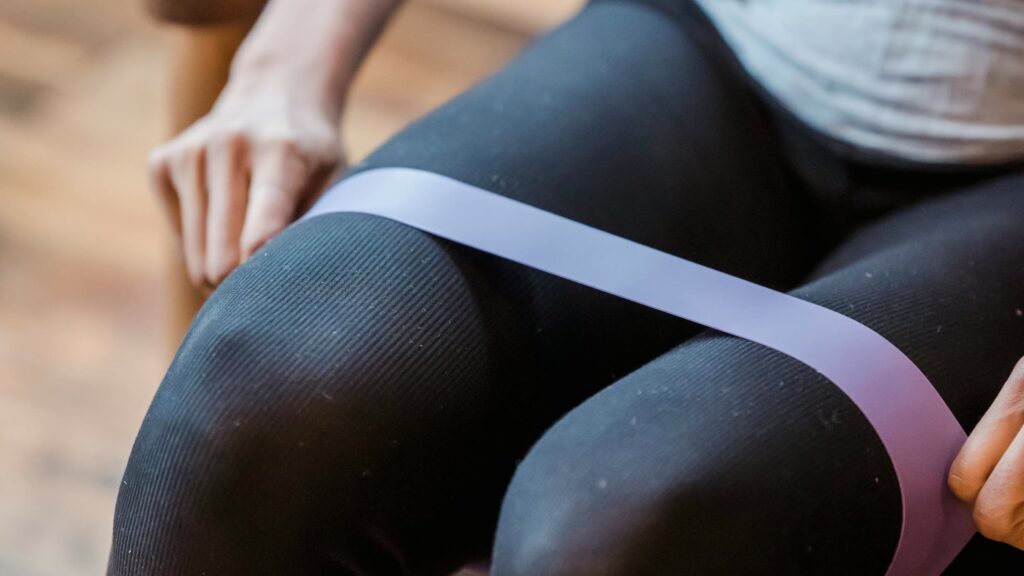
- Use progressive resistance in a form you can repeat: machines, free weights, bands, or body-weight exercises can all count if the muscles are challenged safely.
- Keep aerobic work in the plan: cardiometabolic risk also shifts around menopause, and strength training does not replace walking, cycling, swimming, or other endurance work.
- Bring symptoms into medical review: heavy bleeding, sudden weakness, unexplained weight change, severe fatigue, falls, or new pain deserve assessment rather than a supplement plan.
- Discuss HRT for symptoms and risk profile, not as a muscle-building strategy; the decision is individual and should include contraindications.
What we don’t know
The field still has a women-specific evidence problem. Many exercise and muscle studies historically under-recruited women, mixed premenopausal and postmenopausal participants, or failed to measure hormone status carefully. Even in menopause research, trials often measure body composition more readily than muscle protein turnover, tendon health, injury risk, or long-term disability.
We also do not know which midlife women are most vulnerable to accelerated muscle decline. Genetics, early menopause, surgical menopause, inflammatory disease, diabetes risk, medicines, sleep disruption, and baseline training history may all change the answer. The next step for research is not another broad claim that oestrogen matters. It is better stratification: which women, which tissues, which outcomes, and which interventions.
For now, the evidence supports a sober conclusion: menopause may change the muscle environment, but the most dependable lever remains well-scaled resistance training, with medical care when symptoms or risks make the picture more complicated.
Photo: Klaus Nielsen on Pexels.