VO₂ max has become one of the most quoted numbers in longevity culture. It is often presented as a direct readout of biological age, cardiovascular health, or future survival. The more careful version is narrower: VO₂ max is one way to describe cardiorespiratory fitness, and cardiorespiratory fitness is consistently associated with long-term health outcomes.
That makes it useful. It does not make it a diagnosis, a guarantee, or a reason to copy an intense training plan from someone else.
What VO₂ max actually measures
VO₂ max estimates the maximum amount of oxygen the body can use during intense exercise. In plain English, it reflects how well the lungs, heart, blood vessels, blood, and working muscles can cooperate when demand is high.
Evidence label: Fact. The American Heart Association describes cardiorespiratory fitness as a reflection of overall physiological health and function, especially cardiovascular function. It also notes that fitness can be measured or estimated in several ways, including metabolic equivalents, exercise testing, walking tests, and non-exercise prediction equations.
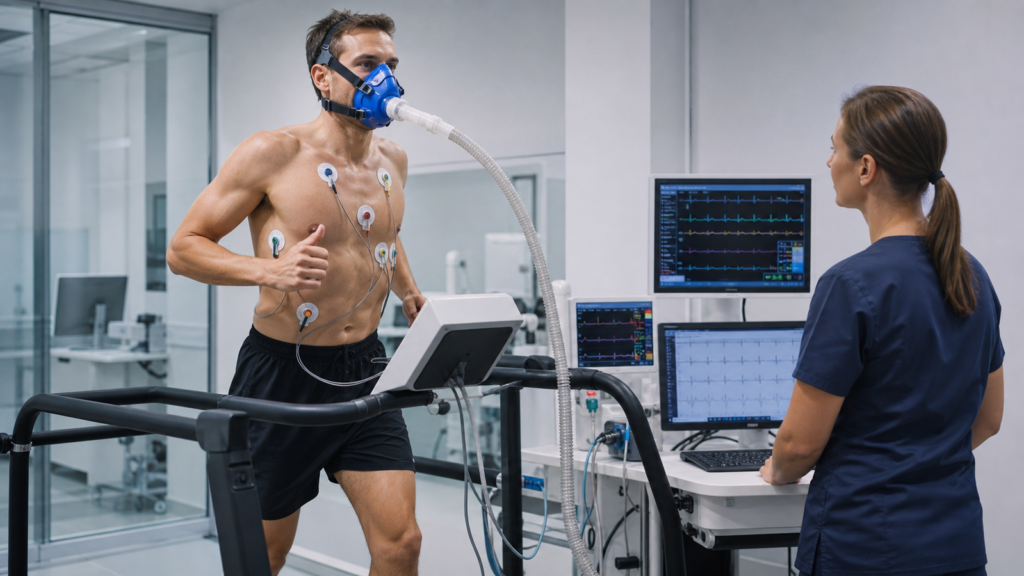
The most precise measurement usually comes from cardiopulmonary exercise testing, where breathing gases are measured during a graded exercise test. Many people, however, encounter VO₂ max as an estimate from a watch, smart ring, treadmill test, bike test, or app.
Evidence label: Interpretation. A lab test and a wearable estimate are not interchangeable. A wearable trend may still be useful for noticing broad changes over time, but it is not the same as a clinical measurement.
Why longevity researchers care about cardiorespiratory fitness
Large observational studies repeatedly find that higher cardiorespiratory fitness is associated with lower mortality risk. One 2024 overview in the British Journal of Sports Medicine pooled evidence from meta-analyses and reported that cardiorespiratory fitness was a consistent predictor across many adult health outcomes.
The same pattern appears in clinical treadmill data. In a 2018 JAMA Network Open cohort study of more than 122,000 adults referred for exercise treadmill testing, higher estimated fitness was inversely associated with long-term mortality. The least fit group had substantially higher mortality than the highest fitness groups after adjustment for measured risk factors.
That does not prove that raising VO₂ max by a certain number will add a certain number of years to life. Fitter people may differ in many ways: activity habits, smoking, blood pressure, income, diet, body composition, medication use, sleep, and access to healthcare. Good studies adjust for some of this, but they cannot make observational evidence behave like a lifetime randomised trial.
A strong marker, not a medical diagnosis
The American Heart Association has argued that cardiorespiratory fitness deserves more routine attention. Its scientific statement on fitness as a clinical vital sign says clinicians should at least estimate fitness in adults, because it can add useful risk information beyond traditional measures.
That clinical framing matters, but it can be misunderstood. A low VO₂ max reading does not diagnose coronary artery disease, lung disease, anaemia, or any single condition. A high reading does not rule them out. It is one signal among many, and it becomes more meaningful when interpreted alongside symptoms, age, sex, blood pressure, lipids, glucose, medication history, and the reason the test was performed.
For everyday readers, this is the practical middle ground: VO₂ max is worth noticing because it captures something important about the body’s reserve capacity. It is not worth treating as a stand-alone verdict on health.
Lab tests and wearables are not the same thing
Most people now meet VO₂ max through a watch rather than a lab. That can be helpful for tracking trends, especially if the device uses repeated outdoor walks, runs, or rides with heart-rate data. But a watch is still estimating. It is not measuring oxygen exchange.
A systematic review and INTERLIVE expert statement in Sports Medicine found that consumer wearables using exercise-based algorithms were generally more accurate than resting estimates, but the error range was still wide. The authors also noted that validation studies were often small and concentrated in healthy, physically active people, which limits how confidently the numbers can be generalised.
So a wearable VO₂ max is best used as a compass, not a ruler. If the estimate trends upward over months of consistent training, that may reflect improving fitness. If it drops suddenly, it may reflect illness, fatigue, heat, poor sleep, a sensor problem, route changes, or medication effects. A concerning number is a reason to look for context, not to panic.
What tends to improve it
The training principle is uncomplicated: cardiorespiratory fitness improves when the oxygen-delivery system is challenged often enough, then allowed to recover. The exact mix depends on age, health status, injury history, current fitness, and preference.
Steady aerobic work builds the base. That might mean brisk walking, cycling, swimming, rowing, or jogging at an effort where conversation is possible but not effortless. Harder intervals can raise the ceiling for some people, because they ask the heart, lungs, and muscles to work nearer their current limit. Strength training is not a direct substitute for aerobic work, but it supports the musculoskeletal system that makes regular aerobic exercise possible.
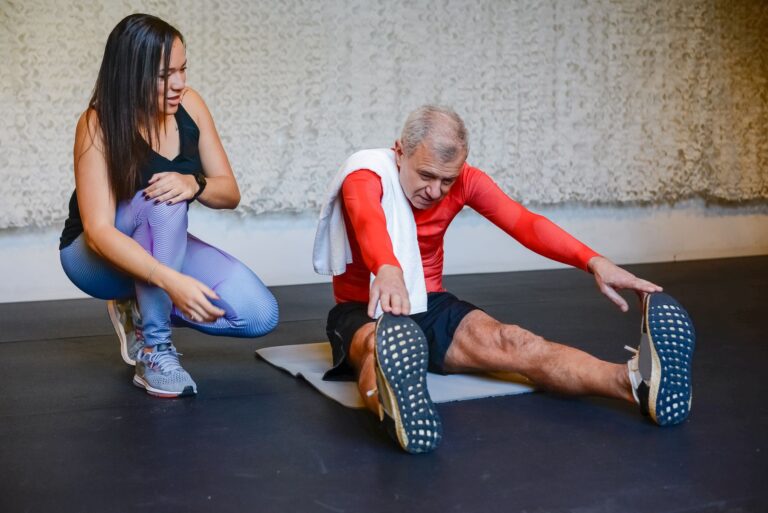
The caution is that harder is not automatically better. For someone who has been inactive, the first useful step may be shorter, easier sessions repeated consistently. For someone with known cardiovascular disease or symptoms, the right starting point may be medical review or supervised rehabilitation. The useful dose is the one a person can recover from and repeat.
Who should be cautious before chasing a number
VO₂ max content often makes high-intensity training sound like the obvious route. That is too blunt. People with chest pain, unexplained breathlessness, fainting, palpitations, known cardiovascular disease, uncontrolled hypertension, significant lung disease, pregnancy, frailty, recent surgery, or a long period without exercise should not treat a generic fitness article as clearance to test their limit.
The ACSM preparticipation screening guidance places special emphasis on current activity level, known cardiovascular, metabolic, or renal disease, symptoms, and intended exercise intensity. In plain English, the more intense the plan and the higher the medical risk, the more sensible it is to involve a clinician or qualified exercise professional before pushing hard.
This is not a warning against movement. It is a warning against turning a population-level fitness marker into a self-directed stress test.
What this means in practice
- Treat VO₂ max as a trend marker. A month-to-month direction is usually more useful than one watch reading.
- If you want a more accurate number, look for a supervised cardiopulmonary exercise test or a well-run graded exercise test rather than relying only on a wearable estimate.
- Build the base first: regular brisk walking, cycling, swimming, rowing, or jogging is a safer entry point for many adults than repeated maximal intervals.
- Add intensity cautiously if you are already active, symptom-free, and recovering well. Hard sessions should be the smaller part of the week, not the whole plan.
- Pause and seek medical advice for chest pain, fainting, unusual breathlessness, irregular heartbeat symptoms, or exercise intolerance that is new for you.
- Remember the neighbouring markers: blood pressure, ApoB or LDL cholesterol, glucose control, sleep, strength, and smoking status still matter.
What we don’t know
The evidence is strongest for association and risk prediction. It is weaker for precise promises about how much life expectancy changes when one person raises VO₂ max by a fixed amount. We also know less about how consumer-device estimates perform across older adults, people with chronic disease, pregnancy, frailty, different medications, and very high or very low fitness levels.
There is also a translation problem. VO₂ max can improve through many routes, and the best route for a healthy 35-year-old runner is not the best route for a 72-year-old with hypertension, knee pain, and no recent exercise habit. The marker is shared; the path is individual.
VO₂ max deserves its place in the longevity conversation because it captures a real and repeatedly observed signal: fitter adults tend to do better over time. The cautious reading is also the useful one. Measure it well if you need precision, track it gently if you use a wearable, and build fitness in a way your body can repeat.
Featured image: Editorial illustration generated for LiveWellBell.