The physiological sigh has become shorthand for a fast reset: two inhales, one long exhale, and perhaps a little more room between you and the stressor. The evidence is interesting, but narrower than the viral version. It points to a brief shift in arousal and mood in healthy adults, not a treatment for anxiety, panic, breathlessness, or trauma.
What a physiological sigh actually is
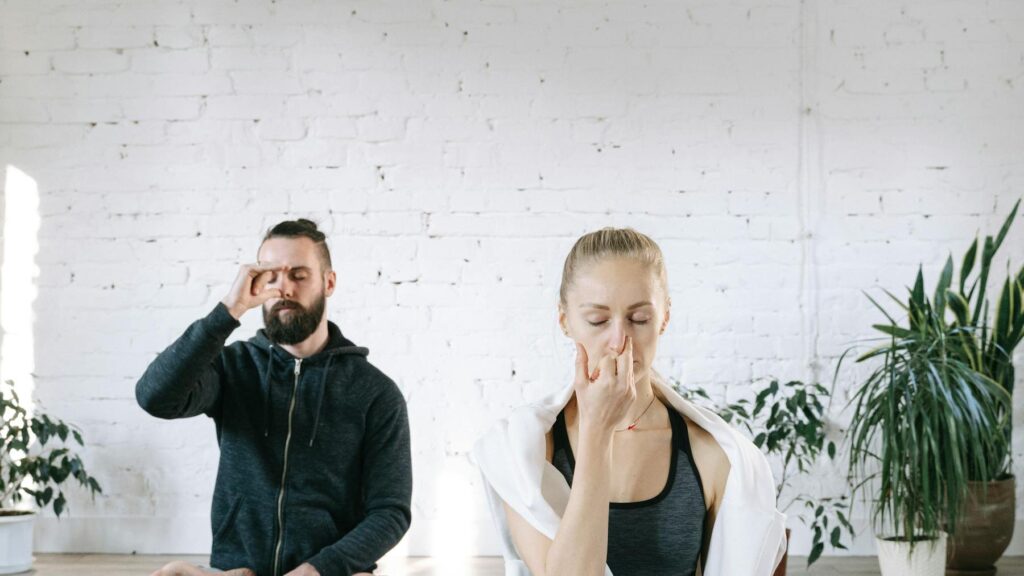
A sigh is not simply a dramatic breath. In physiology, it is a larger-than-usual inhalation that helps reopen small air sacs in the lungs and reset aspects of breathing rhythm. The version now circulating as a stress tool is usually taught as a double inhale through the nose, followed by a slow, complete exhale through the mouth.
That shape matters. The second, smaller inhale can top up the lungs after the first inhale, whilst the long exhale emphasises the part of breathing most closely tied to slowing down. Cambridge University Hospitals gives similar practical advice for breathlessness: longer out-breaths can create more space for the next in-breath, and slower low breathing may feel easier for some people (Cambridge University Hospitals patient guidance on managing breathlessness).
Still, the physiological sigh is not a magic switch. It is a pattern that briefly changes the mechanical rhythm of breathing. Whether that feels calming depends on context, the person, and whether attention to the breath itself is soothing or unsettling.
The main study behind the claim
The strongest direct evidence comes from a small remote randomised trial published in Cell Reports Medicine. In that study, 111 healthy volunteers practised one of several five-minute daily routines for a month: cyclic sighing, box breathing, cyclic hyperventilation with retention, or mindfulness meditation. The cyclic sighing group used repeated sigh-like breaths with prolonged exhalations (the 2023 Cell Reports Medicine trial by Balban and colleagues).
The result was not that sighing cured anxiety. The careful reading is smaller and more useful. All groups reported lower state anxiety and negative mood. Breathwork groups, especially cyclic sighing, showed greater improvement in positive affect and a reduction in resting respiratory rate compared with mindfulness meditation. Stanford’s summary of the same work notes that people with moderate to severe psychiatric conditions were not part of the preliminary study (Stanford Medicine’s report on the cyclic sighing trial).
That exclusion matters. A person facing ordinary work tension is not the same population as someone with panic disorder, uncontrolled asthma, chest pain, fainting, or severe anxiety. The study makes cyclic sighing plausible as a low-cost stress-regulation practice for many healthy adults. It does not make it a stand-alone clinical intervention.
Why a long exhale can feel calming
Breathing is unusual because it is both automatic and partly voluntary. You do not have to remember to breathe, but you can alter the pace for a short time. That gives breathing exercises their appeal: they offer a handle on a bodily process that is already linked to arousal.
When stress rises, breathing often becomes faster, higher in the chest, and more effortful. Slowing the out-breath may help interrupt that pattern. In the cyclic sighing trial, the breathing group that emphasised prolonged exhalation also showed the largest reduction in respiratory rate. That does not prove a single mechanism, but it fits the broader idea that breath pace and emotional state can move together.
Other breathwork evidence is mixed but not empty. A 2023 placebo-controlled trial in Scientific Reports tested coherent breathing at about 5.5 breaths per minute for ten minutes a day over four weeks. The researchers reported improvements in mental health and wellbeing measures, but the design also highlights a recurring problem in breathwork research: expectation, attention, and the calming ritual itself can be difficult to separate from the specific breathing pattern (the 2023 Scientific Reports coherent-breathing trial).
How to try it without turning it into a protocol
The least theatrical version is the most defensible. Sit or stand somewhere steady. Take a comfortable inhale through the nose. Before exhaling, take a second smaller inhale. Then let the breath out slowly and fully, without forcing. One to three rounds is enough for a first attempt.
The word comfortable is doing real work. If the breath becomes effortful, if you feel light-headed, or if you start monitoring every sensation with alarm, stop and return to normal breathing. This is a short state-shift tool, not a test of discipline. Nadia Vern’s rule for nervous-system advice applies here: the body does not become safer because a technique sounds more precise.
For some readers, a softer option may be better: simply lengthen the exhale slightly, breathe low into the abdomen, or use a rectangle in the room as a cue to breathe in on the short edge and out on the long edge. Those approaches match clinical breathlessness advice more closely than social-media breath challenges do.
Who should be cautious
Breathing exercises are usually low risk, but they are not risk free. Hyperventilation can involve rapid or deep breathing that lowers carbon dioxide and may bring dizziness, tingling, chest discomfort, palpitations, or feeling breathless (Johns Hopkins Medicine on hyperventilation). The Merck Manual also describes hyperventilation syndrome as a diagnosis of exclusion, sometimes overlapping with panic disorder or asthma, and notes that symptoms can include chest pain, dizziness, presyncope, or syncope (Merck Manual Professional on hyperventilation syndrome).
That is the reason for caution around panic disorder. Some people find breath focus calming; others find it intensifies body monitoring and fear. If panic attacks, dissociation, trauma symptoms, or severe anxiety are part of the picture, breathwork is best discussed with a qualified clinician rather than treated as a self-directed cure.
People with asthma, COPD, other respiratory disease, a history of fainting, pregnancy-related breathlessness, heart symptoms, chest pain, or unexplained shortness of breath should be especially careful. New, severe, or unusual breathlessness, chest pain, blue lips, fainting, one-sided weakness, or symptoms that feel medically different from ordinary stress warrant urgent clinical care. A breathing exercise should never be used to rule out a medical problem.
What this means in practice
- Use the physiological sigh as an optional short reset, not as treatment for anxiety, panic, asthma, or trauma symptoms.
- Try one to three gentle rounds during ordinary stress, and stop if dizziness, tingling, chest discomfort, or breath hunger appears.
- Keep the exhale slow rather than forceful; the goal is less strain, not a dramatic breath.
- If breath focus makes you more anxious, use grounding, movement, or a clinician-recommended strategy instead.
- Seek medical advice for recurrent breathlessness, fainting, chest pain, palpitations, or symptoms linked to pregnancy or respiratory disease.
What we don’t know
The current evidence does not tell us whether cyclic sighing helps people with diagnosed anxiety disorders, panic disorder, PTSD, respiratory disease, or cardiovascular symptoms. The best-known trial was short, remote, and conducted in a relatively healthy group. It measured mood and physiology over a month, not long-term mental-health outcomes.
We also do not know how much of the benefit comes from the exact double-inhale pattern. Some of it may come from taking a pause, paying attention, extending the exhale, or believing the practice will help. That does not make the effect useless. It does mean the claim should stay modest.
The bottom line
The physiological sigh is a credible one-minute tool for some moments of ordinary stress. Its best use is humble: a few gentle breaths, a check on how your body responds, and a clear boundary between calming a state and treating a condition.
Photo: Ivan S on Pexels.