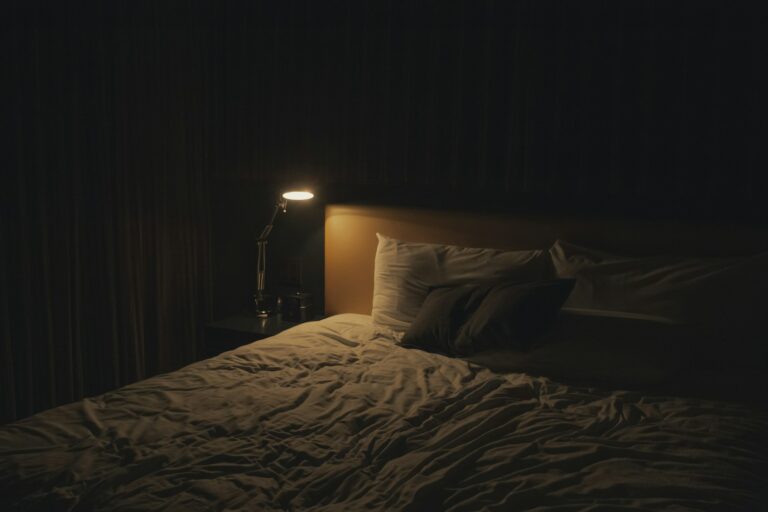
Your body clock is not stubborn because you lack discipline. It is stubborn because it evolved for a world that turned dark at dusk and bright at dawn. When work demands the opposite — evening starts, midnight finishes, rotating patterns that flip every few days — the circadian system does not simply adapt. It negotiates, badly. The science is clearer for why shift work disrupts sleep than for any single fix that works for every schedule.
That gap matters because shift work is no longer a niche problem. Hospitals, warehouses, transport, security, and customer-service lines all run around the clock. NIOSH analysis of nationally representative U.S. workforce data found that night-shift workers had the highest rates of short sleep, slow sleep onset, poor sleep quality, and insomnia compared with daytime workers — and those risks persisted after adjusting for long hours, health status, and lifestyle factors. If you work non-traditional hours, fragmented sleep is not a personal failure. It is a predictable biological response.
The circadian clock does not follow the rota
Sleep timing is controlled by a roughly 24-hour rhythm generated in the suprachiasmatic nucleus and reinforced by light, activity, meals, and social cues. The system is designed for stability. A regular wake time anchors the whole cascade: cortisol rises in the morning, core body temperature falls in the evening, melatonin secretion begins as light fades. Shift work pulls several of those levers in the wrong direction at once.
Night shifts ask the brain to stay alert when melatonin is rising and sleep pressure is high. Rotating shifts add a second problem: the clock never receives a consistent signal about when “day” begins. NIOSH training guidance on shift work and long hours describes the mechanism plainly — disturbed sleep and circadian misalignment reduce recovery time, increase fatigue, and promote stress responses that extend beyond the shift itself. The immediate cost is alertness. The longer-term cost, when schedules stay irregular for years, includes higher risks for metabolic and cardiovascular problems.
This is why telling a night worker to “just sleep during the day” rarely solves the problem. Daytime sleep competes with light, noise, temperature, and the social world operating on a different schedule. The bedroom can be dark and quiet and the brain still knows it is the wrong part of the circadian cycle for deep, consolidated sleep.
What the population data actually show
The NIOSH study linked to the 2016 bulletin used survey data from more than 6,300 working adults and remains one of the clearest snapshots of how schedule type maps to sleep outcomes. Night-shift workers were far more likely to sleep less than seven hours — 61.8% versus 35.9% of daytime workers. Nearly half took 30 minutes or longer to fall asleep at bedtime, compared with 31% of daytime workers. Insomnia — poor sleep quality plus daytime impairment — affected 18.5% of night-shift workers versus 8.4% of daytime workers.
Evening and rotating shifts sat between those extremes, which fits the biology: the further work pushes against the clock, the more sleep fragments. Long weekly hours compounded the picture. Workers logging 48 hours or more per week had higher rates of short sleep and poor quality regardless of shift type — schedule and duration interact, not one or the other.
Age modified the pattern in an interesting direction. Workers aged 60 and over reported less short sleep than those aged 30 to 59, possibly because older shift workers who remain in demanding schedules are a selected group, or because some have found stabilising routines. The takeaway is not that ageing solves shift-work sleep. It is that the burden is unevenly distributed across schedules, sex, weight, smoking status, and mental health — all of which deserve attention when assessing whether a rota is sustainable.
Sleep inertia hits harder on the wrong schedule
Shift workers do not only struggle to sleep. They often struggle to wake into full alertness at the wrong time. Sleep inertia — the groggy, cognitively blunt period after waking — lasts longer when you are woken from deep sleep and when your circadian phase expects sleep, not work. A nurse starting a 7 a.m. shift after a night roster, or a driver finishing a 6 a.m. run after driving through the circadian trough around 3 to 5 a.m., is fighting both inertia and circadian sleep pressure.
That combination is why accident risk rises at the end of night shifts and during commutes home. The problem is not laziness or lack of coffee. It is mistimed wakefulness. Our earlier piece on sleep inertia after 50 applies here too: the brain needs time to clear slow-wave activity and rebuild alertness, and shift work often allows neither enough sleep nor wake-up at a biologically sensible hour.
Rotating shifts are the hardest pattern to manage
Fixed night shifts are difficult. Rotating shifts — alternating days, evenings, and nights across a fortnight or month — are often worse for the circadian system because the clock cannot entrain to any stable position. Each rotation is a miniature bout of jet lag without the travel. Some European rota designs move forward through the day (morning to evening to night) because delaying the clock is slightly easier than advancing it, but the evidence for any single rotation pattern being “safe” is limited.
Employers sometimes shorten night blocks or insert rest days between rotations. That helps, but only if the rest days are long enough for partial realignment. One day off between a night block and a morning start is rarely sufficient for the clock to shift fully. Workers feel this as persistent fatigue that no single long lie-in fixes — because the lie-in itself may land at a circadian phase that produces shallow sleep.
Irregular bedtimes outside work make the picture worse. Our guide to irregular bedtimes covers how variable sleep timing fragments architecture even in day workers. Add shift rotation and the variability can become chronic.
What employers and workers can realistically change
There is no universal protocol that neutralises shift work. NIOSH and occupational-health guidance converge on a set of practical levers rather than a miracle schedule. Forward-rotating shifts, limiting consecutive night shifts, building adequate rest between shift changes, and avoiding overtime stacked onto already demanding rotas all reduce exposure to circadian conflict.
At the individual level, light is the most powerful tool. Bright light during the early part of a night shift can modestly improve alertness; dark sunglasses on the commute home reduce morning-light signals that would otherwise delay sleep onset. A pre-shift nap of 20 to 90 minutes — long enough to take the edge off sleep debt, not so long that inertia dominates — is supported in occupational sleep medicine for some roles, though it must fit the job’s safety requirements.
Sleep environment matters more for day sleep than night sleep. Blackout curtains, eye masks, white noise, cool room temperature, and a phone on silent are not luxuries for shift workers; they are structural requirements. NHS Every Mind Matters guidance emphasises consistent bed and wake times where possible; for shift workers, the practical version is to make the sleep window as predictable as the rota allows rather than changing both ends of sleep on every day off.
Melatonin is sometimes used as a timing signal for night workers trying to sleep in the morning, but it is not a sedative and the evidence for shift-work populations is mixed. Our article on melatonin for sleep timing covers the distinction: low-dose, well-timed melatonin may help shift the clock; high-dose nightly use often does not fix fragmented day sleep.
When shift-work sleep needs clinical review
Persistent insomnia, loud snoring, gasping during sleep, or excessive daytime sleepiness that survives schedule changes may indicate sleep apnoea or another disorder layered on top of circadian disruption. Shift workers are not immune to conditions that fragment sleep mechanically. If a partner reports breathing pauses, or if you fall asleep involuntarily within minutes whenever you finally lie down, a GP or sleep clinic referral is appropriate — not another week of willpower.
Symptoms of depression and anxiety also rise in poorly recovered shift workers. That can be cause, consequence, or both. A StatPearls clinical review hosted by NCBI Bookshelf notes that clinical assessment should separate circadian misalignment from primary insomnia, mood disorders, and other sleep pathologies before treatment is chosen. The wrong label leads to the wrong intervention.
What this means in practice
- Treat shift-work sleep disruption as a circadian problem first — not a motivation problem.
- Keep your main sleep window as predictable as your rota allows; change one end of sleep less often when work and family life make perfect consistency impossible.
- Protect day sleep with blackout conditions, cool temperature, and minimal phone alerts — treat it as night sleep in importance.
- Use pre-shift naps and strategic light exposure where your role allows; avoid stacking long overtime onto already rotating rotas.
- Ask occupational health about rota design — forward rotation and limits on consecutive nights are evidence-informed starting points.
- Seek clinical review for snoring, gasping, involuntary sleep attacks, or insomnia that persists after schedule stabilisation.
What we don’t know
We lack large randomised trials proving which rota designs produce the best long-term health outcomes across industries. Most evidence comes from observational workforce studies, occupational-health programmes, and laboratory circadian research — useful, but not a blueprint for every employer. We also do not know how newer remote and hybrid patterns, where people shift hours without formal night-work classification, compare with traditional rotas for sleep and metabolic risk.
Individual variation is substantial. Some workers tolerate night blocks for years; others deteriorate within months. Genetic differences in circadian period, age, caregiving responsibilities, and commute length all modify the picture. The honest conclusion is narrower: shift work predictably harms sleep quality and circadian alignment; some schedule changes and environmental supports reduce the damage; none fully erase the mismatch between biology and the rota.
Your body clock was never designed for midnight starts and rotating bedtimes. It will resist — not because you are doing sleep wrong, but because the schedule is asking for something physiology handles poorly. The practical goal is not perfect sleep. It is enough recovery, often enough, to stay safe, functional, and healthy across a working life that does not fit daylight hours.
Photo: Vitaly Gariev on Pexels.