A text from a friend arrives at the end of a difficult day. It does not solve the deadline, the diagnosis, or the argument still waiting at home. Yet the body may register it anyway. Social connection is not a treatment for stress, but evidence suggests it can change how stress is carried.
The stress buffer is ordinary, not mystical
The phrase “social support” can sound soft, as if it belongs more to greeting cards than biology. Researchers use it more precisely. It can mean the people you can call, the practical help available to you, or the belief that someone would respond if you needed them.
That distinction matters. A large address book is not the same as feeling supported. A small, reliable circle may be more protective than a busy social calendar that leaves a person unseen. In stress research, the useful question is not simply “How many people do you know?” It is closer to “When something happens, who helps you make sense of it?”
The basic idea is known as stress buffering. Social support may soften the appraisal of a threat, make a problem feel more manageable, or reduce the sense that a person is facing it alone. A National Center for Biotechnology Information chapter on social support describes it as both a predictor of physical and mental health and a buffer against the effects of stressful life events.
Loneliness and isolation are not the same thing
One reason this subject becomes muddled is that loneliness and isolation are often used as if they are interchangeable. They are related, but they are not identical. Isolation is about contact and relationships. Loneliness is the felt gap between the connection a person has and the connection they want.
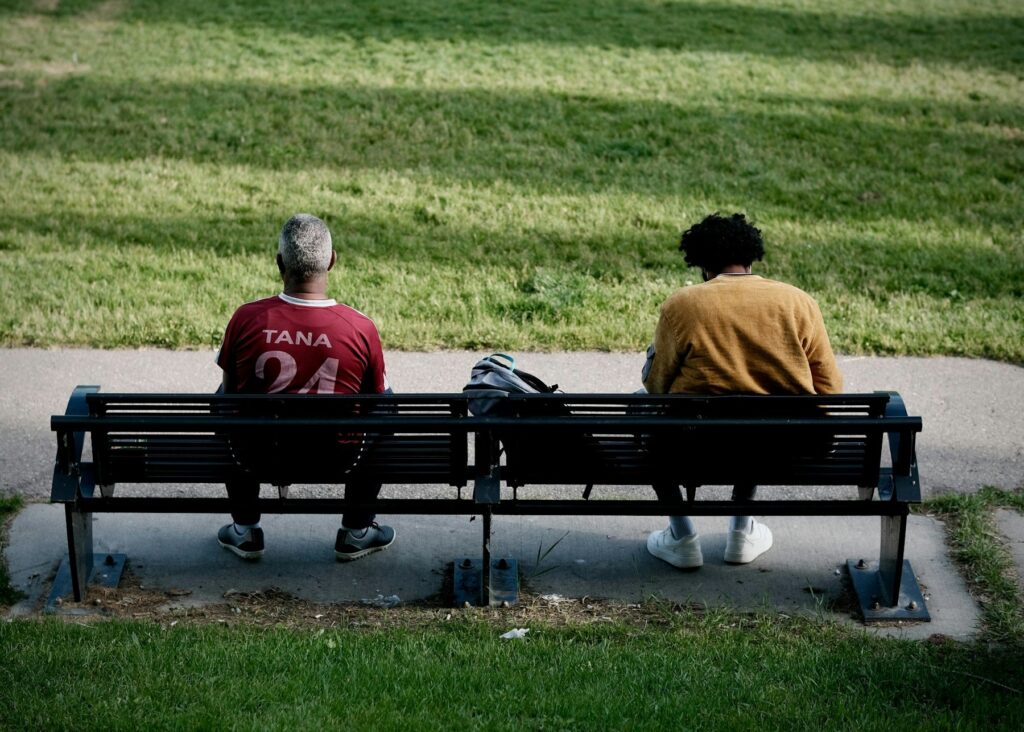
The difference is not academic. A person can live alone and feel content, particularly if they have meaningful contact woven through the week. Another can be surrounded by colleagues, family, and notifications, and still feel profoundly disconnected. The nervous system appears to care less about the visible size of the crowd than about whether connection feels safe, reciprocal, and available.
The CDC’s 2024 overview of social isolation and loneliness makes the same distinction and notes that both can raise the risk of serious mental and physical health problems, including depression, anxiety, dementia, cardiovascular disease, and earlier death. That does not mean loneliness directly causes each outcome in every person. It means the signal is strong enough to be treated as a public-health risk, not merely a private sadness.
What the body may be doing
Stress is not only a feeling. It is also a cascade: attention narrows, muscles prime, heart rate shifts, and the hypothalamic-pituitary-adrenal axis helps regulate cortisol release. That response is useful when a problem is acute and bounded. It becomes more costly when pressure is chronic and recovery never quite arrives.
Supportive contact may change that recovery curve. It can provide information, practical help, emotional regulation, or a reminder that the threat is shared rather than solitary. In laboratory and observational work, social support has been linked with lower physiological reactivity in some stressful situations, although the effect is not universal.
A review on social support and resilience to stress summarised evidence that support may moderate vulnerability and confer resilience, possibly through effects on stress-response systems such as the HPA axis and related neurobiology. The careful word is “may”. Human relationships are not pills. They vary in timing, quality, history, and meaning.
Connection is a risk marker as well as a comfort
The strongest evidence for social connection is not that a single phone call lowers cortisol. It is that relationship patterns track with long-term health in large populations. In a meta-analysis in PLOS Medicine, researchers pooled 148 studies involving more than 300,000 participants and found that stronger social relationships were associated with better survival.
That finding should be handled carefully. It does not prove that joining a club will make any individual live longer. People with stronger relationships may also differ in income, health, mobility, personality, neighbourhood safety, and access to care. The authors adjusted for many factors across studies, but observational research cannot make life as neat as a randomised trial.
Still, the pattern is hard to dismiss. Social connection seems to sit among the background conditions that shape health: like sleep, movement, air quality, and financial strain. It may influence health directly, by shaping behaviour and meaning, and indirectly, by changing how stress is interpreted and recovered from.
Bad support can make stress worse
Not all company is calming. Some relationships are demanding, humiliating, unpredictable, or unsafe. Others offer help in a way that increases shame: advice when listening was needed, surveillance disguised as concern, or pressure to be cheerful before a problem has been named.
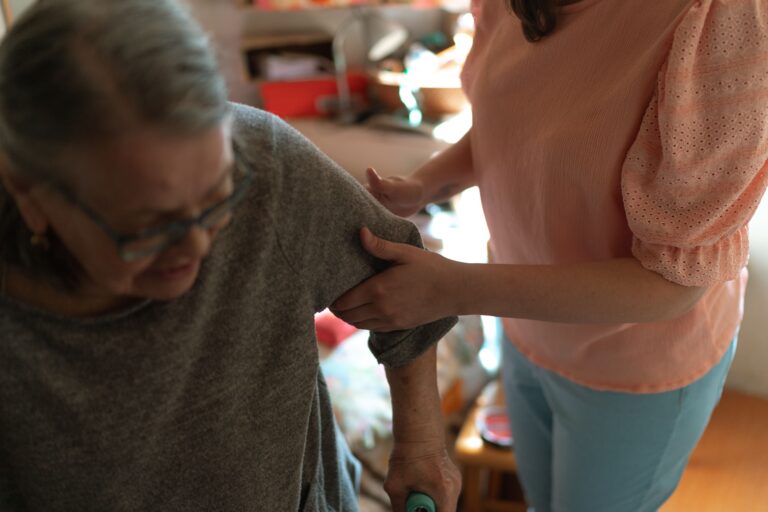
This is where popular advice often fails. “Reach out” is reasonable, but incomplete. Reach out to whom? For what? At what cost? A person recovering from bereavement may need someone who can sit with silence. A caregiver may need two hours of practical relief more than another message saying “thinking of you”. Someone with social anxiety may need structured, low-pressure contact rather than a crowded event.
The quality of the exchange matters because stress is relational as well as individual. A supportive person can help organise a problem into something bearable. An invalidating person can make the same problem feel more dangerous. The body learns the difference.
Small connections count when they are repeatable
For people under strain, the grand version of social repair can feel impossible: rebuild a friendship group, join a community, volunteer every week, become more open. Those may help some people, but they are too large as a first step.
The more useful starting point is repeatability. A short walk with the same neighbour each Tuesday. A standing call with a sibling. A shared class where nobody has to perform intimacy on day one. A message that asks a specific question rather than the vague “How are you?” These are not dramatic interventions. They are small pieces of predictability.
The CDC’s guidance on improving social connectedness takes a similarly modest line: make time for people who care about you, build different kinds of connection, join shared-interest groups, offer and ask for help, and address barriers such as poor health, money problems, or living alone.
What this means in practice
- Choose one reliable contact and make the next step specific: “Can we walk for 20 minutes on Thursday?” works better than “We should catch up.”
- Match the person to the need. Use practical friends for logistics, calm listeners for fear, and professionals for problems that exceed friendship.
- Build low-pressure repetition. A weekly class, library group, community garden, or walking routine can make connection less dependent on mood.
- Notice the after-effect. Support that leaves you steadier is different from contact that leaves you ashamed, tense, or depleted.
- If loneliness comes with persistent low mood, panic, self-harm thoughts, or inability to function, treat it as a clinical signal and seek professional help.
What we don’t know
We do not yet have a precise prescription for connection. There is no equivalent of “150 minutes a week” for friendship, and it would be misleading to pretend otherwise. The dose, timing, and type of support probably differ by personality, culture, age, health status, and the stressor itself.
There is also a causality problem. Stress can shrink social worlds. Illness can make people harder to reach. Depression can make support feel unavailable even when others are trying. So the relationship runs both ways: weak connection may worsen stress, and stress may weaken connection.
The fairest conclusion is practical rather than grand. Social support is one condition that can make stress easier to metabolise. It is not a cure for anxiety, poverty, grief, caregiving strain, or unsafe relationships. But when the connection is trustworthy, specific, and repeated, the body may get a message it can use: this is hard, and I am not doing it alone.
Photo: Kris Tian on Unsplash.