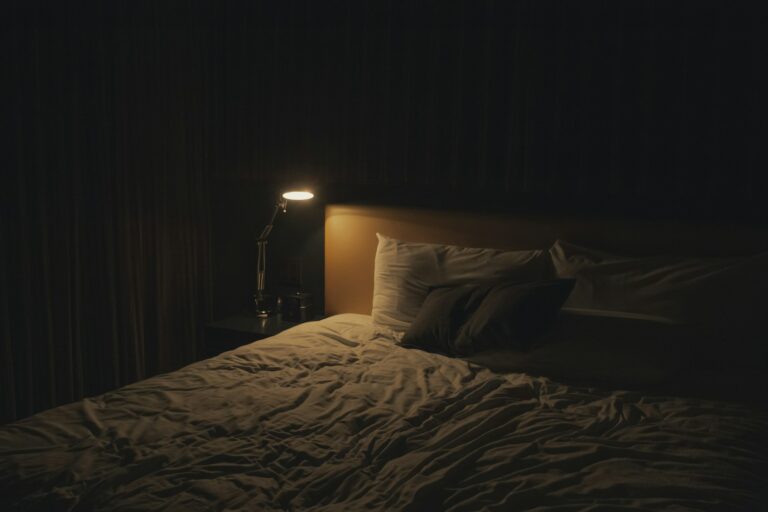
Bedroom temperature matters for sleep, but not because there is one magic number that suits every body. Sleep begins as the brain, skin, blood vessels, and bedroom negotiate heat. The science is clearer for the direction of travel than for a universal thermostat setting: most people sleep better when heat can leave the body, whilst older adults may need a warmer room than the usual advice suggests.
Sleep starts with a cooling signal
Most people think of sleep as a mental switch. The eyelids get heavy, attention loosens, and the day recedes. Underneath that familiar feeling is a thermal shift. Core body temperature begins to fall before habitual bedtime, helped by blood flow moving heat toward the skin, especially the hands and feet.
That change is not decorative biology. A review on sleep and thermoregulation describes how sleep and temperature control are coupled through the hypothalamus and peripheral blood vessels. When heat can move out through the skin, sleep onset becomes easier. When the body is too hot, or sometimes too cold, that signal becomes noisier.
This is why the simple instruction to “keep the room cool” is partly right and partly incomplete. The aim is not to chill the body. It is to support the normal evening fall in core temperature without making the skin so cold that the body has to defend its heat.
The room is only one layer
The temperature your body experiences at night is not the number on the wall thermostat. It is the microclimate under the duvet, the breathability of pyjamas, the mattress, humidity, whether two people share the bed, and how much heat the room can shed after sunset.
That is why two people can sleep in the same bedroom and have opposite complaints. One wakes sweating at 3am. The other has cold feet and cannot settle. Both may be responding to the same system: the body trying to keep core temperature within a narrow range whilst sleep pressure and circadian timing pull it toward rest.
Mattresses and bedding matter here because they sit closest to the skin. Heavy foam that traps heat can feel comfortable at lights-out and become stifling later. Linen, cotton, wool, and lighter layers are not automatically better, but they make adjustment easier. A steady room with flexible bedding is often more useful than a perfectly chosen thermostat setting with no way to fine-tune.
Cooler is not always better
The popular sleep-hygiene range is often cooler than many older adults actually prefer. In a longitudinal study of community-dwelling adults aged 65 and over, researchers found the most efficient sleep when bedroom temperatures were roughly 20-25C, with sleep efficiency dropping as rooms became warmer beyond that range. The paper on night-time ambient temperature and sleep in older adults is useful because it measured real homes rather than only laboratory nights.
That does not mean everyone over 65 should set the bedroom to 24C. It does mean the old rule of a very cool room can be too blunt. Age changes circulation, sweating, muscle mass, medication use, and the ability to sense or respond to heat and cold. Comfort also has clinical edges: arthritis pain, nocturia, hot flushes, and cardiovascular disease can all change what a tolerable night feels like.
The better question is not “What temperature is ideal?” It is “At what temperature do I fall asleep easily, stay asleep, and wake without signs of overheating or cold stress?” The answer may move across seasons and life stages.
Heat hurts sleep in several ways
Warm nights tend to disturb sleep because the body has less room to lose heat. People may take longer to fall asleep, wake more often, or spend more time near the edge of comfort. In laboratory and real-world studies, heat exposure is commonly linked with more fragmented sleep, although the exact effect depends on humidity, bedding, acclimatisation, and age.
The mechanism is straightforward enough. If the room and bedding hold too much heat, the body must push more blood to the skin and sometimes sweat. Those responses are useful for temperature control, but they are not quiet. They can compete with deeper, more stable sleep. A review of the temperature dependence of sleep makes the broader point: thermal comfort and sleep architecture are linked, and the relationship is not just about preference.
Climate makes this increasingly practical. Hotter nights are not simply uncomfortable; they remove one of the environmental cues that helps sleep consolidate. Air conditioning is one answer, but not the only one. Shading the room before sunset, ventilating when outdoor air cools, using lighter bed layers, and moving heat-generating devices away from the bed can all matter.
A warm bath can work by helping you cool
The warm-bath effect sounds paradoxical until the physiology is clear. Warming the skin before bed can widen peripheral blood vessels. After the bath or shower, heat leaves the body more readily, helping core temperature fall at the right time.
A 2019 systematic review and meta-analysis in Sleep Medicine Reviews found that warm water bathing or showering before bed was associated with shorter sleep-onset latency and improved sleep measures, especially when timed around one to two hours before bed. The effect is not a sedative in the drug sense. It is a timing cue plus a thermal nudge.
There are limits. Very hot baths close to bedtime can leave some people flushed, light-headed, or more awake. People with unstable blood pressure, falls risk, pregnancy complications, or cardiovascular disease should treat heat exposure more cautiously. For everyone else, the useful version is modest: warm rather than punishingly hot, long enough to feel relaxed, early enough to cool down afterwards.
Track patterns, not single nights
One poor night in a warm room does not prove much. Alcohol, late meals, infection, stress, pain, and noise can all disturb sleep. Temperature becomes a more useful clue when the pattern repeats. If the same duvet produces 3am waking in July, or the same cold room produces long sleep latency in winter, the environment is worth adjusting.
Sleep trackers can help if they are treated as diaries, not verdicts. Look for repeated signals: later sleep onset on hot evenings, more waking after the room stays above a certain range, or better continuity when feet stay warm but the torso does not overheat. Subjective notes still matter. “Woke sweating” and “cold feet until midnight” are more actionable than a proprietary recovery score.
The science is clearer for avoiding extremes than for prescribing one perfect number. A room that is too hot tends to fragment sleep. A room that is too cold can keep the body in heat-conservation mode. Between those poles, personal comfort is not a weakness in the evidence; it is part of the biology.
What this means in practice
- Start with a comfortable bedroom range, then adjust by sleep quality rather than chasing a universal number.
- Use layers on the bed so you can remove insulation without fully waking or disturbing a partner.
- If you overheat at night, cool the room before bed, switch to lighter bedding, and keep heat-trapping electronics away from the bedside.
- If cold feet delay sleep, warm socks or a warm footbath may help the body move heat to the skin without overheating the whole room.
- Try a warm shower or bath one to two hours before bed, especially if you struggle to fall asleep, and keep it moderate rather than very hot.
- For older adults, treat comfort as data: the best room may be warmer than standard sleep-hygiene advice suggests.
What we don’t know
Temperature research has a measurement problem. Laboratory studies control the room but may not reflect real bedrooms. Home studies capture real life but include changing bedding, partners, windows, medication, illness, and habits. Many studies are small, short, or focused on specific age groups.
We also do not yet have a precise answer for common practical questions: the best mattress material for hot sleepers, how humidity changes the ideal range, or whether wearable skin-temperature trends can reliably guide bedroom settings. The evidence supports thermoregulation as a real sleep pathway. It does not support a single thermostat rule for everyone.
For most sleepers, the useful move is modest experimentation: make the bedroom easier to cool, keep bedding adjustable, and pay attention to repeated patterns. Sleep is not only a matter of hours in bed. It is also a nightly negotiation with heat.
Photo: Sam Jotham Sutharson on Unsplash.