When a sore knee meets an exercise plan, the question is immediate: will movement help, or make things worse? For people with diagnosed knee osteoarthritis, research supports exercise, with qualifications. Benefits vary, discomfort can occur, and a general recommendation cannot decide what an individual knee will tolerate. The useful starting point is a tailored plan and a clear route for review.
What the trials actually found
A 2024 Cochrane review led by Belinda Lawford brought together 139 trials involving 12,468 people. Compared with no treatment, usual care, or limited education, land-based exercise improved pain by roughly 13 points and physical function by about 13 points on 100-point scales immediately after the programme. Certainty was low for pain and moderate for function.
Against attention control or placebo, improvements were smaller. The review judged the clinical importance of the average benefits uncertain: a statistically detectable difference may not be noticeable to a particular person. Some comparisons also suggested more adverse events with exercise.
That is a more useful account than saying exercise simply works. The question for a reader is whether an appropriate programme makes the activities they value easier. Trial averages cannot promise that outcome, but they give a reason to discuss the option rather than dismiss it because a knee already hurts.
The timing deserves attention. The Cochrane review’s plain-language summary reports programmes lasting from two to 104 weeks. The figures above describe outcomes measured immediately after the programme; some studies also collected results in the following weeks and months. These are different questions. Improvement at the end of a programme does not, by itself, show that the same benefit remains later. Nor does a range of programme lengths establish an ideal duration for an individual. When discussing the findings, it helps to separate what changed during the study from what follow-up can tell us about persistence. A short-term average is a starting point for expectations, rather than a forecast for the years ahead.
Why guidance still includes exercise
NICE’s 2022 management summary places therapeutic exercise among the core treatments for osteoarthritis. It recommends tailoring it to the person, including local muscle strengthening and general aerobic fitness, and considering supervised sessions. It also explains that pain or discomfort may occur initially.
The word “tailored” matters. A recommendation for exercise is not a recommendation that everybody starts the same walk, repeats the same squat, or follows the same video. A sensible conversation begins with the person’s symptoms, current abilities, and priorities.
For one reader, the priority might be getting to the local shop. For another, it might be returning to a favourite activity. Those are examples of goals to discuss, not promises about what exercise will deliver. They also make a better review question than whether a programme looks sufficiently demanding. What would useful progress look like in your own day?
Pain needs a plan, not a slogan
The NHS overview of osteoarthritis treatment describes exercise as an important part of care and recommends discussing a suitable programme with a GP or physiotherapist. It also cautions against doing too much too quickly or choosing unsuitable exercise.
There is room between avoiding movement altogether and treating every painful repetition as something to push through. This article cannot tell you whether today’s discomfort belongs in that middle ground. That decision needs context which a headline, a pain score, or somebody else’s routine cannot supply.
Useful questions for an appointment include: what symptoms are expected with this particular plan; which changes mean I should stop; and who should I contact if it becomes harder to manage? Ask for answers that you can understand and use at home. A plan that says only “keep exercising” leaves its most difficult decision unexplained.
There is no universal pain allowance offered here. Having a number to aim below would sound reassuring, but it would also imply an individual safety judgement this article has not made.
Good days and difficult days both count
The Royal Orthopaedic Hospital’s patient information on exercise and physiotherapy describes osteoarthritis symptoms as variable. Its pacing advice includes starting with a small amount when unfamiliar with exercise, building gradually, and taking things easier or resting when a joint feels particularly inflamed.
It also describes a physiotherapist’s role in assessing movement, strength, and flexibility. These are reasons to ask how a plan can accommodate difficult days, rather than treating every change as a failure of commitment.
Consider keeping a brief note for that conversation: the activity attempted, what felt difficult, and any questions that came up. This is an organisational suggestion, not a diagnostic test or a validated way to calculate training load. Its purpose is to make an appointment more specific.
A useful note might say “I was unsure whether to continue”, rather than “I need to try harder”. The first identifies a question the clinician can address. The second has already supplied an answer without the necessary information.
There is no single winning routine
NICE’s exercise evidence review did not establish one exercise type as consistently superior. The committee therefore supported strength and aerobic exercise tailored to individual needs, rather than one specific programme. Evidence favouring supervision in some comparisons was limited and of low quality.
This leaves a practical choice to discuss. What is available locally? What could fit around work or caring responsibilities? Would you feel more comfortable starting with supervision? These questions do not prove which exercise will work best. They help turn a broad treatment option into something concrete enough to consider.
Ask how the programme will be reviewed, too. A written list of exercises is only part of the conversation; you also need to know whom to approach if the plan is confusing or unsuitable. There is no requirement to select the most fashionable activity. The aim is an informed choice you and your clinician can revisit.
When assessment comes before exercise
Knee pain is not automatically osteoarthritis. The NHS knee-pain guidance advises against self-diagnosis and recommends seeing a GP when pain does not improve within a few weeks.
It advises getting help from NHS 111 now for a very painful knee, inability to move it or bear weight, marked swelling or a change in shape, or locking, giving way, or painful clicking. A high temperature or feeling hot, cold, or shivery alongside redness or heat around the knee also needs urgent advice and may indicate infection.
These symptoms should not be treated as routine exercise discomfort. Seek assessment rather than using this article to decide whether another session is safe. If you already have restrictions after an injury, operation, or medical assessment, the general discussion here does not override them.
This distinction sets the scope of the article: exercise evidence for diagnosed osteoarthritis cannot identify the cause of a newly painful knee.
What this means in practice
- Write down one everyday activity you would like to discuss at your next appointment, so the conversation has a concrete goal.
- Ask your GP or physiotherapist what a suitable exercise plan would involve, including whether supervision is available.
- Ask for clear instructions about expected discomfort, reasons to stop, and how to obtain a review.
- Keep any existing exercise plan and questions together; a short note can make it easier to explain what remains unclear.
- Check the NHS warning signs linked above before assuming new or markedly different symptoms are part of your usual osteoarthritis.
What we don’t know
The trials do not settle which programme will suit an individual, how large their benefit will be, or whether it will persist. Many studies were small or difficult to blind. The evidence discussed here concerns symptoms and function; it does not establish cartilage regrowth, a cure, or longer life.
Exercise deserves a place in the conversation about knee osteoarthritis. Its value is best judged through a suitable plan, realistic expectations, and a review of what matters in daily life.
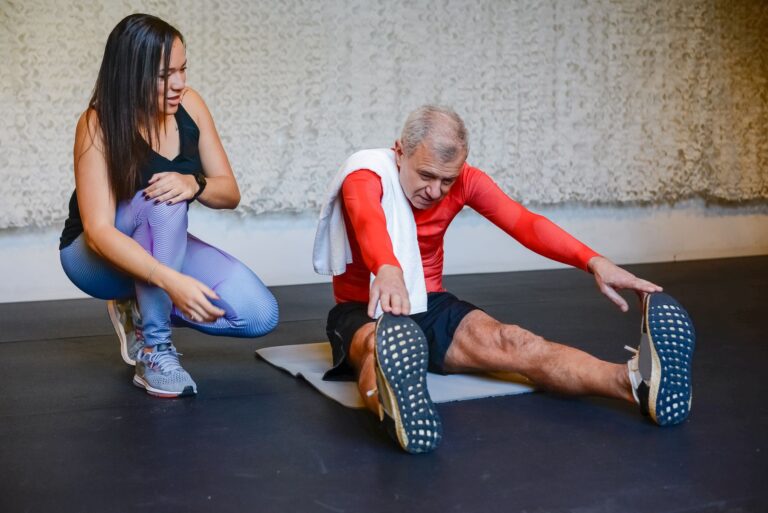
Photo: Charu D on Unsplash. Illustrative photograph; the person pictured is not identified as having osteoarthritis.