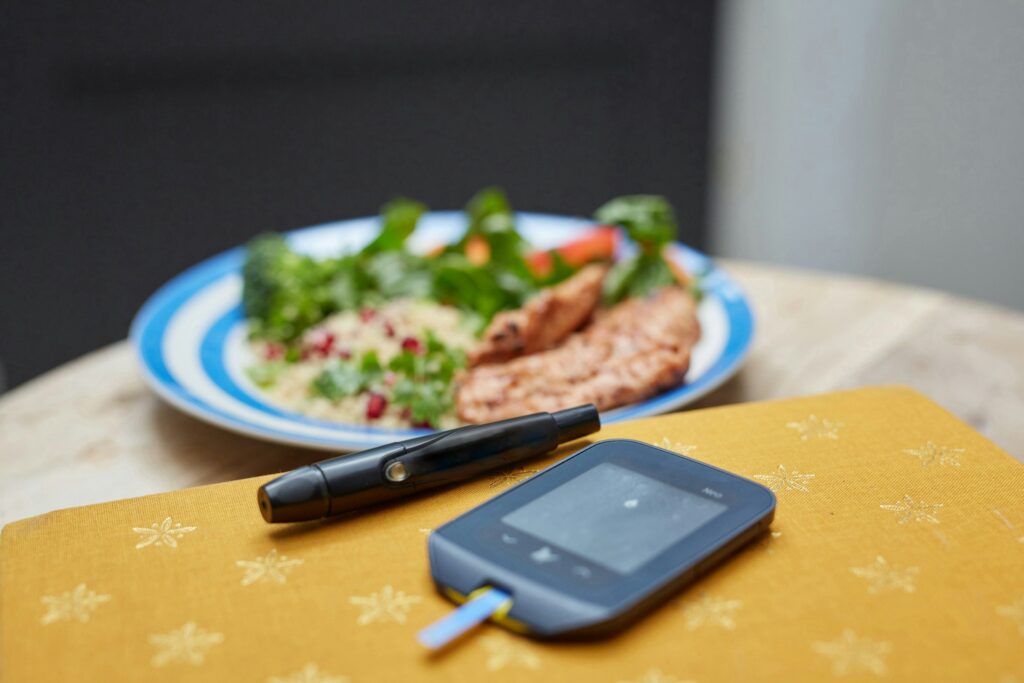
Average glucose is useful because biology likes summaries. It is also incomplete. Two people can have the same HbA1c and very different daily glucose patterns: one steady, one swinging repeatedly above and below range. Glycaemic variability is the attempt to measure that difference. What we have is a clinically useful signal, especially in diabetes care. What we do not have is a diagnosis in its own right.
What glycaemic variability actually measures
Glycaemic variability describes the amplitude and frequency of glucose swings across a day or across longer periods. In continuous glucose monitoring, the most practical expression is usually coefficient of variation, alongside time in range, time above range, and time below range. The 2019 international consensus report on continuous glucose monitoring targets recommended using a coefficient of variation threshold of 36% or lower as a marker of more stable glucose in many people with diabetes, while also emphasising time spent in the target range.
That matters because HbA1c is an average. It estimates glucose exposure over roughly two to three months, but it cannot show whether the average came from relatively smooth readings or alternating highs and lows. NIDDK guidance on continuous glucose monitoring makes the same practical point: CGM can show the current glucose estimate and how glucose changes over hours or days, allowing people to spot trends.
The mechanism is not mysterious. Meals, exercise, sleep, alcohol, illness, stress hormones, medication timing, and insulin sensitivity all affect glucose movement. A larger swing after breakfast than after dinner may be dietary, hormonal, or pharmacological. A nocturnal low followed by a morning rise means something different from a post-meal spike. The number is useful only when the pattern has context.
Why the wellness version gets ahead of the evidence
Continuous glucose monitors have moved from specialist diabetes care into consumer wellness. The pitch is often simple: flatten the curve, avoid spikes, and protect future health. The science is less tidy. In people with diabetes, especially those using insulin or medicines that can cause hypoglycaemia, glucose patterns can guide safer treatment. In people without diabetes, a transient rise after a meal is not automatically pathological.
This is where mechanism and clinical effect need to be separated. Post-meal glucose rises are real physiology. Repeated severe hyperglycaemia is clinically important. But the claim that every visible spike on a consumer app is a longevity problem is not established. The stronger clinical evidence sits in diabetes management, where continuous data can reveal hypoglycaemia, hyperglycaemia, and treatment patterns that an average misses.
NICE takes that narrower, more clinical view. NICE guidance for type 2 diabetes in adults discusses continuous glucose monitoring as part of diabetes management, particularly when treatment complexity, insulin use, or hypoglycaemia risk makes extra glucose information useful. It does not treat CGM data as a general wellness score for people without diabetes.
Time in range is usually more actionable than a single spike
A single glucose peak can look dramatic on a phone screen. Clinically, the better question is what happened across enough days to show a pattern. The international consensus report recommends that CGM reports usually include at least 14 days of data, with sufficient sensor wear, because short snapshots can mislead. The aim is not to prosecute one meal. It is to identify repeated time above range, repeated time below range, or high variability that might be modifiable.
Time in range is also easier to translate than most variability statistics. For many non-pregnant adults with type 1 or type 2 diabetes, the consensus target is at least 70% of readings between 70 and 180 mg/dL, or 3.9 to 10.0 mmol/L, while keeping time below range low. Those targets are not meant to be copied uncritically into people without diabetes. They are diabetes targets, designed around treatment benefit and safety.
Coefficient of variation adds another layer. A person may spend a reasonable percentage of time in range but still move sharply between highs and lows. That can matter if lows are frequent, if insulin dosing is difficult, or if post-meal excursions are repeated. It is less helpful when detached from the clinical question. A beautiful graph is not the endpoint. Better decisions are.
Where variability may matter biologically
There are plausible reasons to care about glucose swings. Laboratory and clinical research has linked fluctuating glucose with oxidative stress, endothelial function, inflammation, and diabetic complications. Observational studies also find associations between higher variability and worse outcomes in certain groups. In acute care, for example, a 2024 systematic review and meta-analysis in critically ill patients reported a consistent association between higher glycaemic variability and higher short-term mortality.
That finding is important, but it should not be overexported. Critical illness is not everyday metabolic health. In intensive care, glucose variability may reflect severity of illness, treatment complexity, stress physiology, nutrition changes, and organ dysfunction. It may be a risk marker, a contributor, or both. The study supports the idea that variability can carry prognostic information in high-risk settings. It does not prove that a healthy person who sees a lunch spike has increased mortality risk.
The same caution applies in type 2 diabetes. Greater long-term variability in HbA1c or glucose readings is often associated with poorer outcomes, but association is not a treatment pathway. The useful question is not whether variability is “bad” in the abstract. It is whether measuring it changes treatment, reduces hypoglycaemia, improves time in range, or helps someone make a sustainable dietary or medication adjustment.
For diabetes, the clinical use case is clearer
For someone using insulin, glycaemic variability can be immediately relevant. Repeated overnight lows may call for medication review. Recurrent post-breakfast highs may point to meal composition, dose timing, dawn physiology, or basal insulin settings. High variability can also explain why two people with similar HbA1c values have different symptoms, different hypoglycaemia risk, and different daily burden.
This is why continuous monitoring has changed diabetes conversations. Finger-prick tests provide moments. HbA1c provides an average. CGM provides a profile. Used well, that profile can make treatment safer and more personal. Used poorly, it can create noise, anxiety, and a false sense that every curve needs immediate correction.
The conservative approach is to start with the clinical question. Is the person having suspected hypoglycaemia? Are HbA1c and symptoms mismatched? Are post-meal readings repeatedly high despite treatment? Is a medication change being assessed? In those cases, variability data may clarify a decision. Without such a question, the data can become a mirror that keeps asking for attention.
For people without diabetes, interpretation is harder
In people without diabetes, glucose variability is usually narrower, and the clinical thresholds are much less settled. A non-diabetic person may see a rise after white rice, a larger rise after poor sleep, or a flatter curve after walking. Those observations can be interesting. They are not automatically diagnostic, and they do not replace standard testing when diabetes or prediabetes is a concern.
If the question is whether someone has diabetes, HbA1c, fasting plasma glucose, and oral glucose tolerance testing remain the established routes. If the question is whether a particular meal produces a larger response than expected, CGM can generate a hypothesis. That hypothesis still needs perspective: total diet, body weight, waist circumference, lipids, blood pressure, family history, medication use, and sleep are all part of the metabolic picture.
There is also a behavioural cost. Some people use glucose feedback to build a more consistent eating pattern. Others become more restrictive, more anxious, or more convinced that normal physiology is a personal failure. A glucose curve can inform. It should not become a moral score.
What this means in practice
- If you have diabetes and use insulin or medicines that can cause lows, discuss time in range, time below range, and variability with your clinician rather than focusing only on HbA1c.
- If you use a CGM, look for repeated patterns over 10 to 14 days, not isolated spikes from a single meal.
- Pair glucose data with context: sleep, illness, exercise, alcohol, medication timing, stress, and meal composition can all change the curve.
- Do not use consumer CGM readings to diagnose diabetes. Use established tests through a clinician if you are concerned.
- For post-meal rises, test boring interventions first: a walk after meals, more fibre-rich carbohydrates, protein with carbohydrate, and consistent meal timing.
- If the data is making you anxious or more restrictive, the tool is no longer neutral. Pause and review whether it is helping a real clinical decision.
What we don’t know
We do not yet know whether reducing glycaemic variability in otherwise healthy people improves long-term outcomes independently of weight, fitness, diet quality, sleep, and standard metabolic risk factors. We also do not have universally accepted variability targets for people without diabetes. A diabetes-derived metric can be informative, but it is not automatically transferable.
We also do not know how much of the association between variability and outcomes is causal. In some settings, variability may contribute to harm. In others, it may mostly mark underlying illness, treatment intensity, or unstable routines. That distinction matters because treating the number is not the same as improving the person.
The practical conclusion is restrained. Glycaemic variability is a useful signal when it answers a defined clinical question. It is especially valuable in diabetes care because it shows what averages hide. Outside that context, it can generate helpful hypotheses, but it should not be promoted into a diagnosis, a longevity score, or a reason to fear normal meals.
Photo: Sweet Life on Unsplash.