Magnesium has become another mineral with a marketing department. It is sold for sleep, calm, blood pressure, glucose control, cramps, and longevity, usually with more certainty than the evidence allows. The quieter truth is still useful: many adults do not eat enough magnesium-rich foods, and after 50, that gap is worth closing without turning one nutrient into a cure.
Why magnesium gets attention after midlife
Magnesium is not exotic. It is a basic mineral involved in hundreds of enzyme systems, including those linked with muscle and nerve function, blood glucose control, blood pressure regulation, protein synthesis, and bone structure, according to the NIH Office of Dietary Supplements magnesium fact sheet. That breadth is exactly why magnesium claims can get slippery. When a nutrient is involved in many processes, it is tempting to imply that adding more of it will improve all of them.
The better question is narrower: are you regularly eating foods that contain magnesium, and are you in a group more likely to fall short? For many people, the answer is not a clean yes. Diets built around refined grains, low vegetable intake, and few legumes, nuts, or seeds make it easy to miss the target. Ageing can add more reasons to pay attention, including medication use, chronic digestive conditions, type 2 diabetes, and kidney function changes.
How much are we actually talking about?
The adult recommended intake is not one universal number. The NIH lists daily magnesium targets of 320 mg for women aged 31 and over, and 420 mg for men aged 31 and over. That does not mean readers need to turn dinner into arithmetic. It means the scale matters: a few magnesium-rich foods across a day can be meaningful, whilst one sprinkle of seeds is not a mineral strategy.
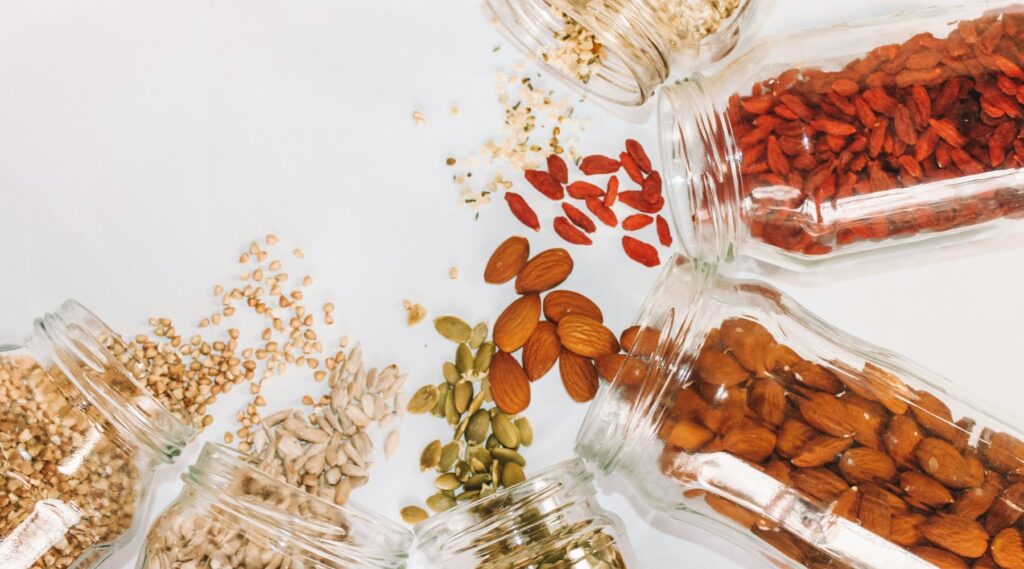
Food examples make the point better than supplement labels. Cleveland Clinic’s registered-dietitian guide to magnesium-rich foods lists pumpkin seeds, chia seeds, almonds, cashews, black beans, edamame, quinoa, spinach, Swiss chard, potatoes with skin, yoghurt, and dark chocolate as useful contributors. The pattern is familiar: legumes, whole grains, nuts, seeds, leafy greens, and some dairy. It is not a list of rare foods.
That familiarity is important. Magnesium adequacy is usually less about finding the single highest-magnesium food and more about making the ordinary high-magnesium foods show up often enough.
The evidence is strongest for patterns, not miracles
The optimistic case for magnesium mostly comes from observational nutrition research. A 2016 dose-response meta-analysis in BMC Medicine pooled prospective cohort studies involving more than one million participants. It found that higher dietary magnesium intake was associated with lower risk of stroke, heart failure, type 2 diabetes, and all-cause mortality, but not clearly with total cardiovascular disease or coronary heart disease.
That is a signal, not a verdict. People who eat more magnesium-rich foods often eat more fibre, more plants, fewer refined foods, and sometimes have more money, more time, and better access to healthcare. Statistical adjustment helps, but it does not turn food-frequency questionnaires into a controlled experiment. Magnesium may be part of the benefit. It may also be a marker for a better overall diet.
This is where the food-first argument is strongest. If the foods that provide magnesium also bring fibre, unsaturated fats, potassium, plant protein, and other micronutrients, the practical advice does not depend on magnesium being the lone hero. Beans, oats, nuts, seeds, greens, and yoghurt earn their place even if the mineral itself is only one piece of the picture.
What about blood pressure and glucose?
Magnesium is often promoted for blood pressure, and there is some clinical-trial evidence, especially for people with hypertension or low magnesium status. A 2025 systematic review and meta-analysis of randomised controlled trials reported modest average reductions in systolic and diastolic blood pressure with magnesium supplementation, with larger effects in people with hypertension on blood-pressure medication and in those with hypomagnesaemia. The authors also noted high heterogeneity and called for better trials.
That is not the same as saying everyone over 50 should take magnesium. A small average blood-pressure reduction in a trial is not a replacement for diagnosis, medication when needed, exercise, salt reduction, weight management, or a broader dietary pattern such as DASH or Mediterranean-style eating. It is a possible supporting factor, especially when deficiency is present.
The glucose story is similar. Higher magnesium intake has been associated with lower type 2 diabetes risk in cohort studies, and magnesium biology is plausibly involved in insulin signalling. But again, the intervention question is more modest than the headline version. Correcting low magnesium may matter. Taking high-dose magnesium on top of a poor diet is unlikely to do what legumes, whole grains, vegetables, movement, sleep, and evidence-based diabetes care are meant to do.
Food sources beat capsule logic for most people
A magnesium capsule is clean and countable. Food is messier. That is partly why supplements sell so well: they make the problem feel isolated. But nutrition rarely works that neatly.
Consider a practical day. Porridge with chia seeds at breakfast, lentil soup or black beans at lunch, a handful of almonds, leafy greens with dinner, and yoghurt or dark chocolate in a sensible portion will move magnesium intake without asking anyone to memorise a table. The same day also raises fibre, improves protein distribution, and usually displaces more processed snacks. The mineral is not acting alone.
There are exceptions. People with diagnosed deficiency, malabsorption disorders, poorly controlled diabetes, heavy alcohol use, or certain medication patterns may need testing and clinician-guided supplementation. For everyone else, starting with food is the lower-risk move.
When supplements deserve caution
Magnesium from food is rarely a toxicity problem in people with healthy kidneys, because excess is usually excreted. Supplements and magnesium-containing laxatives are different. The Harvard Nutrition Source overview of magnesium notes that toxicity is rare from food but can occur with long-term high-dose supplement use, especially in people with kidney disease.
The common side effect is less dramatic but still unpleasant: diarrhoea, nausea, and abdominal cramping. Magnesium can also interact with some medicines, including certain antibiotics and bisphosphonates, depending on timing and formulation. Anyone with kidney disease, heart rhythm problems, complex medication use, or persistent symptoms should treat magnesium as a clinical question, not an online shopping category.
What this means in practice
- Build magnesium from a pattern: legumes, whole grains, nuts, seeds, leafy greens, yoghurt, potatoes with skin, and occasional dark chocolate.
- Use one or two small daily anchors, such as chia in oats, beans at lunch, or a measured handful of almonds.
- Do not chase one food as a cure. Magnesium-rich foods work best as part of a higher-fibre, minimally processed diet.
- If you have diabetes, digestive disease, heavy alcohol use, or take regular medicines, ask your clinician whether testing is relevant.
- Avoid high-dose magnesium supplements unless a clinician has a reason for them, especially if kidney function is reduced.
What we don’t know
We do not know how much of the long-term disease signal belongs to magnesium itself and how much belongs to the foods that carry it. Most dietary-magnesium evidence is observational, and people who eat more nuts, beans, seeds, and greens differ from people who do not in many ways.
We also do not have a clean answer for who benefits most from supplementation when they are not deficient. Trial results are more persuasive in people with hypertension or low magnesium status than in healthy adults with adequate diets. That distinction matters. A nutrient can be essential without being a treatment for every condition attached to it.
Magnesium-rich foods are worth eating after 50, but not because magnesium is a shortcut. They are worth eating because they sit inside the kind of diet that keeps proving useful, one unglamorous meal at a time.
Photo: Maddi Bazzocco on Unsplash.