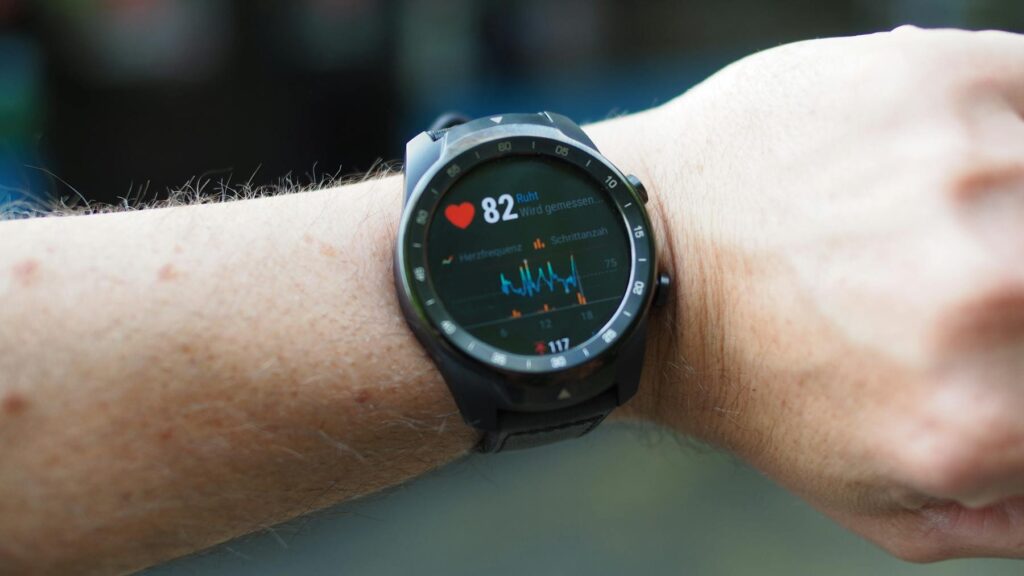
The number usually appears before breakfast: a recovery score, a coloured ring, a small warning that last night’s HRV was lower than usual. It can feel oddly intimate, as if the watch has seen stress before the mind has named it. Heart-rate variability can reflect how the autonomic nervous system is steering the heart from one beat to the next, but it is also pulled around by sleep, illness, alcohol, exercise, pregnancy, medicines, measurement error, and ordinary life. Used well, it is a trend to notice. Used badly, it becomes another thing to fear.
What HRV is actually measuring
Heart-rate variability is the small variation in time between one heartbeat and the next. A pulse of 60 beats per minute does not mean the heart beats exactly once every second. The gaps stretch and narrow as breathing, posture, temperature, blood pressure, and the autonomic nervous system keep adjusting the body to its surroundings.
That is why HRV is often described as an indirect window into sympathetic and parasympathetic balance. The sympathetic branch helps mobilise the body for effort; the parasympathetic branch, heavily mediated through the vagus nerve, is more involved in slowing and settling cardiac rhythm. But the window is narrow. As a 2026 review in Frontiers in Physiology argues, HRV reflects neural regulation of the heart, not the whole autonomic nervous system in every tissue.
Why stress often lowers the signal
When people are under acute psychological or physical load, HRV often falls. That pattern is plausible: the body shifts towards arousal, and beat-to-beat flexibility tends to narrow. A scoping review of HRV and psychological stress in healthy adults found that many studies report HRV changes across different stress states, though the measures and protocols vary enough to make simple rules difficult.
The most useful word is often often. HRV is not a lie detector for stress. It cannot reliably tell the difference between a difficult meeting, a hard interval session, a poor night of sleep, mild dehydration, alcohol, jet lag, or an infection beginning before symptoms become obvious. The number is physiological arousal, not a diary entry.
Recovery is a pattern, not a morning verdict
The consumer-wearable version of HRV is usually sold as recovery: a low overnight value means the body has not settled, while a higher value suggests better readiness. There is some logic here, especially when HRV is compared with a person’s own baseline rather than with someone else’s number.
Still, the evidence is more careful than the dashboard. In a 2025 systematic review and meta-analysis of continuous HRV monitoring in doctors, some HRV measures differed between stress and recovery periods, but the included studies were small and methodologically varied. That is a useful signal for research. It is not a command to cancel a walk, skip work, or diagnose burnout from one low reading.
The better question is not, “Is my HRV good today?” It is, “Is this week different from my usual pattern, and does that fit what I am feeling?” A falling trend alongside poor sleep, soreness, heavy training, irritability, or the first signs of illness deserves attention. A single odd morning often deserves patience.
Why your watch and a clinical test are not the same thing
Clinical HRV studies usually use electrocardiography, carefully cleaned beat-to-beat data, defined recording windows, and controlled conditions. Many watches and rings estimate related signals from optical sensors at the wrist or finger. That is a remarkable engineering achievement, but it is still a different setting.
Motion, loose contact, skin temperature, poor peripheral blood flow, ectopic beats, and algorithm choices can all distort the result. The same Frontiers review notes that short-term and 24-hour HRV measurements are not interchangeable, and that artefacts, arrhythmias, breathing pattern, medicines, and age complicate interpretation. A consumer device may be good enough to show a personal trend. It should not be treated as a clinical autonomic-function test.
The factors that move HRV besides stress
This is where HRV becomes useful and humbling. A 2024 narrative review of factors influencing HRV groups the influences into physiology, disease, lifestyle, and environment. Age, sex, circadian rhythm, pregnancy, physical fitness, alcohol, body weight, temperature, shift work, and multiple health conditions can all affect the measurement.
Medicines matter too. Beta-blockers, some antidepressants, stimulants, anticholinergic drugs, and other treatments may change heart rate or autonomic signalling. That does not make them good or bad; it means the HRV chart is no longer measuring a clean lifestyle experiment. Acute illness, fever, pain, poor sleep, and recent heavy exercise can also push the number away from baseline.
For athletes and regular exercisers, a low HRV trend may reflect accumulated load. For someone returning from infection, it may reflect recovery still underway. For someone tracking obsessively, it may create the very anxiety it claims to measure.
When HRV should prompt care, not self-experimentation
HRV is not designed to diagnose atrial fibrillation, thyroid disease, pregnancy complications, overtraining syndrome, anxiety disorders, or heart disease. It can be misleading in people with arrhythmias because irregular beats can change the calculation itself.
Clinical symptoms matter more than a recovery score. The National Heart, Lung, and Blood Institute lists atrial fibrillation symptoms such as palpitations, chest pain, dizziness or fainting, breathlessness, and fatigue. The American Heart Association also warns that chest pain or pressure can be a medical emergency. Anyone with chest pain, fainting, severe breathlessness, new neurological symptoms, or a fast or irregular heartbeat that feels worrying should seek urgent medical advice rather than trying to interpret HRV.
Pregnancy is another reason to be cautious. Heart rate, blood volume, sleep, temperature, and autonomic patterns change across pregnancy and the postpartum period. HRV readings may shift for reasons that are normal, reasons that need routine discussion, or reasons that require care. The chart alone cannot sort those categories.
What this means in practice
- Compare HRV with your own baseline over several weeks, not with someone else’s score or a universal “normal” range.
- Look for patterns that match lived context: sleep loss, alcohol, acute illness, heavy training, travel, heat, or unusual work stress.
- Treat one low reading as a prompt to notice, not a verdict. Repeated changes are usually more informative than a single morning.
- Do not use HRV to change medication, diagnose a condition, or decide whether symptoms are safe. Use clinical symptoms and professional advice for that.
- If tracking increases anxiety or makes ordinary body sensations feel threatening, take a break from the metric or hide it from your main dashboard.
- For exercise recovery, combine HRV with resting heart rate, sleep, soreness, mood, and performance rather than letting one number make the decision.
What we don’t know
The main uncertainty is not whether HRV contains information. It does. The uncertainty is how much of that information a consumer device can interpret for one person on one day. We still lack clear clinical thresholds for many healthy adults, consistent device-to-device validation, and evidence that chasing a higher HRV number improves long-term health outcomes.
There is also a behavioural uncertainty. Some people use HRV gently, as a reminder to sleep, rest, or reduce training load when the rest of the picture agrees. Others become trapped by it, waking into a score that tells them how they are supposed to feel. The nervous system is not helped by being monitored into alarm.
HRV can still be a useful recovery clue when it is read slowly, in context, and against your own baseline. It becomes less useful when it is treated as a diagnosis, a daily grade, or a target to force upwards. The most honest use of the metric is modest: notice the trend, check it against the body you are living in, and let symptoms outrank the screen.
Photo: Jens Mahnke on Pexels.