Wall squats and planks made headlines in 2023 when a large meta-analysis ranked isometric exercise ahead of walking, running, and conventional gym training for lowering resting blood pressure. The finding was real. It was also easy to misread as proof that holding still beats moving. The better question is what isometric training can add for adults managing borderline or diagnosed hypertension — and where the evidence still falls short.
What isometric exercise actually is
Isometric exercise means generating force without changing joint angle: pressing against an immovable object, holding a squat position against a wall, maintaining a plank, or squeezing a grip trainer without moving the wrist. Your muscles work hard, but the limb stays still.
That distinction matters because blood pressure rises sharply during many isometric holds. A wall squat can push systolic readings well above everyday levels for the duration of the hold. The clinical interest is not what happens in the final ten seconds of a plank. It is whether repeated training lowers resting blood pressure hours and days later, the same post-exercise hypotension phenomenon familiar from aerobic workouts.
Common home-friendly examples include wall sits, static lunges held at mid-depth, planks, side planks, and sustained hand-grip contractions using a dynamometer or rolled towel. Published trials rarely use exotic equipment. They use positions a person can repeat three or four times a week without a gym membership.
Why blood pressure became an isometric story
Hypertension is common, usually silent, and closely tied to heart attack and stroke risk. The NHS advises lifestyle changes — including regular exercise, weight management, and lower salt intake — alongside medicines when readings stay high. Exercise has long sat in that bundle, typically framed as brisk walking, cycling, or other rhythmic aerobic work for at least 150 minutes a week.
Resistance training entered the conversation more slowly. The American College of Sports Medicine notes that regular aerobic exercise lowers resting systolic blood pressure by roughly 5–7 mmHg in people with hypertension, with smaller average reductions from dynamic resistance work. Those are meaningful shifts at population scale, even when individual responses vary.
Isometric training was a smaller research niche until network meta-analyses began comparing modes head-to-head. Headlines followed, often featuring wall squats and planks as unexpected winners. The British Heart Foundation reviewed the coverage in 2023 and stressed a point easy to lose in summary articles: no single exercise type replaces medical follow-up, medicines when prescribed, or broader lifestyle work.
What the 2023 meta-analysis reported
The most cited recent evidence is a 2023 systematic review and network meta-analysis in the British Journal of Sports Medicine led by Jamie Edwards and colleagues. The team pooled 270 randomised controlled trials and 15,827 participants, comparing aerobic training, dynamic resistance, combined programmes, high-intensity interval training, and isometric protocols lasting at least two weeks.
In pairwise analyses, isometric training showed the largest average reductions in resting blood pressure: about 8.2 mmHg systolic and 4.0 mmHg diastolic. Aerobic training averaged near 4.5/2.5 mmHg; dynamic resistance near 4.6/3.0 mmHg. Combined aerobic-plus-resistance programmes also performed well on systolic readings, though not always on diastolic measures.
Network rankings told a similar story. For lowering systolic pressure, isometric training sat at the top of the probability rankings; wall squats were the strongest isometric sub-type in that model. The authors concluded that multiple exercise forms help, but isometric work deserves a clearer place in hypertension prevention guidance than it has traditionally received.
Those numbers describe group averages across trials with different populations, session lengths, and supervision levels. They are not a promise that any one person will drop eight points. They do suggest the mode is more than a headline curiosity.
What a typical programme looks like in trials
Published isometric blood-pressure trials share a family resemblance even when exact protocols differ. Most use three or four sessions per week. Each session commonly includes four two-minute holds separated by one to four minutes of rest, progressed over eight to twelve weeks.
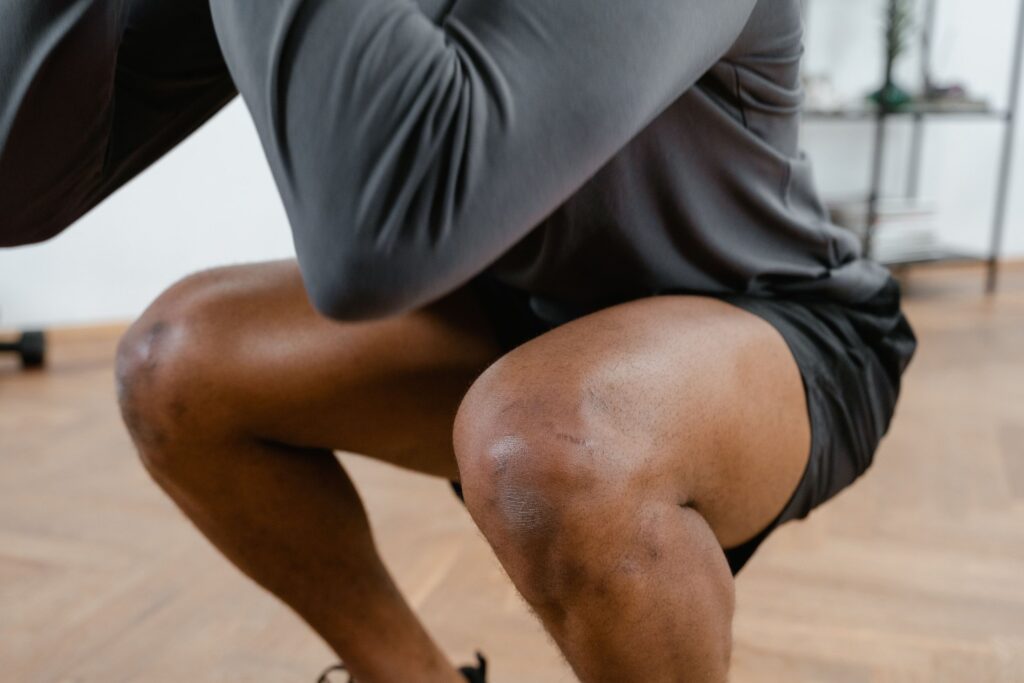
Wall squats are frequent because knee angle and back position are easy to standardise: slide down a wall until thighs are roughly parallel to the floor, keep feet shoulder-width apart, and hold without bouncing. Planks and hand-grip tasks appear often in laboratory studies because force can be measured precisely.
Intensity is usually moderate to strong — enough that the hold feels genuinely hard by the final thirty seconds, but not so extreme that breath-holding and straining dominate. Breath-holding during maximal efforts can spike blood pressure acutely and is discouraged in clinical exercise guidance.
Supervision rates vary. Many trials used monitored sessions early in the programme. That matters for translation: a person copying the protocol from a news article without form checks may load the lower back or knees differently from trial participants.
Who might benefit — and who should be careful
Trials included adults with elevated or diagnosed hypertension, often alongside other cardiovascular risk factors, but generally excluded unstable heart disease and poorly controlled readings. The pattern fits public-health logic: people with mildly raised pressure and physician clearance are the most plausible candidates for a lifestyle add-on.
Caution is not theoretical. Isometric effort can cause sharp short-term blood-pressure spikes during the hold. Anyone with uncontrolled hypertension, a history of heart attack or stroke, significant valve disease, aortic aneurysm, retinal complications, or exercise-limiting symptoms should speak with a clinician before starting wall sits or planks as therapy.
Older adults with knee osteoarthritis may need a shallower wall squat or alternative holds such as a seated leg press against a fixed surface. People prone to dizziness should have stable support nearby and rise slowly after holds. Pregnant women and those recovering from recent surgery need individual advice rather than a magazine protocol.
Even healthy adults should treat isometric work as one component of fitness. The same BJSM analysis found meaningful benefits from walking programmes and resistance training. Longevity-focused exercise still needs strength, aerobic capacity, and balance — not only static holds.
What this means in practice
- Ask your GP or practice nurse whether isometric training fits your blood-pressure profile, especially if you already take antihypertensive medicines.
- If cleared, try a simple wall squat: four holds of about two minutes, with two minutes’ rest between, three days a week.
- Keep breathing steadily during holds; do not clamp down and bear down as if lifting a heavy weight.
- Track resting blood pressure at home with a validated cuff, at a consistent time of day, and share readings at your next review.
- Keep walking, cycling, or other aerobic work in the week; the evidence still supports 150 minutes of moderate activity as a baseline.
- Stop and seek advice if you notice chest pain, unusual breathlessness, severe headache, or vision changes during or after sessions.
What we don’t know
The headline numbers come from pooled trials, not from one definitive long-term study in every population. Most interventions ran for twelve weeks or less. We still lack clear answers on durability after people stop training, optimal hold duration for home users, and direct comparison with antihypertensive drugs in head-to-head trials.
Network meta-analysis ranks modes statistically; it does not prove wall squats are the right first prescription for every patient. Real-world adherence, joint pain, and concurrent medicines may blunt the averages seen in supervised research.
Isometric exercise looks like a credible, low-equipment addition to blood-pressure management for many adults. It is not a reason to skip check-ups, ignore salt intake, or change medicines without medical guidance. For people who can perform holds safely, the evidence is strong enough to try — and to measure whether it works for them.
Photo: MART PRODUCTION on Pexels.