A bedroom can sound quiet enough and still keep the sleeping brain on duty. Night-time noise does not need to wake you fully to matter. The evidence is clearer for repeated peaks, traffic bursts, and aircraft noise than for every small household sound, but the mechanism is straightforward: the auditory system remains partly open during sleep, and sleep architecture can be nudged out of its deeper stages.
The sleeping brain is not switched off
Sleep is not one uniform state. It moves through lighter non-REM sleep, deeper slow-wave sleep, and REM sleep in cycles across the night. That architecture matters because each stage carries different work. Slow-wave sleep is where arousal threshold is highest, tissue repair and immune activity are supported, and waking from it tends to produce the thick mental fog known as sleep inertia. REM sleep is more active, more dream-rich, and closely involved in emotion and memory processing.
The basic physiology is well established. The NIH Bookshelf overview of sleep stages describes N3, or slow-wave sleep, as the deepest non-REM stage, whilst REM sleep becomes longer later in the night. That is why a noise event at 2am may have a different effect from the same event at 6am. It is not only the decibel level. It is the timing, the suddenness, and the sleep stage it interrupts.
This is also why people can say they slept through the night and still wake unrefreshed. A person may not remember brief cortical arousals or stage shifts. The brain registers the interruption; the morning memory often does not.
Noise fragments sleep before it wakes you
The science is clearer for environmental noise than for the vague idea of a noisy bedroom. Transport noise has been studied because it is common, measurable, and often repeated: road traffic, trains, aircraft, and freight movements. These sounds tend to arrive as peaks rather than as a steady background. The sleeper does not merely hear them. The body can respond with cortical arousal, heart-rate changes, and movement into lighter sleep.
A systematic review and meta-analysis updating the WHO evidence base found that transportation noise is associated with higher odds of self-reported sleep disturbance. The important word is disturbance, not awakening. Full awakening is only the obvious end of the spectrum. Smaller arousals can still cut into sleep continuity.
This distinction matters after 50, when sleep is already more fragile for many adults. Slow-wave sleep generally declines with age, and awakenings become more common. Noise is not the only reason older adults sleep lightly, but it can stack on top of an architecture that has less margin than it did at 25.
White noise is not automatically the fix
The popular answer to a noisy room is often to add more sound: white noise, pink noise, brown noise, rain sounds, fan noise. The logic is plausible. A steady sound may mask sudden peaks, making the contrast between silence and a passing lorry less sharp. In practice, the evidence is less settled than the market suggests.
A 2026 editorial in Sleep on protecting sleep in a noisy world summarised a controlled laboratory study in which simulated environmental noise fragmented sleep and reduced N3 sleep. Foam earplugs helped restore sleep architecture under some conditions. Continuous pink noise, by contrast, produced a dose-dependent reduction in REM sleep and did not deliver a clear net benefit when added to environmental noise.
That does not mean every fan or sound machine is harmful. It means the claim should be modest. If a steady low sound helps someone fall asleep in an unpredictable environment, that is useful. But broadband noise should not be treated as a harmless universal sleep aid, especially at higher volumes or for children. The goal is less disruptive sound reaching the sleeper, not a louder soundscape that simply feels more intentional.
The cardiovascular signal is not just annoyance
Noise is easy to dismiss as irritation, but the physiology points beyond annoyance. During sleep, repeated sound peaks can activate sympathetic pathways: the same alerting system that raises heart rate and prepares the body to respond. If that happens night after night, the plausible concern is not only a groggy morning. It is chronic stress on systems that should spend the night downshifting.
A 2026 randomised crossover study published in Cardiovascular Research tested acute night-time road-traffic noise in healthy adults. After noise exposure, participants showed poorer vascular function, higher heart rate, disrupted sleep, and blood-protein changes linked with inflammation and stress responses. The study was short-term and conducted in healthy volunteers, so it does not prove that one noisy night causes heart disease. It does show that the sleeping body is not indifferent to realistic traffic noise.
The wider evidence on transport noise and cardiovascular outcomes is observational, which means confounding is a serious issue. People living near busy roads may also face more air pollution, less green space, and different socioeconomic pressures. Still, when the sleep data, stress physiology, and population studies point in the same direction, noise deserves to be treated as an environmental health exposure rather than a lifestyle nuisance.
Measure the pattern, not just the volume
A decibel reading can help, but it is an incomplete map of the problem. Two bedrooms may average the same sound level whilst producing very different sleep disruption. A steady low hum may be less arousing than ten unpredictable peaks. A bedroom facing a road may be quiet for stretches and then repeatedly interrupted by braking, motorbikes, sirens, or early deliveries.
The first practical question is therefore not, “Is my room silent?” It is, “What sound events are pulling me out of stable sleep?” For some people, the answer is external traffic. For others, it is a partner’s snoring, a neighbour’s television, a heating system, a baby monitor, or a pet moving around the room. The intervention depends on the source.
Sleep trackers can sometimes hint at the pattern if awakenings cluster at the same time as noise events, but they are blunt instruments. A simple sleep diary may be more useful: note bedtime, wake time, remembered awakenings, morning restfulness, and obvious overnight noises for a week. Patterns usually matter more than one bad night.
Reduce exposure before adding masking
The hierarchy is simple. First, reduce the noise at source if you can. Second, block or attenuate it before it reaches the ear. Third, consider masking only when the first two are not enough.
For outdoor noise, the boring interventions are usually the strongest: close the window on noisy nights, move the bed away from the exposed wall, use heavier curtains, repair window seals, or choose the quieter side of the home for sleeping if that is possible. For indoor noise, the answer may be a conversation about television volume, door closing, appliance timing, or snoring that needs medical attention rather than tolerance.
Earplugs are not glamorous, but they fit the mechanism. They reduce incoming peaks rather than adding a competing signal. Fit matters: poorly fitted foam plugs attenuate far less than their packaging suggests, and some people find pressure or wax build-up makes nightly use impractical. The right conclusion is not that everyone should sleep in earplugs. It is that sound reduction is biologically cleaner than turning up another sound and hoping the brain prefers it.
What this means in practice
- Track noise and sleep for one week before buying anything: note remembered awakenings, morning restfulness, and obvious sound events.
- Prioritise sudden peaks over a steady low background. Braking traffic, doors, snoring, and deliveries are often more disruptive than a quiet hum.
- Try source reduction first: window seals, bed position, quieter appliance timing, or a bedroom away from the road where possible.
- If you use earplugs, test fit and comfort before relying on them nightly. They should reduce sound without pain, pressure, or irritation.
- Keep sound machines low if you use them. They are masking tools, not treatments for poor sleep architecture.
- If snoring, choking, or pauses in breathing are part of the noise problem, treat that as a possible sleep-apnoea signal, not a household annoyance.
What we don’t know
We do not yet have perfect evidence for the everyday bedroom decisions people actually face. Most laboratory studies are short, many participants are young and healthy, and real homes vary enormously. A person habituated to city noise may respond differently from someone newly exposed to it. The evidence for broadband noise as a sleep aid is also uneven, with small studies and mixed methods.
What we can say is narrower and more useful. Repeated night-time noise can fragment sleep architecture. The body can react even when the mind does not remember waking. Lowering disruptive exposure is more defensible than assuming a louder masking sound is automatically benign.
Good sleep is not silence at any cost. It is stable architecture. The quieter the sleeping brain can stay, the better chance it has to do the night’s repair work without being repeatedly called back to guard duty.
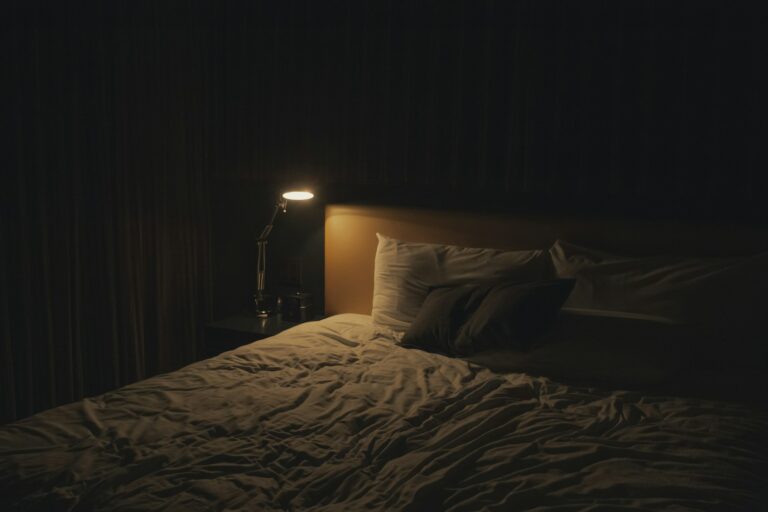
Photo: dp singh Bhullar on Pexels.