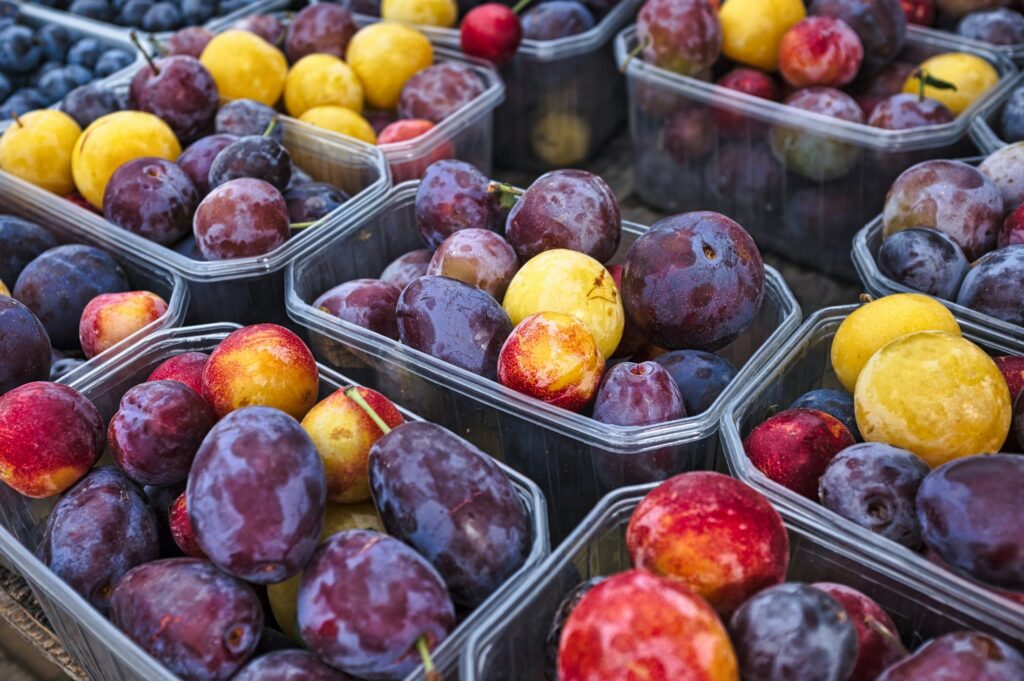
Prunes have become an oddly specific bone-health food. That does not make them a cure, a substitute for osteoporosis care, or a dietary obligation. It does make them worth a calmer look. The best human data are in postmenopausal women, and they suggest a modest, plausible effect on bone measures. The larger question is whether that evidence fits real meals.
Why prunes entered the bone conversation
The prune claim is not quite the usual superfood story. It did not begin with a smoothie brand or a celebrity pantry. It comes from a small but persistent line of research into dried plums, polyphenols, fibre, and bone turnover after menopause.
That matters because bone loss is not only a calcium story. Bone is living tissue, continually broken down and rebuilt. After menopause, falling oestrogen tends to tilt that balance towards faster loss. Diet cannot erase that biology, but dietary patterns can influence the materials and inflammatory environment in which bone remodelling takes place.
Prunes are a dense package: fibre, sorbitol, potassium, vitamin K, boron, and phenolic compounds. None of those ingredients proves a bone benefit on its own. Food does not behave like a single-ingredient drug. Still, the combination is biologically plausible enough to test, and several research groups have done that.
What the best trial actually found
The most useful starting point is a 12-month randomised controlled trial in postmenopausal women published in The American Journal of Clinical Nutrition. Researchers assigned 235 women to a control group, 50 grams of prunes a day, or 100 grams a day, then measured bone mineral density and bone biomarkers over time.
The headline result was specific, not sweeping. Total hip bone mineral density declined in the control group over 12 months. In the 50-gram prune group, it was better preserved. The 100-gram group did not clearly outperform control in the same way, and it had a much higher dropout rate. That detail matters. A food only helps if people can tolerate eating it consistently.
Fifty grams is not a tiny garnish. It is roughly five or six prunes, depending on size. One hundred grams is closer to a substantial daily portion of dried fruit. Anyone who has eaten that much dried fruit for several days understands why adherence becomes part of the result.
Bone strength is more than a DXA number
Bone mineral density is useful, but it is not the whole skeleton. Bone geometry, cortical structure, muscle strength, fall risk, medication history, and previous fractures all matter. That is why a later analysis from the same Prune Study, published in Osteoporosis International, is worth noting. It looked at three-dimensional bone measures and estimated strength at the radius and tibia.
The strongest signal was at the tibia, where prune consumption appeared to preserve cortical density and estimated bone strength over 12 months. Again, this is interesting. It is not a fracture-outcome trial. The study does not tell us that eating prunes prevents hip fractures, replaces medication, or reverses osteoporosis.
That distinction is the difference between evidence and advertising. A surrogate marker can point in a useful direction. It cannot carry the whole clinical claim.
The gut-bone idea is plausible, but unfinished
One reason prunes attract attention is the possible gut-bone axis. Fibre and polyphenols can alter the gut microbiome; the microbiome can influence inflammation and mineral handling; inflammation can influence bone turnover. The chain is plausible, but each link is still being worked out.
A 2024 post-hoc analysis in Frontiers in Nutrition examined gut microbes in postmenopausal women who appeared to respond to prune intake by maintaining hip bone mineral density. The responders and non-responders differed in microbial patterns and inflammatory signals. That is useful hypothesis-building. It is not yet a test that can tell an individual reader, before breakfast, whether prunes will help her skeleton.
This is where nutrition claims often get ahead of themselves. The microbiome is not a vending machine. You cannot put in one food and reliably receive one health outcome. But the emerging data do make a narrow point: prunes may be doing more than supplying a few isolated micronutrients.
What prunes cannot replace
If someone has osteoporosis, osteopenia with high fracture risk, a previous fragility fracture, long-term steroid use, early menopause, an eating disorder history, or another medical reason for bone loss, prunes are not the main event. They are food. The main event is risk assessment, usually including DXA scanning when appropriate, and a discussion with a clinician about the full picture.
That full picture includes calcium intake, vitamin D status, protein, resistance and weight-bearing exercise, fall prevention, alcohol, smoking, medicines, thyroid status, and whether osteoporosis medication is indicated. The US National Institute of Arthritis and Musculoskeletal and Skin Diseases notes that calcium, vitamin D, exercise, and medical treatment may all be part of osteoporosis care, depending on the person.
UK guidance is similarly broader than any single food. The National Osteoporosis Guideline Group recommends regular weight-bearing and muscle-strengthening exercise, adequate calcium and vitamin D, and targeted supplementation where needed. Prunes can sit inside that kind of pattern. They do not replace it.
The tolerance problem is real
The most practical drawback of prunes is also the most obvious one: digestion. Prunes contain fibre and sorbitol, a sugar alcohol that can draw water into the bowel. For some people, that is helpful. For others, especially those with irritable bowel syndrome, diarrhoea-prone digestion, or sensitivity to high-FODMAP foods, daily prunes may be uncomfortable.
There is also the dried-fruit issue. Prunes do not usually contain added sugar, but drying concentrates carbohydrate into a small volume. People monitoring blood glucose, including those with diabetes or prediabetes, may want to treat prunes like other dried fruit: potentially useful, but portion-sensitive. That does not make them forbidden. It does make the serving size matter.
People with advanced kidney disease, or those told to manage potassium intake, should be cautious with potassium-rich dried fruit and follow individual clinical advice. Anyone using prunes as a constipation aid alongside laxatives should also avoid quietly escalating intake without discussing persistent bowel changes with a clinician.
What this means in practice
- Think of prunes as a possible bone-supporting food, not as osteoporosis treatment.
- If they suit your digestion and glucose goals, the studied lower dose was about 50 grams a day, roughly five or six prunes.
- Consider them as part of a broader pattern that includes protein, calcium-rich foods, vitamin D adequacy, and resistance or weight-bearing exercise.
- If you have osteoporosis, a fragility fracture, kidney disease, diabetes, or significant bowel symptoms, individual clinical advice matters more than a food trend.
- If prunes cause bloating, loose stools, or glucose swings, forcing the habit is not evidence-based.
What we don’t know
We do not yet know whether daily prunes reduce fracture risk. We do not know whether the same effect appears in men, younger women, people with established osteoporosis on medication, or people with very different diets from the trial participants. We also do not know the minimum effective dose, whether intermittent intake matters, or whether other fibre- and polyphenol-rich foods could produce similar effects.
Most importantly, we do not know who is a responder. The microbiome work is intriguing precisely because it suggests the answer may not be everyone. That is not a reason to dismiss the research. It is a reason to keep the claim proportionate.
Prunes deserve a place in the bone-health conversation because the human data are better than they are for many food claims. They do not deserve the whole conversation. The sensible reading is modest: a tolerable daily serving may help preserve some bone measures in postmenopausal women, but bones are built, protected, and treated through more than one food.
Photo: Eric Prouzet on Unsplash.