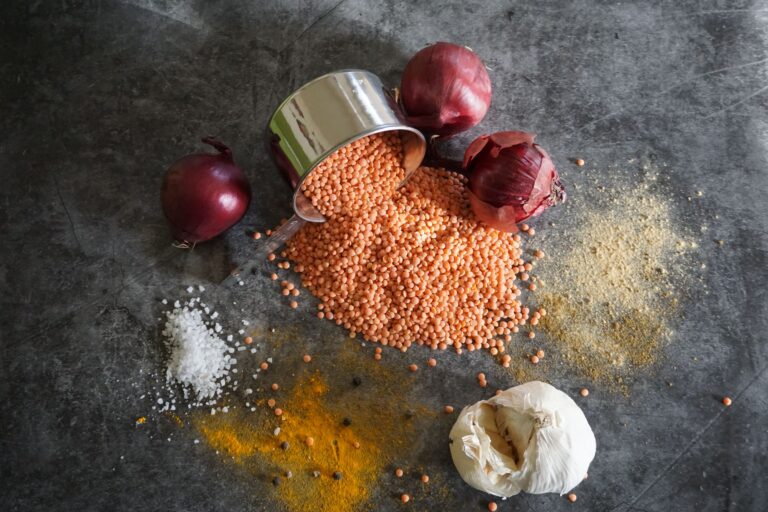
Resistant starch has become the respectable cousin of the carbohydrate debate: not quite fibre, not quite ordinary starch, and often sold as a quiet route to better gut health. The evidence is interesting, but less tidy than the claim. Resistant starch can feed gut microbes and may shift some metabolic markers, yet the response depends on the food, the dose, and the person eating it.
What resistant starch actually is
Most starch is broken down in the small intestine into glucose. Resistant starch is the fraction that resists that digestion and reaches the large intestine, where bacteria can ferment it. That makes it behave more like a fermentable fibre than like the starch in a hot white roll, although the chemistry varies by source and preparation.
There are several types. Some is physically trapped inside intact grains, seeds, or legumes. Some is naturally present in foods such as green bananas and raw potato starch. Some forms when cooked starchy foods, including potatoes, rice, and pasta, are cooled. Food manufacturers can also add chemically modified resistant starches to products. A 2024 narrative review in Frontiers in Nutrition makes the unglamorous but important point: resistant starch is not one ingredient with one predictable effect.
That matters because a bowl of lentils, a cooled potato salad, and a scoop of high-amylose maize starch are not interchangeable in real life. They come with different nutrients, textures, doses, and tolerability. Treating them as the same thing is where many of the stronger claims begin to wobble.
The gut-health claim has a real basis
The most plausible case for resistant starch is microbial. When it reaches the colon, some gut bacteria ferment it into short-chain fatty acids, including butyrate. These compounds are part of normal gut physiology and are often discussed because colon cells can use butyrate as an energy source.
Human studies do show that resistant starch can alter the gut microbiome, but not in a single universal direction. A 2023 meta-analysis in Food & Function reported changes in microbial composition and functional pathways after resistant-starch interventions. That is a signal worth taking seriously. It is not the same as proving that resistant starch reliably prevents disease, fixes digestion, or produces a healthier microbiome in every person.
The reason is simple and inconvenient: baseline microbiomes differ. A 2021 review in Gut Microbes argues that the effect of resistant starch depends heavily on the type of resistant starch and on the microbes already present. In other words, the same intervention can look impressive in one group and underwhelming in another.
Food sources beat supplement certainty
The practical version of resistant starch is not exotic. Beans, lentils, oats, barley, intact whole grains, slightly green bananas, and cooked-then-cooled potatoes or rice can all contribute. These foods also bring ordinary dietary fibre, protein, minerals, and polyphenols. They also tend to displace more refined starches when used as ordinary meals. That wider package is often more defensible than isolating one starch fraction and expecting it to do the work of a diet.
Public-health advice still starts with fibre-rich plant foods, not resistant-starch powders. NHS Inform’s fibre guidance describes fibre as part of a healthy balanced diet and points readers towards plant foods such as wholegrains, pulses, fruit, and vegetables. Resistant starch fits inside that broader pattern; it does not replace it.
Cooling starchy foods can increase resistant starch through a process called retrogradation, but this should not be oversold. A cooled potato is still a potato. A reheated rice dish still needs normal food-safety handling. And the effect on blood glucose will vary with portion size, the rest of the meal, insulin sensitivity, sleep, activity, and medication use.
The glucose evidence is mixed, not useless
Resistant starch is often promoted as a way to blunt glucose spikes or improve insulin sensitivity. There is some support for that idea, especially in groups with metabolic risk, but the literature is inconsistent.
A systematic review and meta-analysis of adults with overweight or obesity found improvements in fasting glucose, fasting insulin, and insulin-resistance measures in some analyses. A separate review focused on resistant starch type 2 was more restrained, reporting that human trials had not clearly shown benefits for appetite, body weight, fasting glucose, insulin resistance, or cholesterol at realistic doses; that paper is available in Nutrients.
This is exactly the kind of split that food headlines flatten. Resistant starch may help some metabolic markers for some people, under some conditions. It is not a stand-alone treatment for prediabetes or diabetes, and it is not a reason to adjust medication without a clinician. People using insulin, sulfonylureas, GLP-1 medicines, or other glucose-lowering drugs should treat major diet changes as something to discuss with their care team, because glucose responses can change.
More is not automatically better
The gut does not always greet fermentable carbohydrates politely. Gas, bloating, cramping, and stool changes are common when people increase fibre or resistant starch quickly. For some, that settles with smaller portions and slower increases. For others, especially those with irritable bowel syndrome or inflammatory bowel disease, the trade-off may not be worth it without professional guidance.
Powders deserve extra caution. Raw potato starch and high-amylose maize starch can deliver much larger doses than normal meals, and labels may not make the real-world tolerance obvious. Supplements also shift the question from “Would more pulses and wholegrains help this diet?” to “Does this isolated product do what it implies?” Those are different questions.
People with chronic kidney disease, complex gastrointestinal disease, a history of bowel surgery, or medically prescribed low-fibre diets should not copy high-resistant-starch advice from wellness accounts. In those cases, the issue is not whether resistant starch is natural. It is whether the extra fermentable carbohydrate is appropriate for the medical context.
What this means in practice
- Start with foods: beans, lentils, oats, barley, and intact wholegrains are a sturdier bet than powders for most adults.
- If you use cooked-then-cooled starches, keep the portion normal and handle rice, pasta, and potatoes safely.
- Increase gradually. A sudden jump in resistant starch is more likely to cause bloating than better gut health.
- Pair starches with protein, vegetables, and healthy fats rather than treating cooling or reheating as a glucose shield.
- If you have diabetes, kidney disease, IBD, IBS, or take glucose-lowering medication, get individual advice before making large changes.
What we don’t know
The biggest unknown is matching the right resistant starch to the right person. The microbiome evidence suggests that individual response matters, but routine stool testing is not yet a reliable way to prescribe a resistant-starch plan. We also need longer trials that compare food-based changes with supplements, track meaningful clinical outcomes, and report side effects clearly.
There is also a language problem. “Feeds good bacteria” sounds simple, but the gut ecosystem is not a houseplant. Shifting bacterial groups or short-chain fatty acids may be favourable in one context and neutral in another. Until trials connect those changes to outcomes people actually feel or measure, the cautious reading is best.
Resistant starch is a useful idea, especially when it nudges people towards pulses, wholegrains, and less refined meals. It becomes less useful when it is treated as a carbohydrate loophole or a microbiome shortcut.
Photo: Nebular on Unsplash.