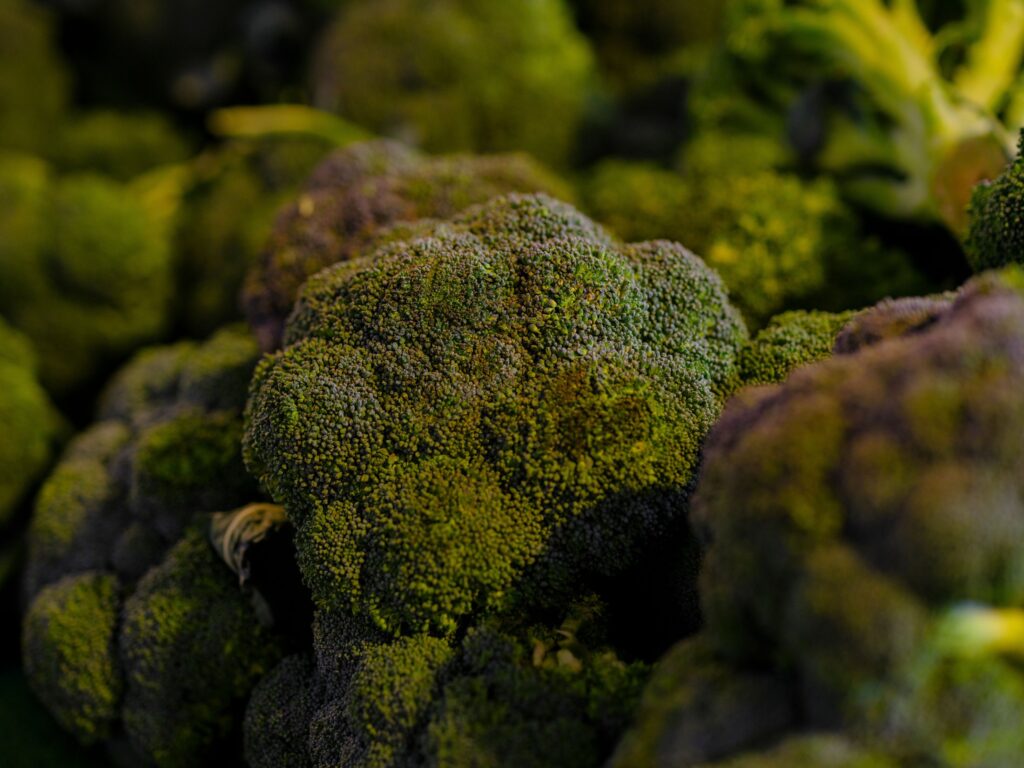
Cruciferous vegetables have acquired the kind of reputation that nutrition writers should handle carefully. Broccoli, cabbage, kale, cauliflower, rocket, and Brussels sprouts are plainly useful foods. They are also surrounded by claims about detoxification, hormones, cancer prevention, and longevity that move faster than the evidence. The sensible case is simpler: eat them often, but do not ask them to do medicinal work.
Why this family gets singled out
The cabbage family is not just a green-vegetable branding exercise. Cruciferous vegetables contain glucosinolates, sulphur-containing compounds that break down into indoles, isothiocyanates, and related metabolites when the plant is chopped, chewed, or otherwise damaged. That chemistry is why raw cabbage smells different from lettuce, and why broccoli has become a research subject rather than just a side dish.
The National Cancer Institute’s fact sheet on cruciferous vegetables describes several mechanisms seen in laboratory and animal work, including effects on inflammation, DNA protection, and carcinogen handling. Those mechanisms are biologically interesting. They are not the same as proof that a serving of kale prevents cancer in a person eating an otherwise ordinary diet.
That distinction is where the popular story often gets ahead of itself. The vegetables are special enough to study. They are not special enough to exempt us from the usual nutrition problem: people eat patterns, not isolated compounds.
The population signal is encouraging, but broad
The most reliable case for cruciferous vegetables is not that they are magical, but that they sit inside a dietary pattern repeatedly associated with better health. In a 2017 dose-response meta-analysis in the International Journal of Epidemiology, higher fruit and vegetable intake was associated with lower risk of cardiovascular disease, cancer, and all-cause mortality. The analysis also found signals for several subtypes, including cruciferous vegetables.
That is useful evidence, but it is still mostly observational. People who eat more vegetables often differ in many ways from people who eat few: income, smoking, exercise, healthcare access, cooking habits, and the rest of the plate. Statistical adjustment helps. It does not turn broccoli into a drug trial.
A more focused prospective study, published in Clinical Nutrition in 2018, also reported that higher cruciferous-vegetable intake was associated with lower all-cause mortality in middle-aged adults. Again, the wording matters. Associated with is not caused by. Still, when a low-risk food repeatedly points in the same direction, the practical conclusion need not wait for perfect certainty.
Detox is the wrong frame
The internet has turned glucosinolates into a detox story, which is unfortunate because the word does more marketing than science. The body already has liver, kidney, gut, lung, and skin systems that process waste products and environmental exposures. Cruciferous vegetables may influence some enzyme pathways involved in metabolism and cellular defence, but that is not the same as flushing toxins.
A better frame is dietary resilience. These vegetables bring fibre, vitamin C, folate, potassium, and phytochemicals in a food matrix that usually displaces something less useful. Cabbage in a stir-fry, broccoli with a meal, or kale in a bean soup changes the structure of the plate. That is not as exciting as a detox promise. It is more defensible.
This is also why supplement logic fails here. Sulforaphane, glucoraphanin, and indole-3-carbinol can be studied as compounds, but the strongest everyday advice remains food-first. A capsule cannot reliably recreate the fibre, water, texture, meal context, and substitution effect of eating vegetables.
Cooking changes the chemistry, not the verdict
Raw cruciferous vegetables contain the plant enzyme myrosinase, which helps convert glucosinolates into isothiocyanates. Heat can reduce that enzyme activity, especially with long boiling. That has led to a small kitchen mythology in which raw broccoli is treated as virtuous and cooked broccoli as ruined.
The truth is less dramatic. A 2025 review on glucosinolates and human health notes that preparation, chewing, cooking method, and the gut microbiota can all influence how these compounds are converted and absorbed. Light steaming may preserve more of the relevant chemistry than aggressive boiling, but cooked vegetables still count as vegetables.
That matters because the best cooking method is partly the one that makes the vegetable get eaten. If lightly steamed broccoli is acceptable and raw cabbage is not, the steamed broccoli wins. If roasted cauliflower replaces chips once a week, the glucosinolate spreadsheet is not the main issue.
The gut story is promising, not settled
Cruciferous vegetables are often discussed through the microbiome, and here again the evidence is interesting without being conclusive. In a controlled feeding study published in 2018, broccoli consumption changed aspects of the gastrointestinal microbiota in healthy adults. That fits with the broader idea that fibre and plant chemicals can shape microbial communities.
But a microbiome change is not automatically a health outcome. We do not yet have a clean way to say that one person’s broccoli-induced shift is clinically meaningful, or that another person’s lack of shift is a failure. The microbiome is responsive, but it is also noisy, personalised, and hard to translate into advice at the supermarket shelf.
The practical version is still worth keeping: these vegetables add fermentable material and plant diversity to the diet. That is likely to be useful for many people. It does not require a stool test, a personalised brassica score, or a claim that cabbage is a gut reset.
There are a few real cautions
For most adults, cruciferous vegetables are low-risk. The problems tend to be practical rather than dangerous: gas, bloating, strong flavours, and the tendency for some people to go from none to enormous portions because a headline told them to. If your gut objects, reduce the portion and build up slowly.
People taking warfarin should keep vitamin K intake consistent and follow their clinician’s advice rather than making abrupt changes to large servings of leafy greens. People with thyroid disease sometimes worry about goitrogens in cruciferous vegetables; ordinary cooked portions are usually not the issue, but anyone with iodine deficiency or active thyroid treatment should keep their clinician in the loop.
The most common mistake is not a medical one. It is believing that a single vegetable family can compensate for an otherwise weak dietary pattern. Broccoli beside a takeaway pizza is better than no broccoli. It is not a transformation.
What this means in practice
- Aim for regular servings across the week rather than a heroic daily bowl of one vegetable.
- Rotate the family: broccoli, cabbage, cauliflower, Brussels sprouts, kale, pak choi, rocket, and watercress all count.
- Use cooking methods you will repeat: steaming, roasting, stir-frying, and adding cabbage to soups are all reasonable.
- If your digestion is sensitive, start with smaller cooked portions before jumping to large raw salads.
- Treat supplements as a separate evidence question; they are not the same thing as eating cruciferous vegetables.
- Judge the whole meal, not the halo. A vegetable improves the plate most when it displaces a less useful default.
What we don’t know
We do not know the exact dose of cruciferous vegetables that would produce a specific long-term health outcome in a specific person. We also do not know whether the benefits suggested in cohort studies come from glucosinolates themselves, the broader vegetable pattern, the replacement of less healthy foods, or all of those at once.
Nor do we have enough evidence to rank broccoli, kale, cabbage, and cauliflower as if they were medicines with known potencies. Their compound profiles differ, but a varied, repeatable habit is more useful than chasing the theoretical winner.
So the honest recommendation is modest. Cruciferous vegetables deserve a regular place on the plate because they are nutrient-dense, versatile, and backed by a plausible evidence base. They do not detox the body, cure ageing, or make the rest of the diet irrelevant. That may be less marketable. It is also more likely to be true.
Photo: Engin Akyurt on Pexels.