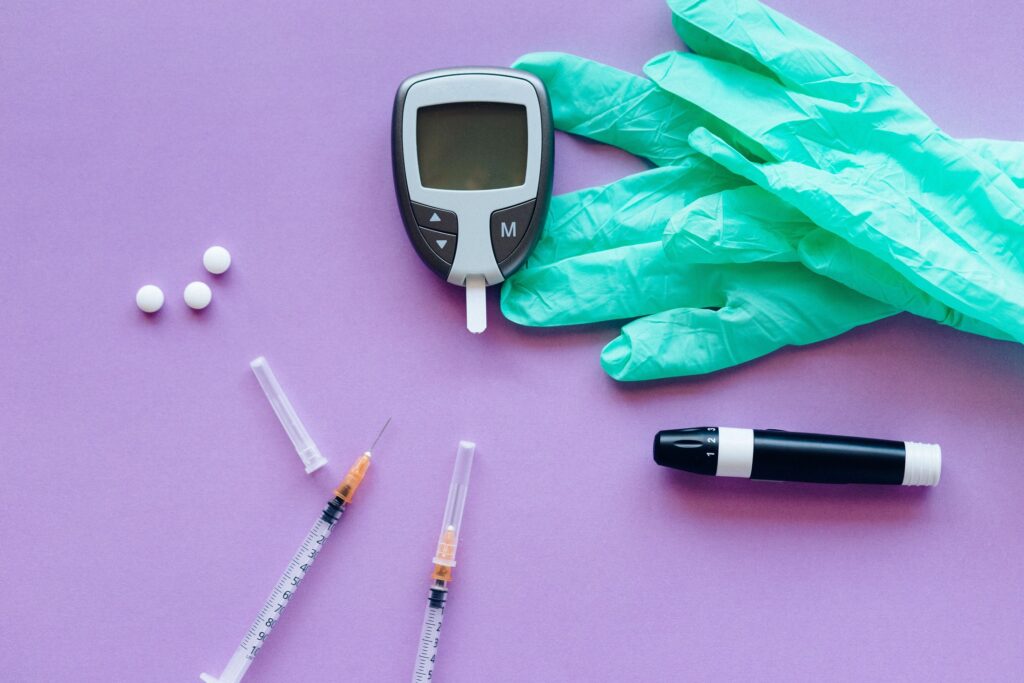
HbA1c is one of the most useful blood tests in metabolic medicine because it compresses weeks of glucose exposure into a single number. That strength is also its weakness. The test is an average, built from red blood cells, and averages can hide volatility. A good HbA1c can still coexist with sharp glucose swings, and a bad one can sometimes reflect more than glucose.
What HbA1c is measuring
HbA1c, or glycated haemoglobin, measures the share of haemoglobin in red blood cells that has glucose attached to it. Because red blood cells circulate for roughly several months, the result is used as a marker of recent average glucose exposure rather than a minute-by-minute glucose reading. That is why it became such a central test for diabetes diagnosis and monitoring.
The framing is straightforward. NIDDK guidance on the A1C test describes it as a blood test that gives information about average blood glucose over the past three months. That makes it far less vulnerable to the timing of breakfast than a fasting glucose result. It also makes it easier to compare one clinic visit with another.
But the biology is not a direct glucose meter. HbA1c depends on glucose exposure and on the life cycle of red blood cells. Anything that changes red-cell turnover, haemoglobin structure, recent blood loss, transfusion, pregnancy physiology, or kidney disease can complicate interpretation. The test is powerful because it is stable. It is imperfect because the stability comes from an indirect measurement.
Why clinicians use it so often
HbA1c solved a practical problem. Glucose varies by meal timing, illness, sleep, exercise, stress, alcohol, and medication. A fasting glucose result can be clean on the morning of the test whilst the broader pattern is deteriorating. HbA1c gives clinicians a longer view. It is cheap, widely available, and linked to diabetes complications in large bodies of research.
For diagnosis, the familiar thresholds are now part of routine clinical language. MedlinePlus explains the common HbA1c ranges: below 5.7% is generally considered normal, 5.7% to 6.4% falls in the prediabetes range, and 6.5% or higher is used for diabetes diagnosis when confirmed appropriately. These cut-offs are useful population tools. They are not a complete description of a person’s metabolism.
That last distinction matters. A person with an HbA1c of 5.6% and strong family history, central weight gain, high triglycerides, fatty liver, and rising fasting glucose may deserve more attention than the label “normal” implies. Another person with an isolated borderline result after iron deficiency or recent illness may need repeat testing and context before anyone declares a durable metabolic state.
The average can hide the pattern
The most common misunderstanding is to treat HbA1c as if it tells the whole glucose story. It does not. Two people can have the same HbA1c with very different glucose patterns. One may spend most days close to their average. Another may swing between post-meal spikes and low readings, landing on the same mathematical mean. The HbA1c number cannot show that difference by itself.
This is where continuous glucose monitoring has changed the conversation, even for people who do not need a sensor. CGM data highlight time in range, variability, overnight glucose, and post-meal peaks. HbA1c remains useful, but it is a summary statistic. It tells you the approximate weather over a season, not the storms on particular afternoons.
The clinical importance depends on the person. In someone with established diabetes, large swings may matter for symptoms, treatment decisions, and hypoglycaemia risk. In someone without diabetes, an HbA1c in the normal range does not prove every meal response is benign, but it also does not justify panic over a single glucose spike. The missing piece is proportion: how often, how high, how long, and in what clinical context?
When the number may be misleading
Red blood cells are the substrate of the test, so red-cell disorders are not a footnote. Anaemia, iron deficiency, haemoglobin variants, recent blood loss, transfusion, and some kidney-related changes can move HbA1c away from the true glucose picture. The direction of error is not always the same, which is why interpretation cannot be reduced to a single correction rule.
Kidney disease is a good example of the problem. A review on chronic kidney disease and HbA1c notes that a number of factors can affect HbA1c apart from glucose exposure alone. Anaemia, altered red-cell survival, erythropoietin treatment, and advanced kidney dysfunction can all make the marker harder to read. The issue is not that HbA1c becomes useless. It is that the result needs a wider frame.
Pregnancy is another setting where standard interpretation can fail. Red-cell turnover changes, glucose physiology changes, and post-meal excursions can matter even when an average looks acceptable. In these contexts, clinicians often lean more heavily on fasting glucose, oral glucose tolerance testing, self-monitoring, CGM, fructosamine, glycated albumin, or repeat testing, depending on the clinical question.
Prediabetes is a risk category, not a destiny
The prediabetes range is useful because it flags elevated future risk. It is also easy to overinterpret. An HbA1c of 5.8% does not mean diabetes is inevitable, and an HbA1c of 5.6% does not mean risk is absent. It is a boundary drawn across a continuous distribution. The closer someone sits to the boundary, the more the surrounding evidence matters.
CDC guidance on A1C testing for prediabetes and diabetes uses the same ranges and frames the test as one way to identify people who may need follow-up. The important word is follow-up. A borderline result should prompt a look at weight trajectory, waist measurement, blood pressure, lipids, family history, medications, sleep, activity, and, when appropriate, another glucose test.
That is the better use of HbA1c: not as a verdict, but as a sorting signal. It helps identify who might benefit from more careful assessment and earlier intervention. It does not reveal the exact cause of metabolic strain, and it does not prescribe the right treatment by itself.
How to read HbA1c alongside other markers
The most useful interpretation is comparative. HbA1c should be read with fasting glucose, sometimes fasting insulin or HOMA-IR, triglycerides, HDL cholesterol, ApoB, blood pressure, liver enzymes, kidney function, waist measurement, medications, and symptoms. When several signals move in the same direction, the case for metabolic strain becomes stronger.
Discordance is often more informative than agreement. A normal HbA1c with high fasting glucose needs explanation. A high HbA1c with normal fasting glucose may point to post-meal exposure, assay issues, or red-cell factors. A rising HbA1c alongside increasing triglycerides and waist circumference is different from a small fluctuation after illness or a laboratory change.
Dr. Soren Hale’s rule would be simple: never make a biomarker do more work than it can bear. HbA1c is one layer of the map. It becomes clinically useful when it changes the next question, not when it becomes a score to chase.
What this means in practice
- Use HbA1c as a three-month glucose summary, not as a complete account of glucose variability.
- If HbA1c is borderline, repeat or confirm it according to clinical advice rather than treating one result as final.
- Interpret the result with fasting glucose, lipids, blood pressure, waist measurement, kidney function, liver enzymes, and family history.
- Ask whether anaemia, kidney disease, pregnancy, haemoglobin variants, blood loss, transfusion, or erythropoietin treatment could affect the result.
- Do not assume a normal HbA1c rules out every glucose problem, especially if symptoms or other metabolic markers are concerning.
- Focus on the drivers that reliably improve metabolic risk: regular movement, resistance training, sleep consistency, appropriate weight loss where needed, and a diet pattern that reduces sustained energy excess.
What we don’t know
We do not know how much additional testing should be used in every person with a normal or borderline HbA1c. CGM can reveal patterns that HbA1c misses, but more data do not automatically mean better decisions. In low-risk people, extra monitoring can create noise, anxiety, and overcorrection. In higher-risk people, it may clarify the pattern enough to change care.
We also do not have a universal way to adjust HbA1c for every condition that changes red-cell biology. The same result can mean different things in iron deficiency, chronic kidney disease, pregnancy, haemoglobin variants, or recent transfusion. Alternative markers help, but each has its own limitations and reference problems.
The conservative conclusion is still strong. HbA1c is a durable, useful biomarker for diabetes risk and glucose exposure. It is not a full metabolic biography. Used well, it tells clinicians when to look closer. Used carelessly, it turns a complex glucose system into a single number with too much authority.
Photo: Nataliya Vaitkevich on Pexels.