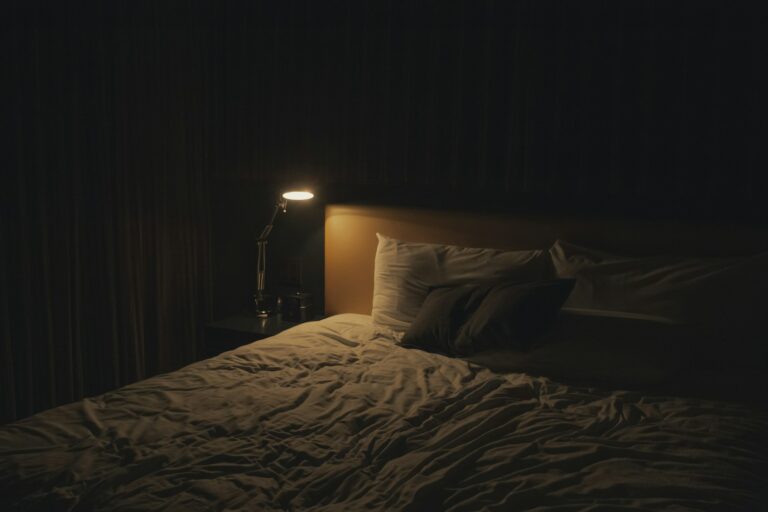
Evening light is not only a screen problem. It is a timing problem. The same lamp that makes a room feel calm at 8pm can tell the brain that the day is still open for business. For sleep, the useful question is not whether light is good or bad, but when, how bright, and how close to bedtime.
Why the evening is biologically different
The human body clock is not a metaphor. A cluster of cells in the brain, the suprachiasmatic nucleus, uses light arriving through the eyes to keep internal time aligned with the outside day. Morning light tends to pull the clock earlier. Evening and early-night light tend to push it later.
That distinction matters because many sleep routines focus on the wrong unit. People count hours in bed, then wonder why sleep arrives late or feels thin. Duration matters, but sleep also depends on timing. If the circadian clock is being nudged later every evening, an 11pm bedtime can become biologically premature even when it looks reasonable on a calendar.
The science is clearer for circadian timing than for many consumer sleep rules. A 2022 expert consensus in PLOS Biology recommends much brighter light during the day and much lower melanopic light in the evening and night. The paper is technical, but the practical message is simple: the body reads light by timing and spectrum, not by whether it came from a phone, a ceiling fixture, or a bedside lamp.
The problem is total light, not just blue light
Blue light gets the blame because short-wavelength light is potent for melanopsin-containing retinal cells, which are involved in circadian signalling. That is true as far as it goes. But it has encouraged a slightly lazy public message: turn on night mode and the problem is solved.
It is not solved. Bright warm light can still be biologically meaningful. A large overhead fixture can matter more than a dim phone. A bright bathroom mirror at 10.30pm may deliver more of a wake-up cue than a low-lit e-reader. Colour temperature is one lever; brightness, distance, angle, duration, and timing all matter too.
This is why the most sensible evening-light advice starts with the room before it starts with the device. If the house is bright after sunset, the phone is joining a broader signal. If the house is dim, warm, and low, the phone becomes a smaller part of the total exposure. The aim is not darkness at dinner. It is a clear contrast between day and night.
What evening light does to sleep architecture
Light near bedtime can delay melatonin, increase alertness, and shift sleep later. Whether it ruins the whole night is a more complicated question. Sleep is resilient, and one evening of brighter light will not affect everyone in the same way.
A 2022 systematic review and meta-analysis in Lighting Research & Technology looked at laboratory studies of evening light and polysomnographic sleep. The authors found evidence that melanopic equivalent daylight illuminance, a metric designed to capture the circadian potency of light, related to sleep latency and sleep efficiency. The paper also shows why the topic resists one-line advice: studies varied in brightness, timing, duration, spectrum, and the outcomes measured.
In plain English, brighter biologically active light before bed can make sleep later and less efficient, but the size of the effect depends on the dose. A few minutes in a softly lit room is not the same exposure as several hours under strong ceiling lights. The dose is the point.
Reading on a device is not the same as reading on paper
The most cited screen study remains useful because it compared two familiar behaviours. In a small controlled trial, participants read either from a light-emitting e-reader or from a printed book in the evening. The 2015 PNAS study found that the light-emitting device delayed the circadian clock, suppressed melatonin, lengthened the time it took to fall asleep, and reduced next-morning alertness compared with print.
The study does not prove that every person must stop using every screen after sunset. It does show that a self-lit device is not neutral when used for hours close to bedtime. The closer the device is to the eyes, the brighter the setting, and the later the timing, the more plausible the effect becomes.
The practical conclusion is narrower than the common headline. Paper is still the cleaner choice for late reading. If a device is necessary, reduce brightness, use warmer settings, hold it farther away, and stop treating night mode as a full biological shield.
Daytime light is part of the night-time solution
The evening routine begins earlier than most people think. A dim day makes a bright evening more confusing to the clock. A bright day gives the brain a stronger contrast: this is daytime; later, this is night.
A 2019 systematic review in Sleep Health found that brighter morning light was associated with better self-reported sleep outcomes, whilst brighter evening light was generally associated with worse subjective sleep outcomes. The evidence was not uniform across every measure, but it fits the broader circadian model: the rhythm needs both a strong daytime anchor and a quieter evening.
That is why a person can do everything right at 10pm and still struggle if the day was spent in weak indoor light. The brain has not had a clear daytime signal. Evening dimming works better when it follows a day that looked like day.
A better evening-light routine
The best routine is usually boring. It does not require amber goggles at dinner or a house lit like a cave. It requires lowering the biological volume in stages.
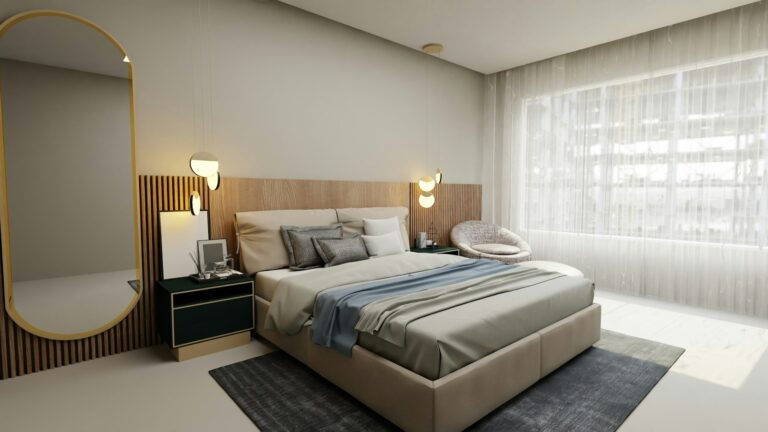
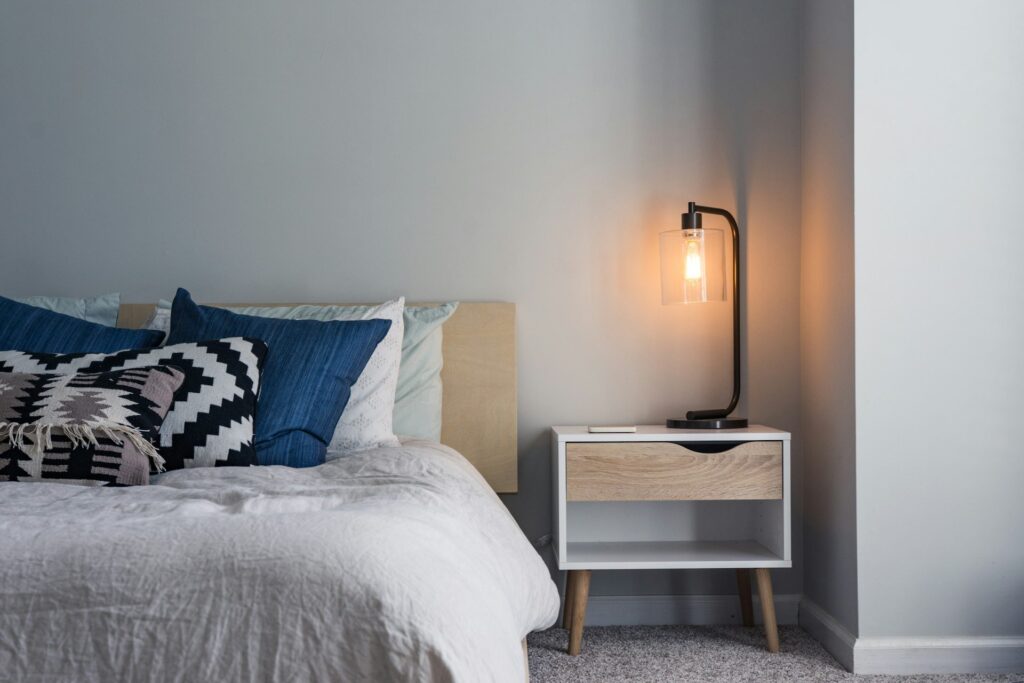
Start by making the last two hours before bed visually different from the rest of the evening. Turn off overhead lights where possible. Use lamps rather than ceiling fixtures. Keep light low in the visual field, because light from above resembles daylight more than a shaded table lamp. Dim screens as far as is comfortable, and avoid using a bright bathroom or kitchen as the final stop before bed.
For many people, this is enough. The goal is not perfect darkness before sleep. The goal is consistency: bright mornings, ordinary days, and a steady reduction in light as bedtime approaches. The body clock is less interested in the moral status of a screen than in the pattern it receives night after night.
What this means in practice
- Get outdoor or bright indoor light within an hour of waking, especially if sleep timing is drifting later.
- Keep a regular wake time, even after a poor night; irregular timing can make evening light more disruptive.
- Reduce overhead lighting after dinner, or at least in the final two hours before bed.
- In the final two hours before bed, switch from overhead lighting to low, shaded lamps where practical.
- Dim phones, tablets, and laptops, and keep them farther from the face if you need to use them late.
- Use warmer light in the evening, but treat warmth as a supporting move, not a substitute for dimming.
- Make the bedroom dark during sleep; remove bright chargers, clock faces, and unnecessary standby lights.
- If you wake at night, use the lowest light that is safe rather than turning on a full room light.
What we don’t know
Light sensitivity varies. Age, chronotype, eye health, prior light exposure, medications, and existing sleep disorders can all change how strongly a person responds. A teenager with a late chronotype and hours of evening gaming may not need the same advice as an older adult who reads under a dim lamp for twenty minutes.
We also do not have perfect home thresholds. Laboratory studies can measure light at the eye and control timing. Real homes are messier. People move from room to room, look up and down, and combine lamps, screens, windows, and street light. That makes exact prescriptions less honest than principles.
Anyone with persistent insomnia, delayed sleep-wake phase disorder, bipolar disorder, severe depression, or shift-work-related sleep problems should be cautious about using bright light as a treatment without clinical guidance. Timed light can help some circadian problems, but the timing is the treatment. Used at the wrong time, it can make the pattern later.
The useful lesson is modest. Evening light is not an enemy, and screens are not uniquely guilty. Sleep tends to improve when the day is bright enough to look like day, and the last part of the evening becomes dim enough to look like night.
Photo: Jp Valery on Unsplash.