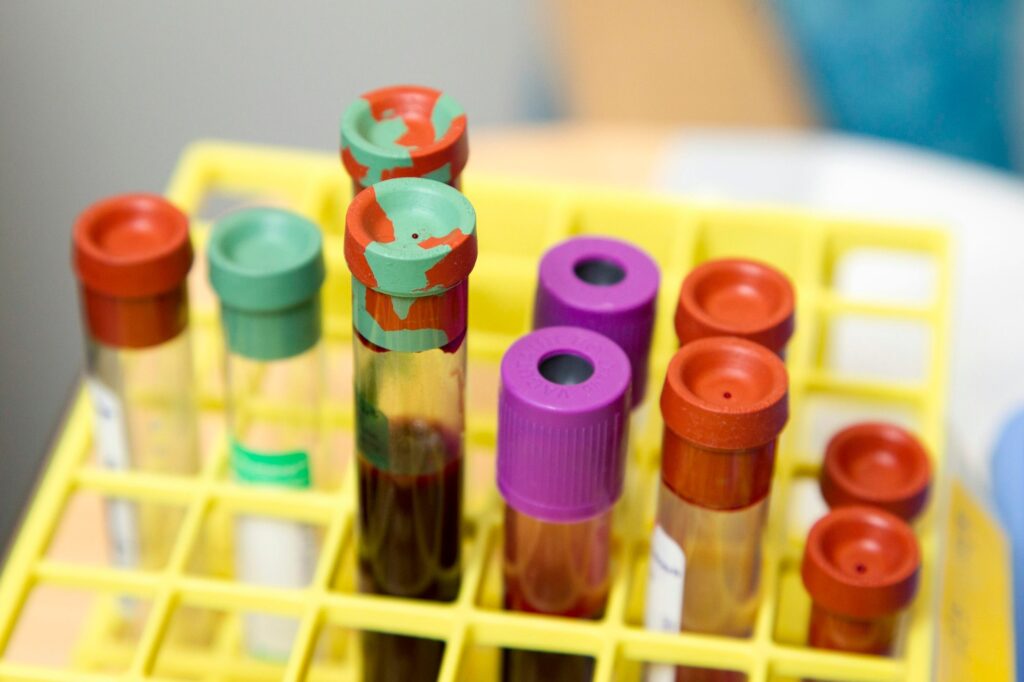
Ferritin is one of the more useful blood markers because it points toward the body’s iron stores. It is also one of the easier markers to overread. A low result can support iron deficiency. A high result can reflect inflammation, liver disease, alcohol intake, infection, metabolic disease, or iron overload. Ferritin is a signal. It is not a wellness score.
What ferritin is actually measuring
Ferritin is a protein that stores iron inside cells. A small amount circulates in blood, and that blood level is often used as a practical proxy for stored iron. That is why ferritin appears on anaemia work-ups, fatigue investigations, heavy-menstrual-bleeding assessments, and, increasingly, consumer longevity panels.
The appeal is obvious. Iron is central to haemoglobin, oxygen transport, energy metabolism, and many enzyme systems. Too little matters. Too much can also matter. Ferritin seems to offer a simple answer to a complicated question: how much iron is available in reserve?
The answer is useful, but not simple. The World Health Organization’s technical brief on ferritin notes that serum ferritin is used to assess iron stores, but interpretation changes in the presence of infection or inflammation. That caveat is not small print. It is the main reason ferritin should not be read in isolation.
Low ferritin is often an iron-store signal
When ferritin is low, the interpretation is usually more straightforward than when it is high. Low ferritin generally suggests low iron stores, especially when paired with low haemoglobin, low mean corpuscular volume, low transferrin saturation, or symptoms that fit iron deficiency. It can help distinguish iron deficiency from other causes of anaemia.
But even here, the result should not become a self-treatment prompt. Iron deficiency is not a diagnosis by itself. It is a finding that asks why iron stores are low. In menstruating people, heavy bleeding is common. In endurance athletes, low intake, gut loss, and training-related factors may contribute. In people with coeliac disease, inflammatory bowel disease, bariatric surgery, or long-term acid suppression, absorption may be part of the story.
That context also changes urgency. A mildly low ferritin in someone with known heavy periods is not the same clinical problem as iron deficiency anaemia with weight loss, bowel changes, black stools, or new breathlessness. Those patterns need medical assessment, not a supplement experiment, because the useful question is not only whether iron stores are low. It is whether blood loss, malabsorption, pregnancy, diet, inflammation, or another condition explains the result.
The higher-stakes group is adult men and postmenopausal women with iron deficiency anaemia. The British Society of Gastroenterology guideline states that serum ferritin is the single most useful marker of iron deficiency anaemia, while also emphasising that iron deficiency anaemia in adult men and postmenopausal women can reflect chronic gastrointestinal blood loss and needs appropriate investigation.
High ferritin is not simply “too much iron”
High ferritin is where overinterpretation becomes especially common. It can mean increased iron stores. It can also mean the body is responding to inflammation, infection, liver injury, alcohol exposure, metabolic dysfunction, kidney disease, malignancy, or recent illness. Ferritin behaves partly as an acute-phase reactant, which means it can rise when the immune system is activated.
That is why a high ferritin result does not automatically diagnose haemochromatosis, and it does not automatically mean someone should try to lower iron. The useful next question is usually whether transferrin saturation is also high, whether liver enzymes are abnormal, whether C-reactive protein or other inflammatory markers are raised, and whether the person has symptoms, family history, or repeated results in the same direction.
For suspected iron overload, the NHS notes that blood tests for haemochromatosis include transferrin saturation and serum ferritin, with genetic testing considered when iron levels are high. Ferritin is part of that assessment. It is not the whole assessment.
Why ferritin appears in longevity panels
Ferritin has found its way into longevity testing because both iron deficiency and iron excess can be clinically relevant, and because inflammation and liver health are central to many chronic-disease pathways. A marker that touches those domains looks attractive in a dashboard.
There is a fair version of that argument. Ferritin can flag something worth following up. It can help explain anaemia. It can raise the question of inflammatory or liver context. It can support a decision to test transferrin saturation, full blood count, liver enzymes, kidney function, C-reactive protein, or coeliac markers, depending on the presentation.
The weak version is the idea that ferritin has an ideal longevity number for everyone. That is not how the marker works. A ferritin result that is appropriate for a menstruating endurance athlete may not carry the same meaning in a postmenopausal adult with fatty liver disease, raised liver enzymes, and high transferrin saturation. The number is not the story. The clinical context is the story.
Iron supplements are not benign
Ferritin is one reason iron supplements are often treated too casually. Low energy plus a low-ish ferritin result can look like an invitation to buy iron. Sometimes iron replacement is appropriate. Sometimes it is not, and sometimes it needs a clinician to identify the cause before treatment begins.
The NIH Office of Dietary Supplements explains that iron deficiency is associated with poor diet, malabsorptive disorders, and blood loss, and that supplemental iron can interact with certain medicines. It also notes tolerable upper intake levels, which matter because excess iron intake can cause harm, especially in children and in people with iron-loading conditions.
This does not mean iron should be feared. It means iron should be targeted. Taking iron without confirming deficiency, without knowing dose, and without asking why stores are low is not a longevity strategy. It is guesswork with a mineral the body has limited ways to excrete.
What this means in practice
- Use ferritin as a context marker for iron stores, not as a standalone wellness score.
- Low ferritin is worth discussing, especially if there is anaemia, heavy bleeding, pregnancy, gastrointestinal symptoms, restricted diet, or fatigue that is new or persistent.
- High ferritin should usually be interpreted with transferrin saturation, liver enzymes, inflammatory markers, kidney function, alcohol intake, medication history, and repeat testing.
- Do not start high-dose iron just because ferritin is below a preferred internet range; the reason for low stores matters.
- Adult men and postmenopausal women with iron deficiency anaemia need careful clinical assessment rather than simple supplementation.
What we don’t know
We do not know a single ferritin number that defines better ageing for everyone. Research can link very low or very high ferritin with health risks, but those associations do not turn ferritin into a clean intervention target. A high result may be a cause, a consequence, or a bystander signal, depending on the illness pattern underneath it.
We also do not know how consumer testing should handle borderline results in people without symptoms. Repeating the test, adding related markers, and looking for context may be more useful than chasing a narrow range. That is slower than a dashboard. It is also closer to medicine.
Ferritin deserves its place in clinical blood work because it can clarify iron deficiency and point toward broader problems when interpreted carefully. It does not deserve the status of a personal longevity grade. The useful reading is modest: ferritin can help ask better questions, but it rarely answers them alone.
Photo: Daniel Sone / National Cancer Institute on Unsplash.