Red cell distribution width, or RDW, is one of those blood-count numbers that often appears without much explanation. In ageing research, a higher RDW has been linked with frailty, cardiovascular outcomes, and mortality. The useful point is narrower: RDW may flag physiological strain, but it does not diagnose why that strain is there.
What RDW is actually measuring
RDW is part of a full blood count, not a specialist longevity test. It measures how much the size of red blood cells varies within a blood sample. A Newcastle Hospitals laboratory test directory calls it a measure of variation in red blood cell volume and notes that it is used in the assessment of anaemias, whilst also warning that some anaemias can present with a normal RDW.
That context matters. A neat row of similarly sized red cells usually produces a lower RDW. A wider spread of cell sizes produces a higher RDW. Cleveland Clinic’s medically reviewed RDW guide explains that RDW is interpreted alongside other red-cell indices, especially mean corpuscular volume, because the pattern matters more than the number in isolation.
The number is usually reported as a percentage. Reference ranges vary by laboratory, assay, and reporting convention, so an RDW that looks just outside one lab’s interval may not carry the same meaning somewhere else. This is one reason RDW is a context marker, not a score to chase.
Why ageing researchers are interested
RDW became interesting to ageing researchers because it is cheap, widely available, and repeatedly associated with worse outcomes in observational studies. That does not make it a measure of biological age. It makes it a candidate signal that may reflect several processes relevant to ageing: inflammation, nutritional deficiency, chronic disease, kidney function, marrow stress, or altered red-cell turnover.
A 2019 Scientific Reports population study concluded that RDW was associated with all-cause and cause-specific mortality in a general population sample. The key word is associated. The study does not show that high RDW causes poorer health, nor that lowering RDW would reduce risk.
That is the central distinction: a biomarker can be prognostic without being directly actionable. Troponin, ApoB, HbA1c, ferritin, and RDW all sit on different parts of that spectrum. RDW is closer to a broad signal than a treatment target.
What a high RDW can point towards
The most traditional use of RDW is haematology. A high RDW can appear when red cells vary more in size because of iron deficiency, vitamin B12 or folate deficiency, recent blood loss, haemolysis, chronic inflammation, liver disease, kidney disease, or mixed causes of anaemia. It can also be abnormal in people who are acutely unwell.
Cleveland Clinic notes that a high RDW may be a sign of anaemia or a related condition and that clinicians often compare it with mean corpuscular volume to work out what pattern is present. A high RDW with a low MCV can suggest a different diagnostic pathway from a high RDW with a high MCV. Haemoglobin, ferritin, B12, folate, kidney markers, liver enzymes, symptoms, medicines, and the blood film may all matter.
For readers looking at private blood panels, this is the practical trap. RDW can look like an ageing marker because it correlates with outcomes in large datasets. In an individual person, it is more likely to be a clue for a clinician to interpret than a standalone longevity verdict.
The cardiovascular and frailty signal
RDW has been studied in cardiovascular disease because red-cell variability may track inflammation, oxidative stress, nutritional status, and chronic illness burden. A 2022 narrative review in Current Problems in Cardiology described RDW as an easy-to-access marker in complete blood count testing and summarised associations between high RDW and several cardiovascular conditions.
The evidence is stronger for prognosis than for diagnosis. In people already undergoing percutaneous coronary intervention for coronary artery disease, a 2020 BMJ Open meta-analysis found that higher RDW categories were associated with higher all-cause mortality, cardiovascular mortality, and major adverse cardiac events. That finding is relevant to risk stratification in a defined patient group. It is not a reason for a healthy adult to interpret RDW as a home heart-risk test.
Frailty research tells a similar story. A 2023 study of frail adults aged 75 and older in an emergency department found that higher RDW values were associated with 30-day mortality, independent of the frailty score used in the analysis. That may help clinicians think about risk in older emergency patients. It does not mean RDW predicts an individual person’s future with precision.
Why RDW should not be treated as a target
Some biomarkers invite direct intervention. High blood pressure can lead to a discussion about measurement technique, lifestyle, medicines, and follow-up. High LDL cholesterol or ApoB may lead to a structured cardiovascular-risk conversation. RDW is different because it is usually downstream of other processes.
If RDW is high because of iron deficiency, the relevant question is why iron is low. In older adults, unexplained iron deficiency can require careful medical evaluation, including consideration of blood loss. If RDW is high because of B12 deficiency, the cause may involve diet, absorption, medicines, autoimmune gastritis, or gastrointestinal disease. If RDW rises during acute illness, treating the underlying illness is the point.
That is why self-treating RDW with iron, B12, folate, or supplement combinations is a poor idea. Iron can be harmful when it is not needed, and B12 or folate supplementation can blur diagnostic patterns if started before proper assessment. The cautious interpretation is not “lower RDW”; it is “understand the pattern that produced it”.
What this means in practice
- Read RDW as part of the full blood count, especially with haemoglobin, MCV, MCH, white cells, and platelets.
- Do not treat a single mildly abnormal RDW as a diagnosis, ageing score, or reason to start supplements.
- If RDW is high, look for the clinical question: anaemia symptoms, recent illness, bleeding risk, diet, medicines, kidney disease, liver disease, or inflammatory conditions.
- Ask whether the result is new, persistent, rising, or part of a stable long-term pattern.
- Seek medical interpretation promptly if abnormal RDW appears with breathlessness, chest pain, black stools, unexplained weight loss, fainting, marked fatigue, or a low haemoglobin result.
What we don’t know
RDW is attractive because it is already on many blood panels. The limitation is that broad availability can make a marker look more informative than it is. Much of the longevity-relevant RDW evidence is observational, so confounding is hard to remove. People with higher RDW may also have more chronic illness, nutritional deficiency, inflammation, kidney disease, or acute physiological stress.
We also do not know whether changing RDW itself changes outcomes. In most cases, RDW is not the intervention target. The target is whatever the wider assessment finds, if anything: anaemia, deficiency, inflammatory disease, medication effect, blood loss, kidney disease, liver disease, or another clinical problem.
There may eventually be better ways to integrate RDW with other routine markers in ageing-risk models. For now, the signal is useful because it is cheap and familiar, not because it is specific.
The bottom line
RDW deserves attention when it is abnormal, especially in older adults or people with symptoms, anaemia, cardiovascular disease, frailty, or acute illness. But it is not a diagnosis, a biological-age reading, or a number to optimise. It is a quiet clue inside a larger blood-count conversation.
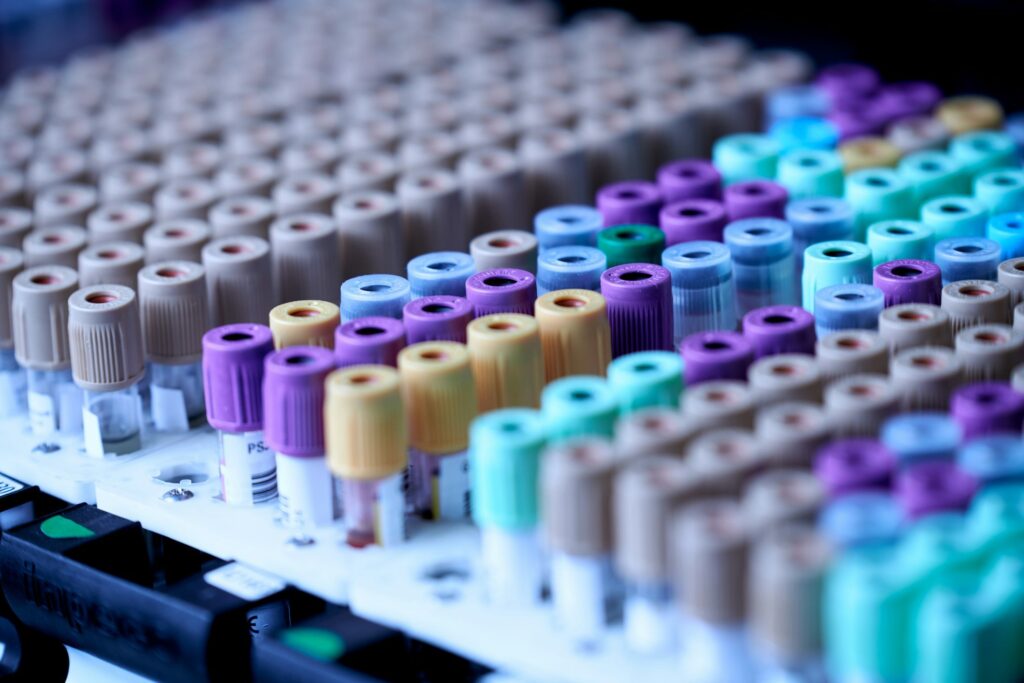
Photo: Testalize.me on Unsplash.