Most sleep trackers are better at telling whether you were probably asleep than at telling exactly what kind of sleep you had. That distinction matters. A watch or ring can make a useful record of bedtime, wake time, and broad night-to-night rhythm. It cannot see the brain directly, and it should not be treated as a miniature sleep laboratory.
What a tracker is actually measuring
The clinical picture of sleep is built from several signals at once. In a sleep laboratory, polysomnography records brain waves, eye movements, muscle tone, breathing, oxygen levels, heart rhythm, and limb movement. Those signals allow trained scorers to separate wake, non-REM stages, REM sleep, breathing events, and brief arousals.
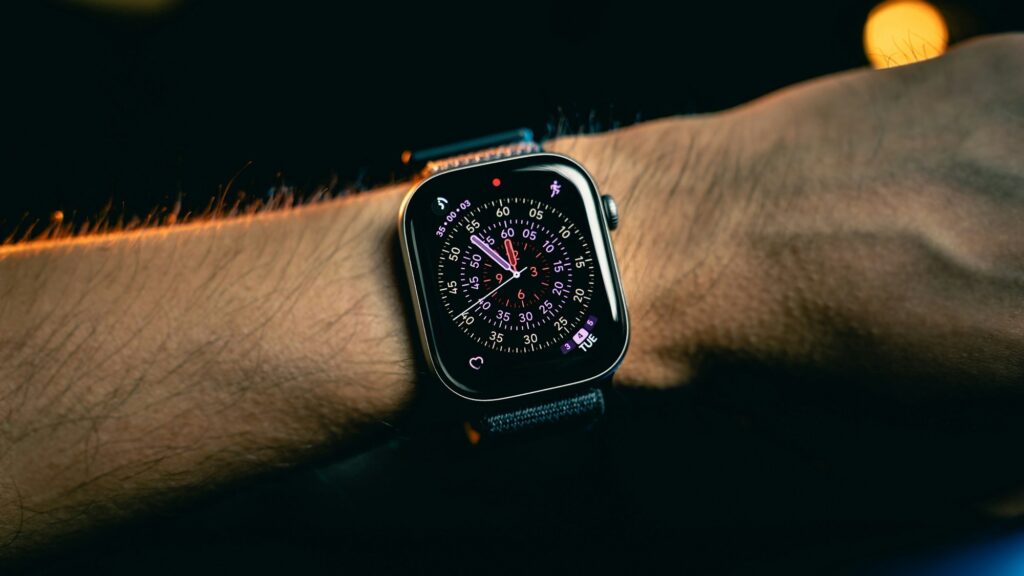
Consumer trackers usually work from a narrower set of signals. Wrist devices and rings commonly use movement, heart rate, heart-rate variability, skin temperature, and sometimes blood oxygen trends. Bedside devices may infer movement or breathing from radar, sound, or pressure sensors. Phone apps may use the microphone, accelerometer, or user-entered data.
That does not make the data useless. It means the device is estimating sleep from proxies. Circadian biology leaves traces in movement, heart rate, and temperature, but those traces are not the same as the electrical activity that defines sleep stages. The science is clearer for broad sleep-wake patterns than for exact minutes of deep sleep or REM.
The strongest signal is your sleep schedule
If a tracker shows that bedtime drifts by two hours across the week, that is usually more meaningful than whether deep sleep was 52 minutes or 78 minutes. The body’s sleep system is rhythmic. Light exposure, meal timing, activity, and wake time all help set the circadian clock, and irregular timing can make sleep feel less restorative even when total hours look adequate.
Most trackers are reasonably positioned to capture this kind of pattern because they are worn for weeks or months. A single laboratory night gives much richer physiology, but it is still one night. A tracker can reveal whether weekday sleep is being borrowed from the weekend, whether a late training session pushes bedtime later, or whether travel repeatedly shortens sleep opportunity.
That is the safest way to read the dashboard: as a diary with sensors. Duration and regularity usually deserve more attention than a proprietary readiness score. When the score conflicts with how you feel, the score should not automatically win.
Sleep versus wake is easier than sleep staging
Validation studies generally find that consumer devices perform better at recognising sleep than recognising wake. In a study of seven consumer sleep-tracking devices compared with polysomnography, sleep sensitivity was high, but specificity for wake was lower, meaning devices were more likely to miss quiet wakefulness than to miss sleep. That matters for people who lie still whilst awake, a common pattern in insomnia.
A 2025 meta-analysis of wrist-worn consumer sleep trackers compared with polysomnography reached a similar broad message: newer devices may estimate total sleep time and sleep latency more closely than older ones in some analyses, but heterogeneity remains high, and wake after sleep onset is still a difficult measure. Put plainly, the device may know that you spent the night mostly asleep. It may be less reliable about how often you woke without moving much.
This is one reason trackers can frustrate people with fragmented sleep. Someone may remember several periods of wakefulness, whilst the app reports a calm and efficient night. Both observations can be sincere. The tracker is reading stillness and physiology; the person is remembering conscious wakefulness.
Deep sleep and REM numbers need the most caution
Sleep stages are where many dashboards become overconfident. Deep sleep and REM are real biological states, but a consumer device usually infers them indirectly. Heart rate and movement patterns can shift across stages, yet they are also affected by age, alcohol, illness, medication, stress, room temperature, fitness, and sensor fit.
A multicentre validation study of 11 wearable, nearable, and airable consumer sleep trackers found substantial variation across devices when compared with polysomnography. The authors reported that different device types had different biases: wearables tended to misclassify some wake as sleep, nearables had their own problems around sleep latency, and performance varied by stage and device. That is a warning against treating one brand’s deep-sleep number as interchangeable with another brand’s.
Ring trackers are often marketed as discreet sleep tools, but clinical-context testing still urges caution. A Scientific Reports study of three commercially available ring trackers in a university sleep-lab population found measurement dropouts and discrepancies against polysomnography, especially relevant because many validation studies focus on healthier sleepers. A device that performs acceptably in a healthy volunteer group may be less dependable in people being assessed for sleep disorders.
The practical interpretation is modest: stage estimates can be used as rough pattern data, especially within the same device over time. They should not be used to diagnose a lack of deep sleep, prove that REM has been restored, or judge treatment success without clinical context.
Scores are summaries, not diagnoses
Most sleep scores combine duration, timing, interruptions, heart-rate trends, and stage estimates into one number. The attraction is obvious. A single score is easy to understand before coffee. The problem is that the formula is proprietary, and the weighting may not match the sleep problem in front of you.
For example, someone with a regular schedule and low overnight movement may receive a strong score despite waking unrefreshed. Another person may get a poor score after one restless night and worry unnecessarily, even though occasional poor sleep is normal. The number can become a verdict when it should be a prompt for reflection.
The American Academy of Sleep Medicine’s position statement on consumer sleep technology is careful here. It says these tools may help patient-clinician conversations when interpreted within an appropriate evaluation, but they should not be used to diagnose or treat sleep disorders. That distinction is the centre of the article: useful context is not the same as medical evidence.
When the data should not reassure you
A good tracker score should not override persistent symptoms. Loud snoring, witnessed pauses in breathing, gasping, morning headaches, excessive daytime sleepiness, restless legs, frequent insomnia, or feeling unsafe while driving are reasons to seek medical advice rather than fine-tune a dashboard. Sleep apnoea, narcolepsy, periodic limb movement disorder, and chronic insomnia need proper clinical assessment.
Consumer oxygen and breathing metrics need particular care. Some devices can flag irregular breathing or oxygen variation, but screening is not diagnosis. False reassurance is risky if someone has symptoms, and false alarm can create anxiety if the data are noisy. The safe interpretation is to bring concerning patterns to a clinician, especially when they align with symptoms or cardiovascular risk factors.
There is also a behavioural risk. Some people become preoccupied with sleep scores, checking the app before deciding how they feel. Sleep clinicians sometimes call this pattern orthosomnia: a pursuit of perfect sleep data that can worsen worry about sleep. The answer is not necessarily to abandon tracking, but to reduce the authority given to nightly scores.
What this means in practice
Used calmly, sleep data can help people notice patterns they would otherwise miss. A tracker may show that late alcohol shortens the night, that a new commute has moved wake time earlier, or that long weekend lie-ins are making Monday night harder. These are not diagnoses. They are clues about rhythm. The best comparisons are usually within the same person and the same device, because each company uses different sensors and algorithms, and even software updates can change how signals are interpreted.
- Use your tracker mainly for sleep timing, wake time, and regularity over several weeks.
- Treat deep sleep, REM, and readiness scores as rough estimates, not precise measurements.
- Compare trends within the same device rather than comparing your numbers with someone else’s.
- Do not let a good score dismiss persistent snoring, daytime sleepiness, insomnia, or breathing concerns.
- If the data make you anxious, consider hiding stage scores or taking breaks from tracking.
- Bring repeated concerning patterns to a clinician, especially when symptoms are present.
What we don’t know
The evidence is moving quickly, but it is uneven. Devices change hardware, firmware, and algorithms faster than independent studies can validate them. A study of one model in one year may not apply neatly to a later model or software version. Many studies are small, short, or conducted in relatively healthy adults, whilst clinical sleepers are more complicated.
We also do not know how much sleep-tracker feedback improves long-term health outcomes. It is plausible that trend data can support better routines. It is also plausible that too much feedback increases worry in some users. The current evidence supports a middle position: use the tracker as a pattern detector, not as an authority over your body.
Sleep is not made better by measuring it more precisely. It is made more stable by rhythm, adequate opportunity, a suitable sleep environment, and medical assessment when symptoms point beyond ordinary poor sleep.
Photo: Amanz on Unsplash.