The 30-plants-a-week rule has become one of the cleaner slogans in gut health. It is simple, memorable, and mostly pointed in a sensible direction. The evidence behind it is less tidy. Plant variety is associated with a more diverse gut microbiome, but the number 30 is a benchmark from limited data, not a diagnostic threshold or a treatment plan.
Why the number caught on
The modern version of the advice traces largely to the American Gut Project, a large citizen-science microbiome effort that asked participants about diet and analysed stool samples. In the project’s 2018 paper in mSystems, people who reported eating more than 30 different plant types a week had more diverse gut microbiomes than those who ate 10 or fewer, and their stool samples also differed in metabolite patterns. The paper is worth reading because it is both interesting and easy to overuse: the American Gut Project study was observational, self-reported, and drawn from people motivated enough to send in samples.
That does not make the finding meaningless. It does mean the headline should be smaller. Thirty plants was not discovered as the exact point at which gut health turns on. It was a practical contrast between high and low plant variety in a large dataset. The useful message is not that 29 plants fails and 30 succeeds. It is that variety may matter separately from whether a diet is vegetarian, vegan, or omnivorous.
What counts as a plant
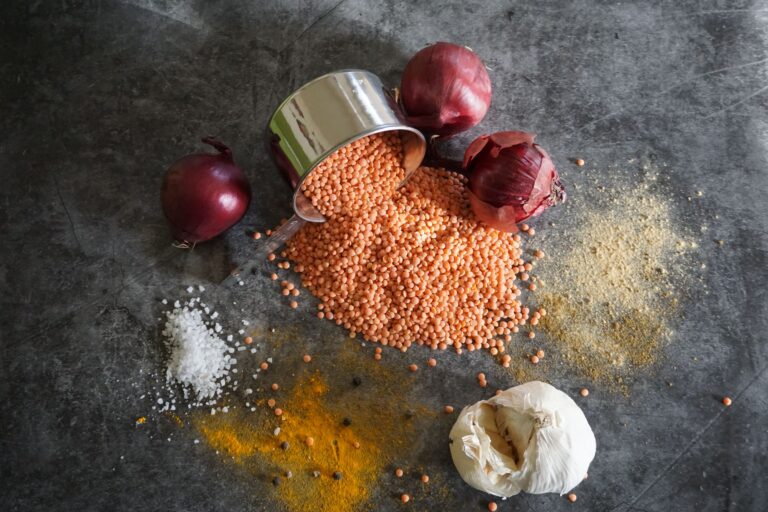
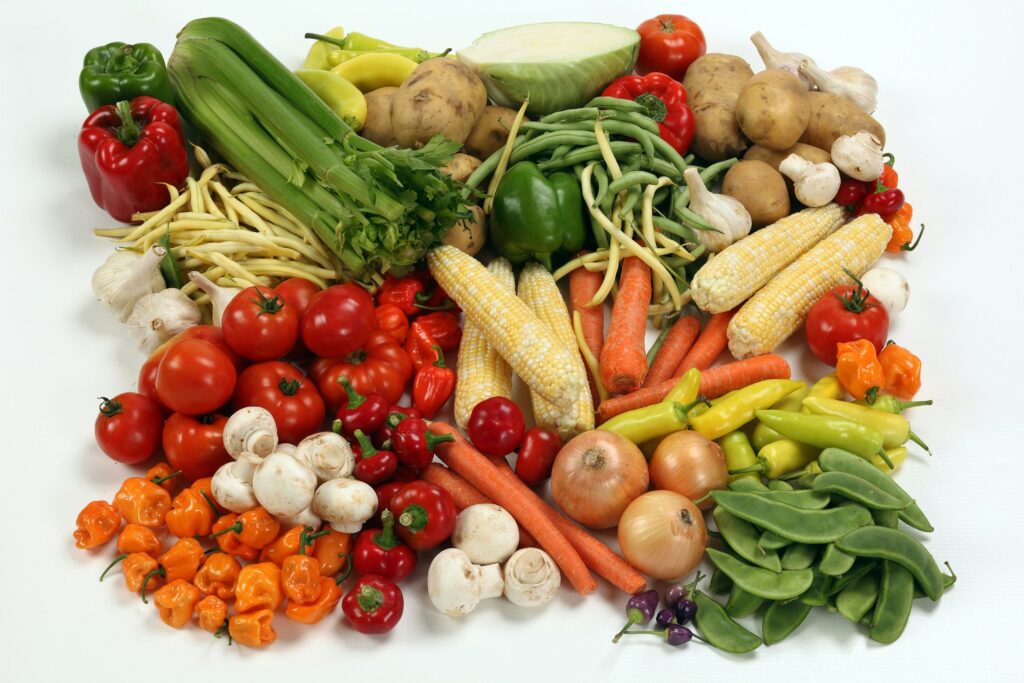
In the popular version, “plants” usually means more than vegetables. Fruit, beans, lentils, chickpeas, wholegrains, nuts, seeds, herbs, spices, coffee, and cocoa can all contribute plant compounds. That broader definition is one reason the target sounds less absurd once you list a normal week: oats, apples, onions, garlic, tomatoes, lentils, parsley, walnuts, blueberries, brown rice, broccoli, and cumin already gets you part of the way there.
The counting can become silly if it turns dinner into a spreadsheet. A pinch of cinnamon is not nutritionally equivalent to a bowl of beans. A mixed salad is not automatically better than a smaller meal that contains enough protein, energy, and fibre for the person eating it. The count is best used as a rough nudge towards breadth, not as a points game that rewards sprinkling tiny amounts of fashionable ingredients over an otherwise poor diet.
Fibre is still the quieter foundation
Plant variety is attractive because it sounds more interesting than fibre. But much of the gut-health case still runs through fibre and other carbohydrates that reach the large bowel, where microbes can ferment them into short-chain fatty acids. Different plant foods bring different fibre structures, resistant starches, and polyphenols, so variety may support a broader microbial menu.
The less glamorous public-health problem is that many adults do not reach basic fibre guidance. The NHS says UK adults should increase fibre intake to 30g a day as part of a balanced diet, while average intake remains lower; its practical advice is built around wholegrains, pulses, vegetables, fruit, nuts, and seeds rather than specialist products. The NHS fibre guidance also makes the point that fibre should come from a variety of sources, because one high-fibre food cannot cover the whole pattern.
The British Heart Foundation gives a similar, less trend-driven message. In its 2026 guidance, dietitian Tracy Parker notes that fibre is found in plant foods, that most people fall short of recommended intake, and that whole foods provide nutrients and plant chemicals that powders do not fully replicate. The BHF discussion of high-fibre foods is useful because it also warns against taking fibre trends to extremes, particularly when concentrated powders are added quickly.
What newer trials add, and what they do not
There is some trial evidence that plant diversity can matter in specific clinical groups, but it should be read with care. A 2025 randomised crossover trial in adults with stage 3-4 chronic kidney disease compared a high-diversity plant-based diet with at least 30 unique plant foods a week against a lower-diversity plant-based diet. The Clinical Journal of the American Society of Nephrology trial reported reduced symptom burden and shifts in microbiome metabolites during the high-diversity phase.
That is interesting, and it is not a reason for everyone with kidney disease to start adding beans, nuts, and high-potassium foods without guidance. The participants were under usual kidney-diet care, the trial was small, and kidney disease changes the stakes around potassium, phosphate, protein, and fluid advice. The broader lesson is cautious: plant variety can be tested as a dietary pattern, but individual medical context still matters.
The microbiome is not a moral score
Gut-health language often drifts into purity. A “diverse microbiome” becomes a badge of virtue; a less varied diet becomes personal failure. That framing is not helpful and not scientific. Microbiome diversity is one marker among many. It varies with antibiotics, illness, travel, age, medication, geography, and diet. It is not something most people can interpret from a commercial test without clinical context.
There is also a food-access problem hiding under the slogan. Eating 30 different plants a week is easier for someone with money, storage space, time to cook, and a nearby market. It is harder for people living with food insecurity, sensory restrictions, fatigue, shift work, or medically restricted diets. Frozen vegetables, tinned beans, mixed wholegrains, and dried herbs can make variety cheaper, but the advice should still be offered as a flexible tool, not a class-coded wellness challenge.
Who should be cautious
For many adults, increasing plant variety gradually is low risk. Gradually is the important word. A sudden jump in beans, bran, onions, garlic, cabbage, dried fruit, and seeds can cause bloating, gas, diarrhoea, or abdominal pain, especially in people who already have irritable bowel syndrome or other gut symptoms. People with inflammatory bowel disease, recent bowel surgery, strictures, eating disorders, swallowing problems, or a prescribed low-fibre or low-residue diet should not treat this as generic advice.
People with chronic kidney disease, heart failure, or medication-related potassium concerns should also be careful, because some high-fibre plant foods are also high in potassium or phosphate. Anyone on warfarin or other medicines affected by diet should keep intake patterns stable and ask their clinician before making large changes. The sensible version of the rule is not “eat everything”. It is “broaden what is appropriate for you”.
What this means in practice
- Use the 30-plant idea as a weekly variety prompt, not a pass-fail target.
- Add one or two new plant foods at a time, especially if your current fibre intake is low.
- Count cheap staples: oats, brown rice, lentils, chickpeas, frozen peas, tinned tomatoes, mixed beans, nuts, seeds, herbs, and spices all contribute variety.
- Prioritise whole foods before fibre powders unless a clinician has recommended a supplement for a specific reason.
- If you have IBS, IBD, kidney disease, a low-fibre prescription, or troublesome gut symptoms, tailor changes with a dietitian or clinician.
What we don’t know
We do not know whether 30 is the best number for most people. We do not know how much of each plant is enough to matter, whether herbs and spices should count the same way as legumes or wholegrains, or which microbiome changes translate into lower disease risk. Most of the broad microbiome evidence is associative, and the trials that exist are small, short, or specific to particular patient groups.
We also do not know how personal the response is. Two people can eat the same lentil stew and show different blood-glucose, digestive, and microbial responses. That does not make the advice useless. It makes it a population-level nudge, not a personalised prescription.
The best reading of the 30-plants rule is neither cynicism nor conversion. Plant variety is a plausible, evidence-aligned habit that may help many people improve fibre intake and microbial diversity. It is not a magic number, and it is not a substitute for a diet that is adequate, affordable, enjoyable, and medically suitable.
Photo: Randy Fath on Unsplash.