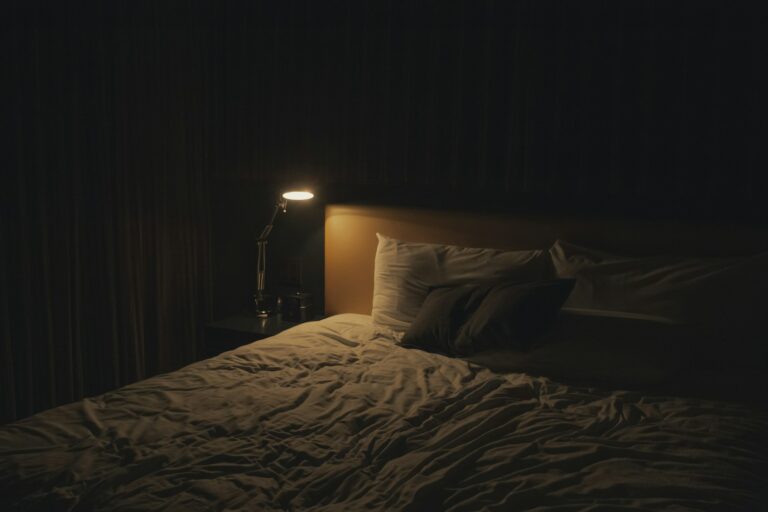
Some mornings, the mind seems to arrive after the body. You are upright, perhaps already making coffee, but the first email is hard to parse and a simple decision feels oddly expensive. That interval has a name: sleep inertia. It is a normal transition out of sleep, not evidence of poor character or a broken morning routine. The science is clearer on what makes it worse than on how to eliminate it.
Sleep does not switch off like a lamp
Waking is not a single biological event. Sleep inertia describes the temporary low-arousal state immediately after waking, when alertness and some aspects of performance are reduced. A foundational review in Sleep Medicine Reviews found that it can occur after a normal night’s sleep as well as after a nap. In people without major sleep loss, it often resolves within roughly 30 minutes, although the research has reported a much wider range depending on the task and the setting.
This matters because the feeling of fog is not always a trustworthy measure of competence. Laboratory work suggests that sustained attention and subjective alertness can be affected more than every kind of thinking. You may feel slow before you are actually unable to make a cup of tea. But it is unwise to convert that distinction into bravado: a 2019 review of sleep-inertia research concludes that measurable performance decrements do occur and fade with time awake.
Deep sleep, timing and a short night can make the transition rougher
One reason mornings differ is that an alarm can interrupt different stages of sleep. Awakening from slow-wave sleep has been associated with more pronounced inertia than waking from lighter sleep; the effect is also amplified after sleep restriction. This is a plausible explanation for the particularly heavy feeling after several curtailed nights. The question is usually less how to reconstruct a single night minute by minute, and more whether the pattern persists.
Timing matters too. The sleep–wake system is governed both by how long one has been awake or asleep and by the circadian clock. The 2019 review notes that waking during the biological night and waking after prior sleep loss tend to worsen the impairment. A 06:00 alarm may therefore feel very different from a 06:00 alarm after a week of late nights, even if the number on the clock says the same thing. This is an interaction of sleep pressure and biological timing, rather than a character flaw or a morning-routine failure.
Why the snooze button is not a clean experiment
The tempting response is to buy nine more minutes. The evidence does not support a universal rule that a short nap or snooze invariably avoids grogginess. A review of short naps in Sleep Medicine found mixed results: the severity of inertia depended on prior sleep, the timing of the nap, and when slow-wave sleep began. The familiar “keep it under 30 minutes” rule is a useful convenience, not a law of physiology.
That does not mean a snooze is forbidden. It means it is not a dependable cure for a rough wake-up. For some people it may be harmless; for others, the dominant problem is simply insufficient overnight sleep, which a few additional minutes in bed cannot meaningfully repair. The study base is not strong enough to turn either response into a universal prescription.
Light and caffeine are imperfect countermeasures
Morning light is often presented as a reset button. The direct evidence on light for sleep inertia is more restrained. In a small, at-home randomised crossover study of 36 adults who were woken 45 minutes after bedtime, light-emitting glasses did not improve performance on the main vigilance test compared with the control condition, despite earlier laboratory promise. The 2024 Sleep Health trial is a good reminder that a mechanism and a marketable morning ritual are not the same clinical result.
Caffeine may make a person feel more awake, but it is not a carefully proven, instant antidote to sleep inertia. A structured review of post-waking countermeasures found the overall evidence insufficient to identify a convincing reactive fix; caffeine was the most promising option, yet appeared most effective when taken before sleep in operational research, which is obviously not a general morning recommendation. Light and temperature had some promising effects on subjective alertness, but the reviewers could not show that they reliably restored performance.
The practical implication is modest. A person may choose their usual morning drink or ordinary daylight without treating either as a guaranteed performance fix. Neither should be used as a substitute for sufficient sleep, a safety buffer, or a clinical assessment when sleepiness has become persistent.
The safety question is more important than the productivity question
Sleep inertia is mainly inconvenient when the first task is a shower or a school run. It becomes more consequential when the first task is driving, operating equipment, making safety-critical decisions, or responding to an emergency. Research reviews repeatedly make this distinction: the transition state is not the time to assume complex performance is normal.
If possible, build in a buffer before a high-consequence task. This is not a productivity ritual. It is a modest acknowledgement that waking and being fully alert are not identical states. Shift workers and people who can be called to work overnight may need an occupational-health or sleep-medicine discussion rather than generic lifestyle tips.
When morning fog needs medical attention
Occasional grogginess is ordinary. Persistent, severe or life-limiting sleepiness deserves a different frame. The NHS advises seeing a GP when someone often falls asleep during the day or sleepiness is affecting their life. It also lists loud snoring, witnessed breathing pauses, gasping or choking during sleep, frequent awakenings, waking headaches and daytime tiredness among the signs of sleep apnoea that warrant assessment.
Do not self-diagnose from a difficult alarm. But do not normalise symptoms that include falling asleep unintentionally, struggling to stay awake while driving, or a marked change in alertness. Medicines, mood, sleep disorders and other health conditions can all contribute. A clinician can help separate a transient sleep–wake transition from a problem that needs investigation.
What this means in practice
- Give yourself a short buffer before driving, cycling in traffic, or starting a safety-critical task after waking.
- For a week, note bedtime, wake time, naps and how long the fog lasts; look for a pattern before changing several habits at once.
- Keep wake time reasonably consistent where life allows, especially after a run of curtailed nights.
- Do not treat a light device, a repeated alarm, or a larger coffee as a guaranteed performance fix.
- Use ordinary morning light and your usual caffeine pattern as choices, not treatment for ongoing sleep loss.
- Seek medical advice for excessive daytime sleepiness, witnessed breathing interruptions, or sleepiness that could make driving unsafe.
What we don’t know
There is no single, well-validated way to predict how foggy a particular person will feel on a particular morning. Much sleep-inertia research comes from laboratory, nap or operational settings, which cannot perfectly reproduce a household alarm. The evidence for immediate countermeasures, including bright light, temperature changes and alarm design, remains limited and uneven. The science is clearer for protecting sufficient, regular sleep than for engineering a frictionless first five minutes.
A slow start is usually a feature of the transition from sleep to wakefulness, not a verdict on the night or the person. Treat it as information: allow time when safety matters, look for persistent patterns, and get help when the pattern is no longer merely inconvenient.
Photo: Chase Yi on Unsplash.