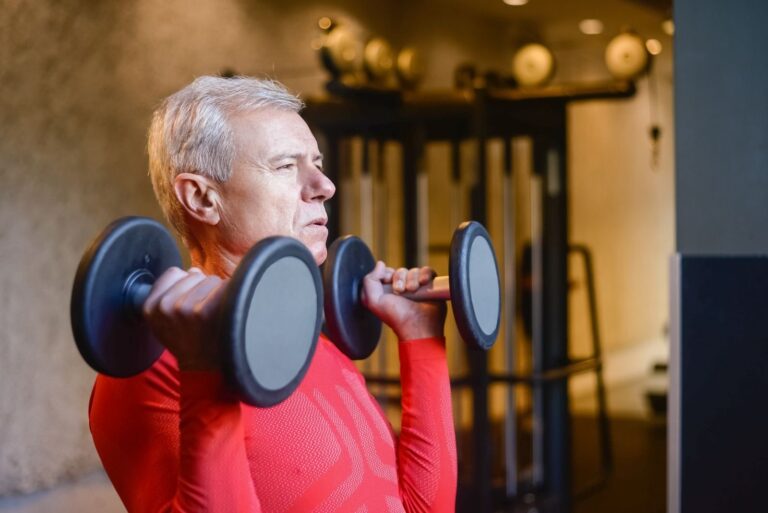
Strength Training for Longevity: What the Evidence Can and Cannot Say
Strength training can support healthy ageing, but it is not a proven life-extension treatment or a substitute for medical care. The evidence is measured.
Weight-bearing exercise can help maintain bone density after 50, but not every type works equally. Here is what the evidence shows about impact, resistance, and safety.
Perimenopause can disrupt sleep, mood, and cycles years before the final period, but symptoms vary widely and testing has limits. Context matters.
Progesterone after 40 affects sleep, brain function, and metabolism, but the evidence base for those non-reproductive effects still has surprising gaps.
Intermittent fasting does not automatically cost muscle mass, but protein intake, training, and deficit size matter more than the eating window alone.
Progressive muscle relaxation may ease stress for some adults, but evidence is mixed and it should not replace care for anxiety, pain, or trauma symptoms.
RDW can add context to blood-count results and ageing-risk research, but it is a non-specific signal that needs careful clinical interpretation.
Sleep inertia can make mornings feel foggy after 50, but sleep timing, sleep debt, medicines, and safety matter more than willpower or blame.
Allostatic load can frame how chronic stress affects the body, but it is a research construct, not a personal score or diagnosis. Context matters.
Plant sterols can modestly lower LDL cholesterol, but products, dose, diet context, medicines, and rare genetic risks decide how useful they are.